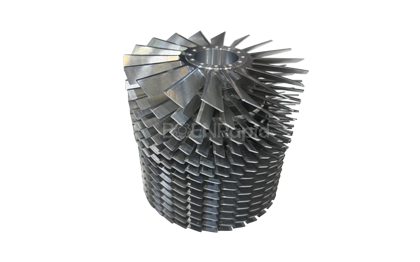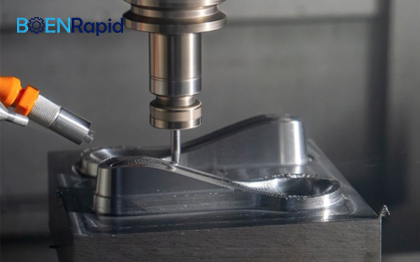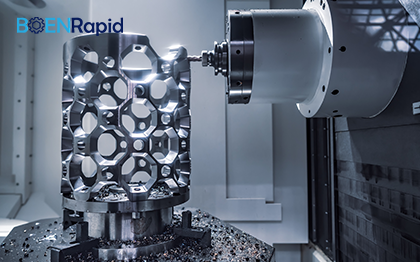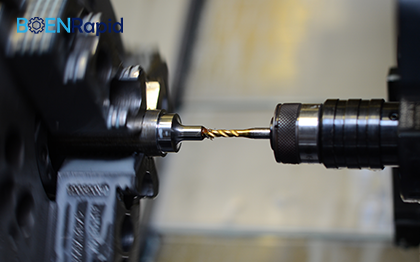
Stainless Steel CNC Milled Parts
Details
Stainless Steel CNC Milled Parts
DongGuan Bohao Industrial Co., Ltd. (BOEN Rapid) specializes in manufacturing precision Stainless Steel CNC Milled Parts backed by over 15 years of industrial expertise. Multi axis machining enables us to reach tolerances of ±0.02 mm and surface roughness of Ra 0.8-1.6 μm. We offer grades like SS303, SS304, SS316 and SS316L in 3 axis, 4 axis and 5 axis CNC machines. Quality management is ISO 9001 & ISO 13485 certified for consistent application to prototype & low volume production. Project review usually takes up to 24 hours. Prototype delivery is 3-15 working days.
What Are Stainless Steel CNC Milled Parts?
The products are precision parts milled using computer-controlled milling machines. Rotating tools chop away material to make complicated shapes, flat surfaces, pockets and fine curves.
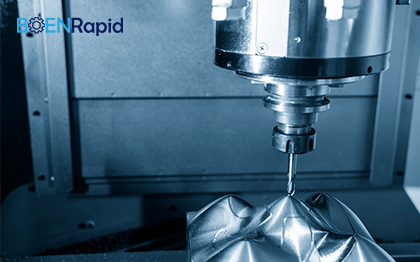
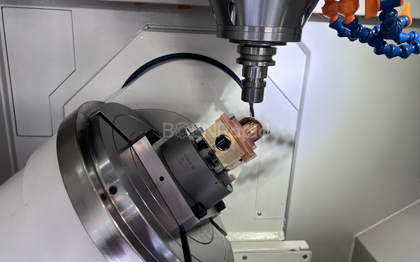
This process is applicable for applications requiring multi-face machining and detailed structural features. Multi-axis capability allows milling, drilling and contouring at the same time, in one configuration, with less repositioning error.
Advantages are great dimensional control and surface integrity. The company handles everything from functional prototypes to high precision manufacturing parts for the automotive, robotics, medical devices and industrial equipment sectors.
Technical Parameters
| Item | Description |
|---|---|
| Material | Stainless Steel (SS303, SS304, SS304L, SS316, SS316L or per customer request) |
| Color | Natural (Silver), or per surface treatment |
| Process | CNC Milling (3-axis / 4-axis / 5-axis machining) |
| Surface Finish | Machined, Polished, Bead Blasted / Sandblasted, Passivated, or Electropolished |
| Tolerance | ±0.02 mm (±0.01 mm for critical features) or per drawing |
| Surface Roughness | Ra 0.8–1.6 μm (machined surface, lower achievable upon request) |
| Feature | High strength, excellent corrosion resistance, good durability, and stable performance in harsh environments |
| Size | Per Customer Drawing |
| Drawing Format | PDF / DWG / STEP / IGS |
| Production Volume | Prototype to Mass Production |
| Inspection | 100% Inspection / Sampling Inspection |
Precision & Quality Control
We mill to exact dimensions and geometric tolerances. Typical tolerances are ±0.02 mm with finer control attainable on important features.
Machining is done with close tolerance to flatness, perpendicularity and positional accuracy. The surface finish is normally in the range of Ra 0.8–1.6 μm and finer surface finishes can be obtained with optimised cutting conditions.
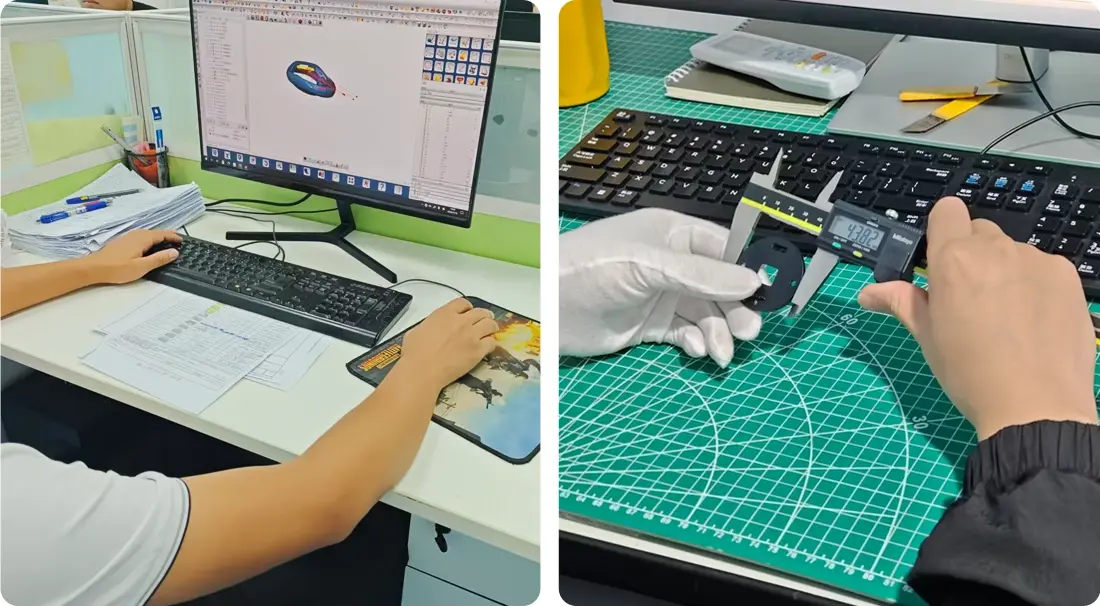
In-process inspections measure essential characteristics during machining for real-time correction of discrepancies. Final inspections include dimension checks, geometric tolerances and surface inspections utilising micrometres, height gauges and optical equipment.
For important parts, we give complete inspection reports for full traceability and conformity with your specifications.

Manufacturing Capabilities
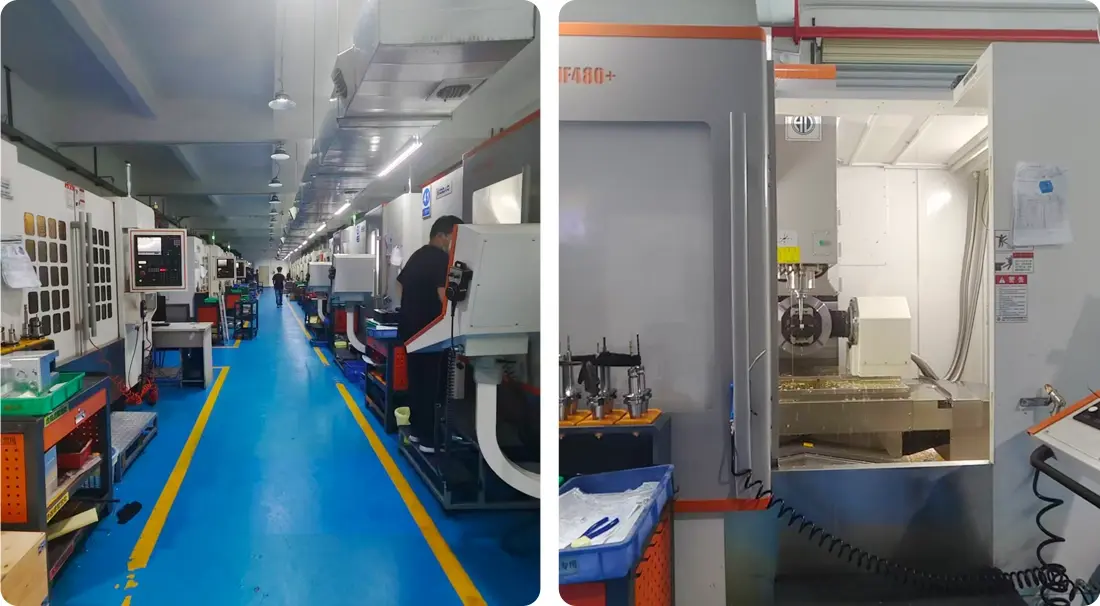
Modern CNC machining centers for 3-axis, 4-axis and 5-axis are at our disposal. This range of equipment allows the production of parts with complex geometry and tight tolerances.
Multi-axis machining enables cutting in several directions simultaneously, making complicated geometries difficult to accomplish with traditional techniques. This feature simplifies setup and increases overall dimensional accuracy.
Our equipment is ideal for small precision components, and huge structural pieces. We process aluminium alloys, carbon steel, brass, copper and technical plastics such as POM, PTFE and PEEK, in addition to stainless steel grades.
Toolpath methods and cutting settings are optimised according to the material qualities to provide efficient machining as well as stable surface quality over production batches.
Why Choose Our Milled Parts?
You have special benefits for manufacturing complex parts. The procedure is suitable for complex geometries and multi-surface machining, for products with pockets, cavities and intricate curves.
Reduces need for several setups, increases precision and efficiency with multi-axis capability. You get great repeatability so you know the quality is the same for each production run.
The procedure is quite flexible, therefore it is possible to quickly adapt for any design modifications throughout the prototyping or manufacturing phases. This flexibility speeds your time-to-market and keeps manufacturing consistent.
Our engineering team offers a full range of DFM analysis services to assist you optimise your design for manufacturability before you begin production. Early identification of potential risks results in lower development costs and better final product performance.
Industry Applications
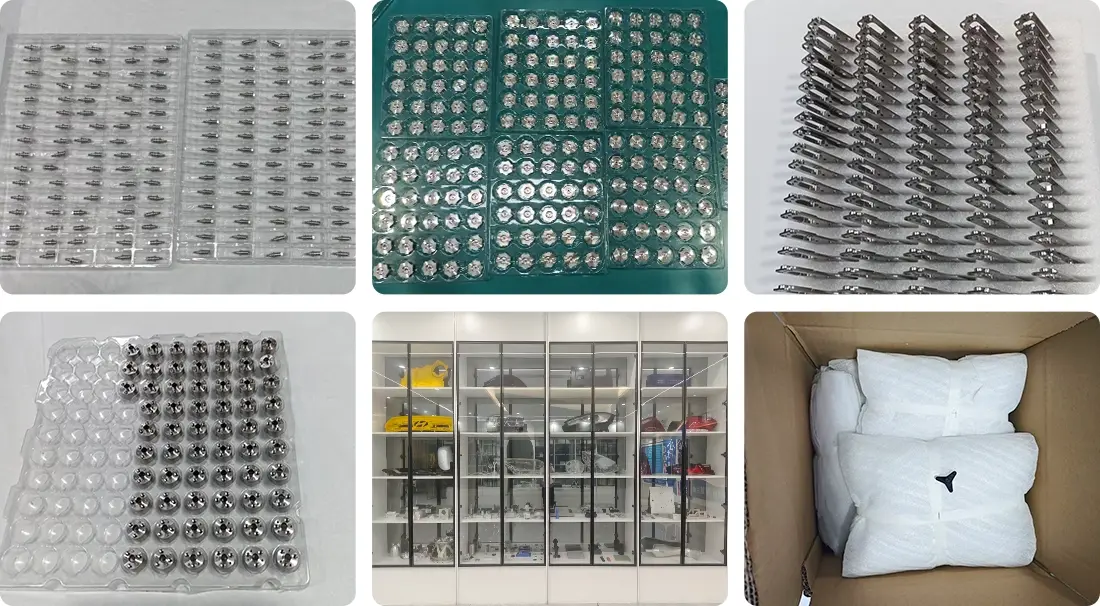
Your Stainless Steel CNC Milled Parts are used in applications requiring structural intricacy and precision. Accurate dimensional control is crucial for assembly and the precise movement of robotics components.
Medical device housings require tight tolerances and the corrosion resistance and biocompatibility of SS316L. Automotive structures need to be strong and durable in tough operating situations. The best material for this is stainless steel.
Precision milling provides clean surface finishes and shielding qualities for use in electronic enclosures. Industrial equipment components depend on consistent performance under temperature changes and mechanical stress.
CNC machined stainless steel is a great choice for parts on coffee machines, precision housings and unique fixtures for long-term reliability.
FAQ
Q: Is stainless steel difficult to machine with CNC milling?
A: Stainless steel possesses high shear strength and work-hardens rapidly during cutting. This requires rigid CNC machinery, specialized carbide tooling, and robust coolant systems.
We utilize slower cutting speeds and high-pressure coolant to manage heat dissipation. Our experience with stainless steel grades ensures efficient machining while maintaining tool life and surface quality.
Q: What is the difference between 303 and 304 stainless steel for CNC parts?
A: SS303 contains added sulfur for improved machinability, significantly reducing production costs and cycle times. However, the sulfur content reduces corrosion resistance and weldability compared to SS304.
We recommend SS304 or SS316 for harsh environments and critical applications. SS303 works well for non-critical, high-volume fittings where corrosion resistance is less demanding.
Q: Is passivation necessary for stainless steel milled parts?
A: Yes, for most applications. Machining can embed microscopic free iron particles from cutting tools into the surface, leading to rust or "rouging."
Passivation chemically removes these contaminants and restores the protective oxide layer per ASTM A967 standards. This treatment ensures your parts maintain their corrosion resistance properties.
Q: Can you achieve mirror finishes on CNC stainless steel parts?
A: While standard CNC milling typically yields Ra 0.8–1.6 μm, we achieve Ra < 0.2 μm through secondary post-processing. Electropolishing or mechanical buffing produces mirror finishes often required for semiconductor or pharmaceutical applications.
Q: How do you handle thermal distortion in thin-walled parts?
A: Stainless steel dissipates heat poorly. For thin-walled components, we utilize low-stress clamping, high-pressure coolant, and multi-stage machining.
Our approach includes roughing followed by stress relief, then finishing operations. This maintains dimensional stability throughout the manufacturing process.
Contact Us for Your Next Project
Ready to transform your design into Stainless Steel CNC Milled Parts? Reach out to our engineering team at contact@boenrapid.com to discuss your project requirements and receive a quote within 24 hours.