How to Make CNC Plastic Prototype Parts: Key Manufacturing Steps
Getting a plastic prototype right the first time saves weeks of rework and thousands in avoidable costs. CNC plastic prototypes parts are high-precision components machined directly from solid plastic stock using computer-controlled cutting tools, following your CAD geometry without any mold investment. At BOEN Rapid, we machine engineering-grade plastics including ABS, PC, POM, PA66, PEEK, and PPSU to tolerances as tight as ±0.05mm, delivering functional prototypes in 3–5 days. This guide walks through each manufacturing step so hardware engineers and procurement teams can make informed decisions before committing to production.
Understanding CNC Plastic Prototype Parts
Before jumping into the process, it helps to understand what separates CNC-machined plastic prototypes from other methods and why the distinction matters for your project.
What Qualifies as a CNC Plastic Prototype?
A CNC plastic prototype is a physical part machined from a solid plastic billet using milling or turning operations. A lot of small plastic pieces weigh between 0.5g and 200g. They're in toy parts, the cases of electronics, the clips on makeup, and the bodies of medical devices. It's easy to get lost when something melts or shrinks a little. That means you need to choose the material and make the mold at the same time.
Common Materials and Why They Are Chosen
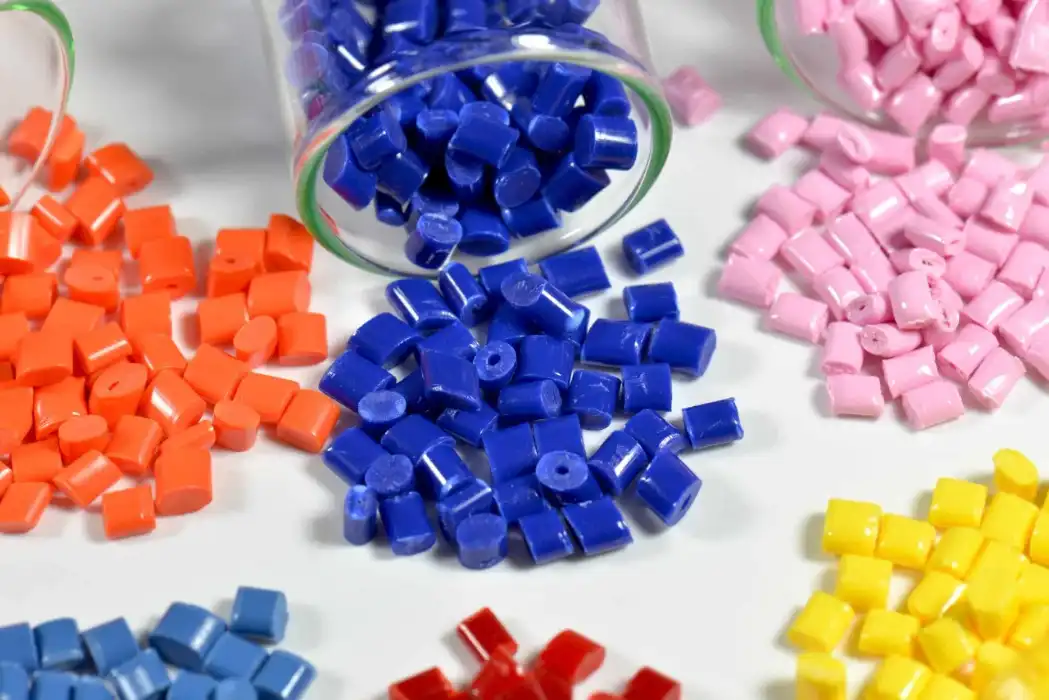
Material selection drives prototype performance. ABS doesn't change size, has a smooth surface, and is simple to color. Because of this, it's often used for building and toy parts. Polycarbonate (PC) offers optical clarity for lens covers and show windows. POM (Delrin) delivers low friction and is the best material for making gears, fasteners, and moving systems. PA66 provides toughness under load and handles heat well in automotive brackets. PMMA is nice to touch and see through, with more than 92% of light passing through, though it breaks quickly.
CNC Machining vs. 3D Printing vs. Injection Molding
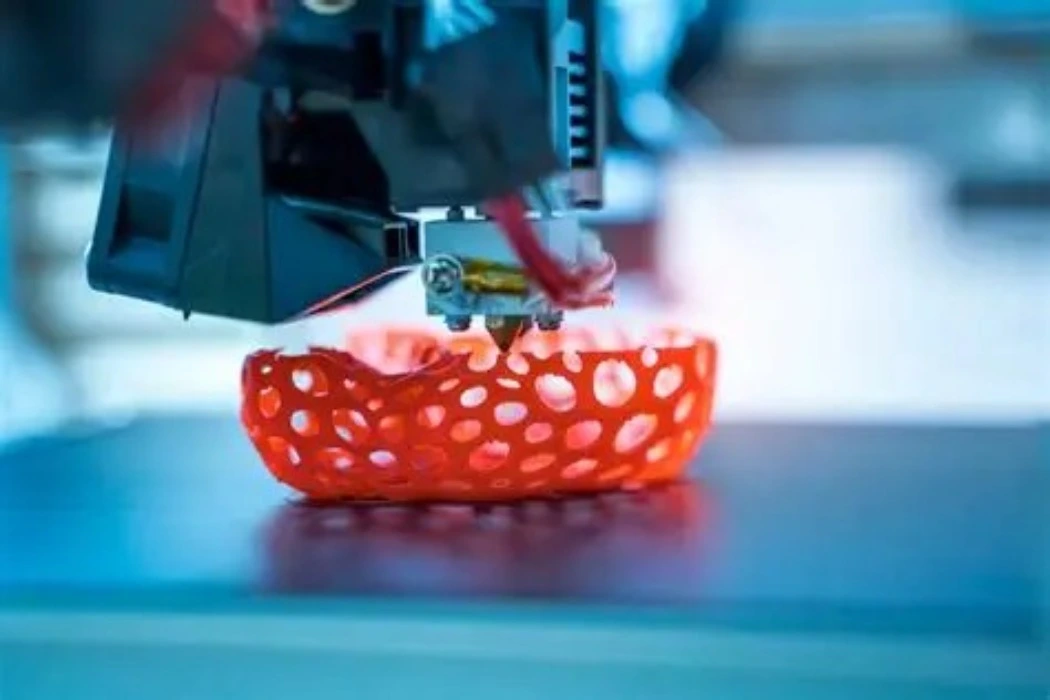
CNC plastic prototypes parts from production-equivalent materials. Bigger holes and pieces take longer to cool down and fill up. They leave behind weld lines or short shots that weaken the part when they don't move well. More than 10 grams per minute of melt flow (MFI) is best for cuts or shapes with thin walls. Injection molding delivers identical parts at scale. For test runs of 1,000 to 5,000 pieces, making tools out of ABS or PP costs less and takes less time.
Key Manufacturing Steps to Make CNC Plastic Prototype Parts
The quality of a plastic prototype is determined at each stage of the workflow. Skipping or rushing any step introduces dimensional error, surface defects, or material failure.
Step 1 — Design Preparation and DFM Review
The process starts with a clean CAD file, typically in STEP or IGES format. Before the mold is cut, a DFM (Design for Manufacturability) review finds these problems. There are different ways to measure the walls and plates of different materials because they all shrink in different ways. ABS drops by 0.4% to 0.8%, PP by 1.5% to 2.5%, and POM by 2% to 3%. Sink marks can show up on walls that are too thick for a material that shrinks a lot.
Step 2 — Material Selection and Stock Preparation
Once the design is confirmed, the appropriate plastic stock is selected. Before things will work well, they need to be dried out at higher temperatures or with certain screws or tools. This makes the process take longer. If the POM gets too hot, formaldehyde will come out, so keep an eye on it. Find qualified resin providers and get material certificates from them before you ask for prices. Do not wait until the samples are ready. From now on, stays won't cost as much.
Step 3 — CNC Machining — Milling, Turning, and Toolpath Strategy
The machined part takes shape through a sequence of passes. Here are some of the most important design factors that affect the choice of material:
• Walls that are all the same height: The part won't bend or cool down in different places if the walls are all the same width. Most small parts are between 1.5 and 3 mm thick.
• Put the gates where they belong: Put gates in the thicker parts to let the stuff move to the lighter ones. You'll be able to see weld lines and short shots better this way.
• If each side has at least 1° of draft: Providing draft helps parts come off. Heavy things like POM and PA66 might not show the drag marks if you use 1.5° to 2°.
Step 4 — Dimensional Inspection
After machining, each part undergoes verification. A Coordinate measuring machine (CMM) can be used to ensure the sizes are right and the surface is smooth before a steel mold is made. Things that BOEN Rapid sends out have both a material certificate and a record of a check. These documents confirm that quality claims are backed by process discipline, not just marketing language.
Step 5 — Post-Processing and Surface Finishing
Raw machined parts carry tool marks that require finishing. Depending on application, options include hand polishing, vapor polishing for clarity, or spray painting for appearance models. ABS looks good after two coats and is simple to paint. PP is good for snap-fit and live hinge frames. Both of these can be worked on with normal tools, and they can help with extra steps like silk-screen marking (pad printing) or light plating for decorative applications.
Practical Considerations for Procurement Managers and OEMs
Understanding the manufacturing steps is only half the equation. Procurement teams also need to evaluate lead times and supplier qualification for their CNC plastic prototypes parts before placing an order.
Lead Times and Order Flexibility
Standard lead times are reduced when you get a price in 24 hours. One hundred things at a time are all that the BOEN Rapid machine can make. Before the process is used on 1,000 to 50,000 or more pieces, it can be tried out on small tools. This flexibility is particularly valuable during early-stage design iteration when the geometry may change between revision cycles.
Cost Structure Compared to Alternative Methods
There are always pros and cons to choose materials. Buyers don't have to worry about specifying too many materials that add cost without value when they know about these trade-offs. Choosing things that will work for the job saves cash. For test runs of 1,000 to 5,000 things, aluminum tools cost less. A CNC prototype that identifies a design flaw before mold fabrication avoids a far larger expense downstream.
Selecting a Qualified CNC Prototyping Supplier
A reliable supplier demonstrates ISO certification. In the EU and the US, B2B buyers often want to see proof that a seller follows REACH, RoHS, or FDA rules before they do business with them. BOEN Rapid follows the rules set by ISO 9001 and ISO 13485, and they can work with materials like POM, ABS, PP, and PA66 that are made for engineering.
Case Studies and Applications
CNC plastic prototypes parts solve specific engineering problems across multiple industries. Here is how the method performs in practice.
Consumer Electronics — Enclosure Validation
For electronics, toys, and home goods, ABS is often used because the smooth surface makes it easy to work with. Hardware development teams use these to verify snap-fit assembly and surface finish uniformity before committing to a steel mold.
Automotive Interior — Fit and Function Testing
An automotive supplier required PA66 and POM trim pieces because they can handle heat and stress well. These prototypes are used to verify assembly clearances and keep moving parts from breaking down, bypassing one round of costly molded pre-production samples.
Medical Device Housing — Regulatory Sample Production
For the medical market, make sure the person selling the plastic can show that they follow FDA rules. PP is often used to handle medical waste and package food because it is lighter and doesn't react with chemicals. PMMA and PC work well for pill boxes and lens covers that don't need to be very strong.
Conclusion
When you make CNC plastic prototypes parts, you don't always pick the right stuff. This is something you have to do at every step, from making the plans to finishing the top. A lot of the things you can buy are made from plastics like ABS and PP. You can build things and move things with PA66 and POM. The food is good for seeing on both PMMA and PC. Your market has rules that tell you what to buy and how much money you can make. If you do this before the mold is made, you will save time, money, and risk.
FAQ
What kind of things are broken up into little pieces?
ABS is often used to make small CNC plastic prototypes parts for electronics, toys, and home goods. The smooth surface makes it easy to work with. PP is often used for things that need to be safe around food or chemicals.
Can I change the material once the mold is made?
Sometimes, but things might not go well for you. Like, when you move from ABS to PP, the shrinking rates change. In this case, you might need to change the gates or the sizes of the holes. Before you start making the mold, make sure you like the material you picked. It will cost less to fix things.
How is it that the color doesn't change from one batch to the next?
Always use the same source and amount of masterbatch to keep the color the same. When you place an order with BOEN Rapid, the next batches must fill a certain Delta-E range. This is done by putting down the specs for the main batch.
How do I get parts that will be used in food or medicine?
For the US market, make sure the person selling the plastic can show that they follow FDA rules. For the EU market, you should ask for a REACH/RoHS record. BOEN Rapid gets a full material review package with every sale.
I'm ready to begin making small parts. How many pieces do I need?
One hundred things at a time are all that the BOEN Rapid machine can make. Before the process is used on 1,000 to 50,000 or more pieces, it can be tried out on small tools.
Start Your CNC Plastic Prototype Project with BOEN Rapid
It's safe to say that BOEN Rapid has been making CNC plastic prototypes parts for over 15 years. They follow the rules set by ISO 9001 and ISO 13485, and they can work with materials like POM, ABS, PP, and PA66 that are made for engineering. For more than 50,000 pieces, our team can make sure that samples and runs work well together. They can also do DFM analysis. You can get a price in 24 hours by sending your CAD files to contact@boenrapid.com or visiting boenrapid.com.
References
1. Todd, R. H., Allen, D. K., & Alting, L. — Manufacturing Processes Reference Guide, Industrial Press, 1994.
2. Rosato, D. V., & Rosato, M. G. — Injection Molding Handbook, Springer, 2000.
3. Kalpakjian, S., & Schmid, S. R. — Manufacturing Engineering and Technology, Pearson, 2014.
4. Harper, C. A. — Handbook of Plastics Technologies, McGraw-Hill, 2006.
5. Brydson, J. A. — Plastics Materials, Butterworth-Heinemann, 1999.
6. Groover, M. P. — Fundamentals of Modern Manufacturing: Materials, Processes, and Systems, Wiley, 2020.