Welded Assemblies: The Complete Guide to Welded Metal Fabrication
Welded assemblies are permanently joined metal structures produced through processes such as MIG, TIG, and laser welding. They form the structural backbone of products across automotive, aerospace, chemical processing, and industrial equipment sectors. For B2B procurement teams sourcing welded assemblies parts, understanding material selection, welding technique, and supplier qualifications directly affects product quality, cost, and delivery reliability. At BOEN Rapid, we integrate CNC machining, sheet metal fabrication, and welding under one roof, giving clients a single accountable manufacturing partner from prototype through production.
Understanding Welded Assemblies: Definitions, Types, and Materials
What Are Welded Assemblies?
A welded assembly is made up of two or more metal parts that are joined together forever with heat-fusion welding. Welded links, on the other hand, spread stress across the whole joint surface, which makes the structure lighter while still holding more weight. Welded fabrications are the best choice when vibration, pressure, or a long service life are needed because they are permanently joined together.
Common Assembly Types
Frames and chassis, pipe manifolds and process headers, and enclosure boxes with built-in brackets are the three most common types of structures that are bought. Auto body subframes, chemical pipeline spools, and machine base frames are all examples from the textbook. Each type has different requirements for the joint shape, access to the weld, and cleaning after the weld.
Material Selection and Its Effect on Welding
Every decision after the material choice is made is based on that choice. Lightweight structures made of aluminum alloys (6061, 5052) are great for robots and space travel, but they need to be welded with TIG or laser to avoid porosity. Grades 304, 316, and 316L stainless steel don't rust in chemical or food-processing settings and can be used in all three main processes. Even though galvanic rusting isn't a problem, carbon and mild steel are still cheap enough to use for heavy structure work. Every order from BOEN Rapid comes with full material certifications that meet ISO, ANSI, ASME, DIN, and JIS standards.
Welding Processes and Techniques for High-Quality Assemblies
TIG Welding
With exact heat input, tungsten inert gas welding makes rings that are narrow and clean. It is the best way to make thin-wall aluminum and stainless steel parts that need to be accurate in size and look good on the outside. Medical enclosures, semiconductor equipment frames, and aerospace brackets are all common uses.
MIG Welding
A wire electrode is fed constantly during metal inert gas welding, which makes it a good choice for medium-thickness steel and stainless steel structural parts. Because the deposition rate is higher, cycle times are shorter for volume runs, and penetration stays the same. Often used examples are machine bases, AGV frames, and energy storage boxes.
Laser Welding
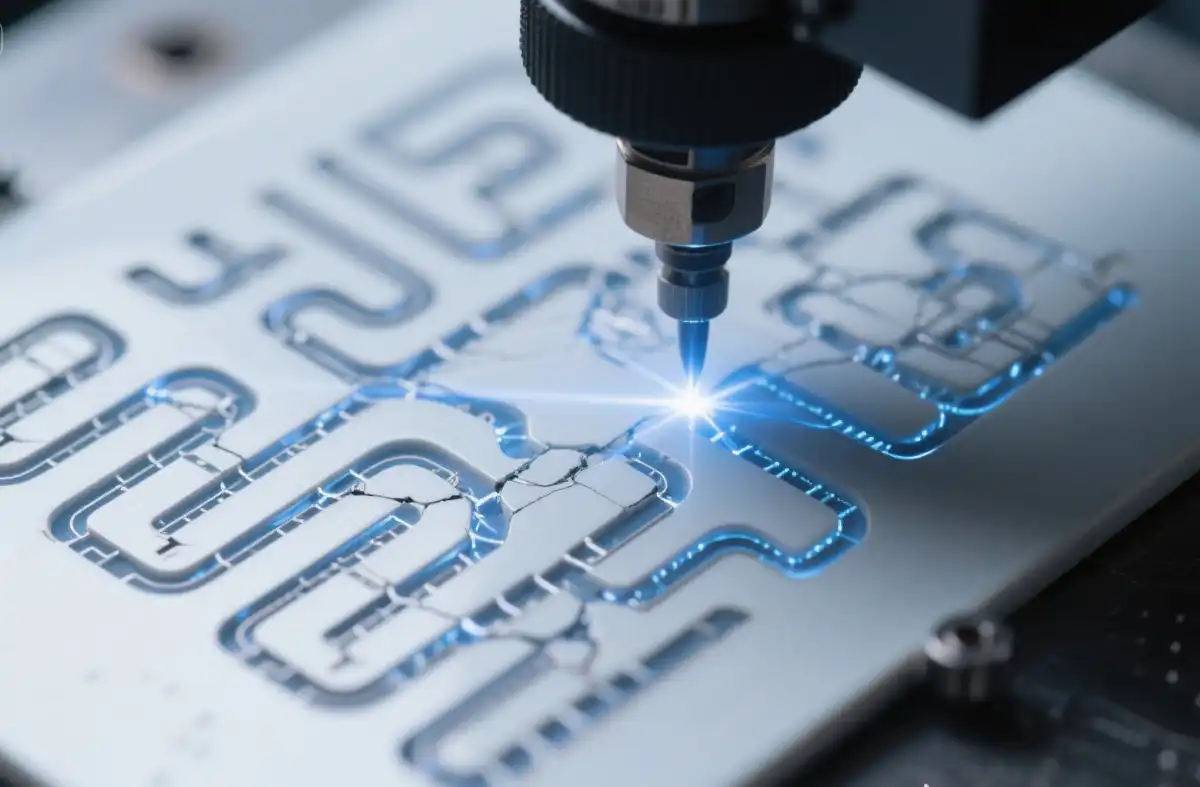
Laser welding focuses energy into a very small area, so there are almost no hot spots and almost no distortion. This is especially helpful for precise welded assemblies parts where surfaces that are machined later must stay within very tight limits after the parts are joined. BOEN Rapid uses laser welding on aluminum, steel, and stainless steel parts that need to have joints that look good and fit tightly.
Which of these three processes to use relies on the thickness of the wall, the shape of the joints, the amount of product being made, and the surface finish that is needed. Design for Manufacturability (DFM) analysis is something that our engineering team does on every new project to make sure that the best process is chosen before production starts.
Benefits and Applications of Welded Assembly Parts in B2B Industries
Structural Strength and Design Flexibility
When you weld, you make a metal link that is usually as strong as the base material. This lets designers make complicated three-dimensional shapes—like tube space frames—that would be hard to cast or put together. The American Welding Society says that for structural uses, joint efficiencies of 100% can be reached with properly qualified welding procedures.
Industry Applications
Welded fabrications can be found in many fields. For the most part, custom welded assemblies are useful in the following situations:
- Automotive and EV manufacturing: Body-in-white subframes, battery tray weldments, and suspension brackets benefit from high-strength-to-weight joints that meet crash safety standards.
- Energy storage and 5G infrastructure: Sheet metal enclosures with welded structural inserts provide the IP54/IP65 ingress protection ratings required by telecom and grid-storage OEMs.
- Industrial automation and AGV systems: Welded machine frames and conveyor supports absorb dynamic loads from motors and actuators without fatigue cracking over long service cycles.
- Chemical and process equipment: Stainless pipe spools and pressure vessel nozzles demand full-penetration welds and third-party inspection to meet ASME and PED requirements.
In all of these situations, the weld joint needs to stay accurate in terms of size, be able to handle surface cleaning, and last in the field. The best way to avoid expensive rework is to take care of those needs early on in the planning process.
Quality Control and Defect Prevention
The three most common flaws in welded structure parts are porosity, undercut, and angle distortion. BOEN Rapid manages these by designing a pre-weld clamp, checking the temperature between passes, and inspecting everything visually before using a CMM to confirm the dimensions. On request, safety-critical joints can be tested without damaging them using dye penetrant or ultrasonic waves.
Comparing Welded Assemblies with Alternative Fabrication Methods
Welded vs. Bolted Assemblies
Bolted joints make it possible to take apart and use parts again in the field, which is important for flexible equipment. Welded joints in welded assemblies parts stop fasteners from coming loose when the machine shakes, and they also cut down on the number of parts, which lowers the cost of assembly labor. When it comes to fatigue life and rigidity, welded fabrications always do better than bolted options for fixed structural uses like machine bases or car subframes.
Welded vs. Cast or Machined Parts
Castings can have complicated shapes, but they need expensive tools and wait times in weeks. Precision-machined parts have very tight tolerances, but they waste a lot of material from solid stock. The gap is filled by welded assemblies, which can quickly take on complicated forms by shaping and combining standard stock. Only the most important mating areas need to be machined one last time. For prototypes and small to medium-sized production runs, welded fabrication usually has shorter lead times and lower one-time costs than tooled castings.
Choosing the Right Method for Your Project
Five things should be taken into account by procurement teams: the needed tolerances, the estimated service loads, the production number, the budget, and the needs for disassembly. When it comes to low to medium numbers and lasting structural uses, welded assemblies win. Above a certain volume level, where tools amortization works in their favor, castings and full machining can compete.
How to Choose and Procure the Best Welded Assembly Parts?
Supplier Qualification Criteria
As a minimum, a suitable company that makes welded systems parts should be ISO 9001 certified. Medical gadget supply chains need to have ISO 13485. Check the supplier's ability to do more than just certifications. If they do machining, welding, and surface treatment all in-house, you won't have to worry about handoffs between suppliers, and the dimensions will stay the same.
The Procurement Process Step by Step
Start with a full drawing package that includes material specifications, weld symbol callouts, tolerance frames, and surface finish requirements. Before you commit to a purchase order, send this to DFM for review. When engineers at BOEN Rapid get a new project inquiry, they get back to the person within 24 hours with information on how to make the weld accessible, how to set up the fixtures, and any tolerance issues. Depending on how complicated they are, prototype parts ship in 3–15 business days. Low-volume production runs of 10 to 10,000 pieces finish in two to four weeks.
Evaluating Logistics and Documentation
OEM buyers around the world need more than just a good part. They need a full set of paperwork, including a report on the first review of the item, certificates for the materials used, instructions for the welding process, and digital records. All of these are standard deliverables from BOEN Rapid. Parts arrive on time and clear customs quickly when they are shipped internationally through DHL, UPS, and FedEx, which all offer tracking and help with customs paperwork.
Conclusion
The best way to choose a welded assembly method for welded assemblies parts is to make sure that the material, process, and provider capabilities are all right for your purpose. TIG, MIG, and laser welding all have specific jobs to do based on the type of material and the level of accuracy needed. A partner in integrated manufacturing that does all of the machining, forging, welding, and surface treatment in-house lowers the risk of quality issues and speeds up the wait time. This integration is often the difference between a smooth launch and a costly delay for B2B procurement teams that are in charge of managing long product development cycles.
FAQ
What materials are best for welded assemblies in corrosive environments?
The most common types of stainless steel used in chemical processes and along the coast are 316 and 316L. This is because they contain molybdenum, which protects against chlorine attack. Aluminum 5052 and 6061 don't rust when exposed to air. When powder coating or electroplating is used to protect it, carbon steel is fine.
How does laser welding reduce distortion compared to MIG or TIG?
Laser welding puts energy into a much smaller area, so the area that gets hot isn't affected as much. This keeps the growth and shrinkage of heat in one place, so the parent material doesn't move as much when it cools. This leads to more accurate measurements after the weld, which is important when parts that were welded directly to machined interfaces.
What certifications should a welded assemblies parts supplier hold?
ISO 9001 confirms that a quality management system has been written down. ISO 13485 covers the supply lines for medical devices. For carbon steel weld qualification, the AWS D1.1 code and the AWS D1.2 code for aluminum weld qualification are in charge. For extra peace of mind, asking for certified weld procedure specifications and welder qualification records is a good idea.
How long does first-article approval typically take?
At BOEN Rapid, sample welded assemblies are sent out 3–15 working days after the drawing is approved, based on how complicated the part is and how quickly the materials can be sourced. Each sample shipment comes with a report on the first article inspection.
Get a Quote for Your Custom Welded Assembly Project — BOEN Rapid
BOEN Rapid makes custom welded assemblies parts for companies around the world that make industrial equipment, automation installers, and original equipment makers. We are a reliable supplier of welded assemblies parts that can handle anything from five prototype units to full production batches. We are certified by ISO 9001 and ISO 13485 and offer in-house TIG, MIG, and laser welding. Our engineering team is available 24 hours a day, seven days a week. To get a price right away, email your models or project brief to contact@boenrapid.com or go to boenrapid.com.
References
1. American Welding Society. Structural Welding Code — Steel (AWS D1.1). AWS, 2020.
2. American Welding Society. Welding Handbook, Volume 2: Welding Processes. AWS, 2004.
3. Cary, H. B., & Helzer, S. C. Modern Welding Technology. Pearson Prentice Hall, 2005.
4. International Organization for Standardization. ISO 9001:2015 Quality Management Systems — Requirements. ISO, 2015.
5. Weman, K. Welding Processes Handbook. Woodhead Publishing, 2011.
6. Messler, R. W. Principles of Welding: Processes, Physics, Chemistry, and Metallurgy. Wiley-VCH, 1999.