Common Applications of Precision CNC Turning Parts Across Industries
Precision CNC turning parts are cylindrical or rotational components produced by computer-controlled lathes, where the workpiece spins while stationary cutting tools shape it into shafts, pins, bushings, threaded connectors, and fittings. These parts appear across hydraulic systems, automotive drivetrains, robotic joints, medical instruments, and aerospace assemblies. With tolerances achievable to ±0.005mm and diameters ranging from Ø3mm to Ø300mm, turned components deliver the dimensional consistency that industrial procurement teams depend on. Whether you need a prototype in three days or a production run of 10,000 units, understanding where and how these parts are used helps you specify correctly and source confidently.
Understanding Precision CNC Turning Parts and Their Core Benefits
CNC turning is not simply "faster manual lathing." It is a programmable, repeatable manufacturing process where every cutting pass is driven by digital coordinates, not operator feel. That distinction matters enormously when your drawing calls for Ra 0.8μm surface quality or M2–M100 thread coverage.
What Separates CNC Turning from Milling and Grinding?
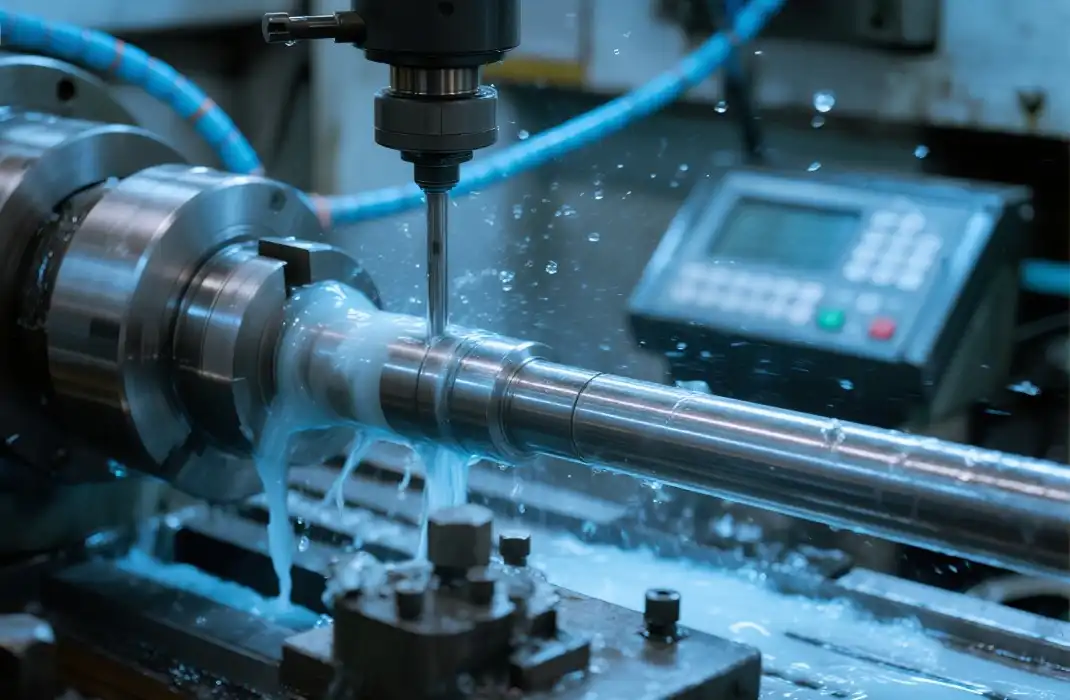
Turning rotates the workpiece; milling rotates the tool. For round-symmetrical parts—shafts, coupling sleeves, valve spools—turning achieves the required geometry in fewer setups and shorter cycle times than multi-axis milling. Grinding adds surface refinement but cannot produce complex features in a single operation. CNC turning occupies a practical middle ground: geometry, threading, and surface finish in one clamping.
Tolerance and Surface Finish Capabilities
Standard CNC turning holds ±0.02mm without difficulty. High-precision operations reach ±0.005mm on diameter, which satisfies the tight fits required in hydraulic valve bodies and motor shaft assemblies. Surface finish starts at Ra 3.2μm for general applications and improves to Ra 0.8μm—or Ra 0.4μm with polishing—for sealing surfaces and bearing journals.
Scalability from Prototype to Production
A turned part does not require expensive hard tooling. You can order ten prototype pieces, review first-article inspection reports, approve the drawing, and proceed to a batch of 5,000 without process changes. This flexibility makes CNC turning especially attractive for OEM suppliers managing multiple product variants or engineering revision cycles.
Common Industrial Applications of Precision CNC Turning Parts
When a round, accurate part needs to move force, seal fluid, or connect motion, turned circular components are used. A lot of B2B demand comes from the five industries below.
Hydraulic and Pneumatic Systems
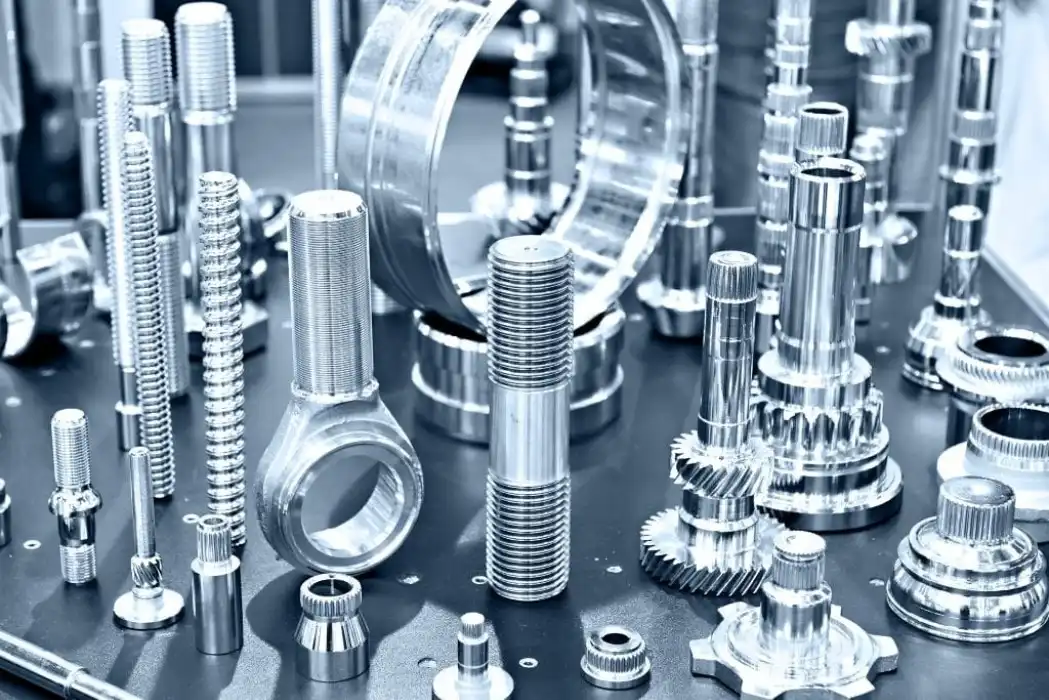
Turned parts that are often used are hydraulic cylinder rods, valve spools, piston pins, and threaded port adaptors. Since these parts are constantly under pressure, the seal's life is directly affected by its concentricity and surface finish. If the shaft is 0.03 mm out of round, the O-ring will wear out in a few weeks. That problem is fixed at its source with turned parts that have been checked to be round and have Ra 0.8µm surfaces.
Automotive and Powertrain Components
What a CNC machine starts with is bar stock. From there, it turns into sensor housings, connecting pins, shift shaft assemblies, and suspension bushings. Automotive companies need to be able to track materials, get certified thread gages, and get batch-level CMM reports. A qualified turning provider should be able to provide all of these documents without asking for them.
Robotics and Industrial Automation
Because positional error builds up across each joint in a robotic arm, precision CNC turning parts such as motor shafts, actuator pins, encoder mounts, and joint connectors need to be very closely centered. Aluminum 6061-T6 is the best choice here because it is easy to work with and lighter, while stainless steel 304 is used for parts that will be washed. PEEK and Delrin turned parts are used in places where chemical resistance or electrical isolation is important.
Medical Devices and Surgical Instruments
Biocompatible materials and microscopic accuracy are needed for the handles of surgical instruments, implant sample parts, and imaging equipment shafts. Most of the time, stainless steel 316L and titanium Grade 5 are used. To end, passivation and electropolishing are used. When it comes to this industry, suppliers must have ISO 13485 approval.
Aerospace and Defense Hardware
AS9100 or similar standards are used to make landing gear pins, hydraulic fittings, structural bolts, and actuator rods. Titanium Grade 5 has the right amount of strength for aerospace engineers. Before the part ships, the drawing is used to check every feature, including the thread shape, surface finish, and measurement accuracy.
Key Design Tips and Material Choices for Optimal CNC Turning Parts
If you make good design choices before the cutting starts, you won't have to do expensive repair after the first piece comes back.
Design for Manufacturability Principles
Do not set tolerances that are tighter than what the application requires. It takes a lot more time and money to check and cycle test a ±0.005mm tolerance than a ±0.02mm tolerance. Use standard tolerances everyplace else and high-precision tolerances only on mating surfaces like bearing seats, sealing diameters, and thread pitch diameters. As much as possible, internal bores should match normal drill and reamer sizes. This will cut down on the time it takes to change tools.
Selecting the Right Material
Here are the main types of materials used in CNC turning, and how they work best in different situations:
Aluminum 6061-T6 / 7075-T6 — Best machinability, low weight, good corrosion resistance with anodizing. Preferred for robotics frames, automotive brackets, and general-purpose housings where weight matters.
Stainless Steel 303 / 304 / 316 — Corrosion resistance and biocompatibility make these the standard choice for medical instruments, food-grade fittings, and marine hardware. 316 offers superior chloride resistance over 304.
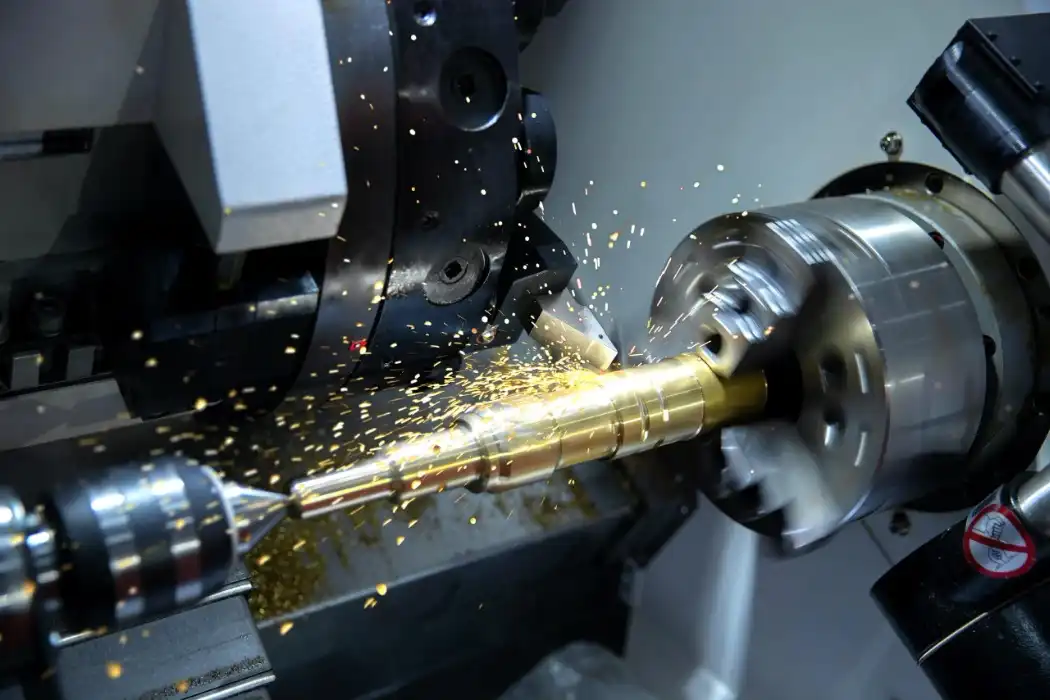
Brass C360 — Excellent machinability and natural lubricity suit hydraulic port connectors, valve bodies, and electrical terminals. Brass machines faster than steel, reducing per-part cost on high-volume orders.
Titanium Grade 2 / Grade 5 — High strength-to-weight ratio and biological inertness. Cost is higher, but aerospace and implant applications justify it.
Engineering Plastics (PEEK, Delrin, ABS) — Electrical insulation, chemical resistance, and weight reduction in specific environments.
When it comes to experience, it pays off to match the material to the application setting, not just the technical requirements. If a turning supplier has DFM, they will find any problems before production starts.
Avoiding Common Design Pitfalls
When turned, precision CNC turning parts thin wall pieces less than 1.5 mm bend, which leads to an out-of-tolerance width. When the length-to-diameter ratio is more than 10:1, the shaft needs a steady rest support to stay straight. Choosing a thread pitch that is too fine for a coarse-load fitting adds cost without improving its function. These problems are easy to fix when the drawings are still in the planning stage, but they cost a lot to fix once production starts.
Choosing the Right Precision CNC Turning Service Provider
A supplier's certification is the entry requirement. Their process control is what actually determines your part quality.
Certifications and Quality Systems to Verify
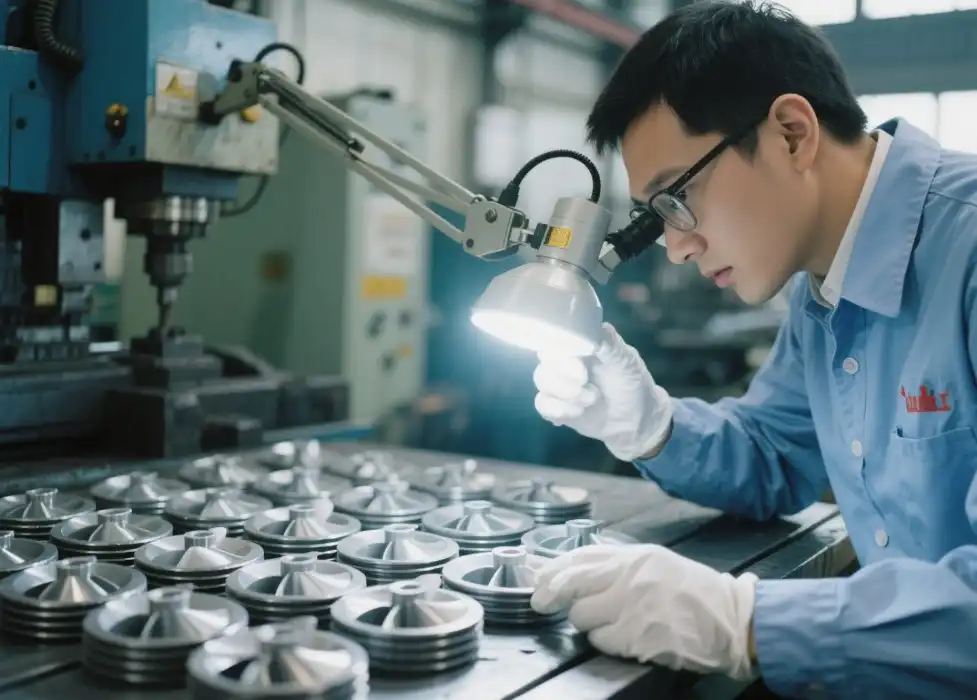
ISO 9001 covers general manufacturing quality management. ISO 13485 is required for medical device components. Ask for current certificates with validity dates, not logos on a website. Beyond certification, request a sample first-article inspection report from a previous project—this shows whether the supplier actually documents dimensional results or simply ships and hopes.
Evaluating Technical Capability
Confirm the supplier's diameter range, threading capability (metric and unified thread series), and CMM inspection availability. A supplier claiming ±0.005mm tolerance without CMM verification cannot prove conformance. Thread gauge calibration records and surface profilometer reports are the baseline documentation a serious OEM supplier should expect.
Comparing CNC Turning with Alternative Processes
CNC turning is the most cost-efficient process for cylindrical geometries up to Ø300mm. For prismatic parts with flat surfaces and pockets, milling is more appropriate. For extreme surface hardness requirements, cylindrical grinding follows turning as a secondary operation. A capable supplier will tell you honestly which process fits your part—not simply quote turning for everything.
How Precision CNC Turning Parts Drive Industry Efficiency?
When you use precision machining, you only remove the material that is needed for the geometry. This is different from casting or forging, which may need a lot of extra cleanup. Tighter control over dimensions means that when parts are put together, they fit without shimmying or hand-fitting, which cuts down on assembly work and guarantee returns. Lead times are cut without adding workers because automatic tool changers and live tooling make production runs faster. Manufacturers are starting to use Industry 4.0 methods, and CNC turning data (spindle load, tool wear, and cycle time) is being used to feed process improvement loops that make quality difference even smaller over time. The total cost of ownership goes down for procurement teams that manage yearly supply deals because of these efficiency gains.
Conclusion
Precision CNC turning parts are the building blocks of hydraulic systems, drivetrains, robotic assemblies, medical tools, and hardware for spacecraft. To choose the right turned part, you must first know what the application needs in terms of tolerance, material, thread standard, and surface finish. Then, you must find a supplier whose documented process capability matches those needs. There is a difference between qualified suppliers and commodity vendors based on DFM analysis, certified materials, and checked inspection records. If the repeat orders in your supply chain rely on the same sizes, the machining process and the provider behind it are just as important as the plan.
FAQ
What is the typical lead time for turned prototype parts?
Simple turned parts in aluminum or stainless steel ship within 3–7 working days from drawing approval. Complex multi-feature parts with threading, secondary finishing, and CMM documentation typically require 7–15 days depending on quantity.
How does CNC turning tolerance compare to grinding?
CNC turning achieves ±0.005mm on diameter for high-precision operations. Cylindrical grinding reaches ±0.002mm or better and improves surface finish to Ra 0.1μm. Grinding is used as a secondary operation when turning tolerance is insufficient—typically for hardened steel bearing journals.
Can I order both prototypes and production batches from the same supplier?
Yes, and it is advisable. Using the same supplier from prototype through production preserves process settings, material sources, and inspection records. This continuity eliminates the re-qualification time that results from switching suppliers mid-program.
What thread standards do CNC turning suppliers typically support?
A qualified supplier covers metric threads (M2–M100), Unified National Coarse (UNC), and Unified National Fine (UNF). Custom pitch threads are achievable with CNC lathes using programmable thread cycles.
How do I verify concentricity and roundness on turned shafts?
Request CMM reports showing roundness (circularity) and total indicator runout (TIR) at specified cross-sections. For hydraulic and motor shaft applications, TIR below 0.01mm is typically required. Go/No-Go gauges verify thread fit but do not measure these geometric characteristics.
Get Accurate Turned Parts from BOEN Rapid — Request a Quote Today
BOEN Rapid has been sending precision CNC turning parts to customers in the medical, robotics, automobile, and industry fields for more than 15 years. Our facilities are ISO 9001 and ISO 13485 approved, and they can make sizes from Ø3mm to Ø300mm with a tolerance of ±0.005mm. They can also handle metric and unified thread standards, and they keep full CMM records. We give DFM feedback within 24 hours and ship samples in 3–7 days because we are a trusted company that makes quality CNC turning parts. Send your plans to contact@boenrapid.com or go to boenrapid.com to begin your project right away.
References
1. Kalpakjian, S., & Schmid, S. R. — Manufacturing Engineering and Technology, Pearson, 2014.
2. Boothroyd, G., Dewhurst, P., & Knight, W. A. — Product Design for Manufacture and Assembly, CRC Press, 2011.
3. Modern Machine Shop — "CNC Turning Center Technology and Applications," Gardner Business Media, 2021.
4. International Organization for Standardization — ISO 2768-1: General Tolerances for Linear and Angular Dimensions, ISO, 2019.
5. Society of Manufacturing Engineers — Tool and Manufacturing Engineers Handbook, Volume 1: Machining, SME, 2016.
6. Precision Machining Technology, Hoffman, E., Hopewell, R., & Janes, B. — Cengage Learning, 2015.