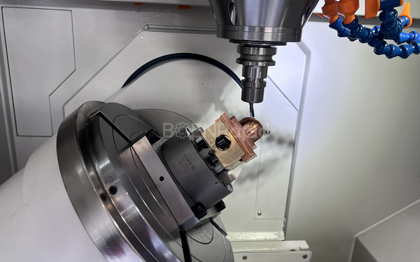
Why is stainless steel used for CNC milling?
Stainless steel is one of the most popular materials for stainless steel CNC milled parts, since it provides a unique combination of mechanical strength, corrosion resistance, and dimensional stability under demanding machining circumstances. Stainless steel CNC-machined parts are the reliable choice for meeting rigorous criteria that other metals just can’t match, whether for medical devices, food equipment, or industrial gear. Grades such as SS304 and SS316L provide their own set of benefits — from resistance to general corrosion to complete biocompatibility — so the choice of grade is a strategic one. Stainless steel is capable of holding tolerances down to ±0.01 mm when machined with precise toolpaths and suitable cutting settings, while preserving surface integrity.
What Makes Stainless Steel Ideal for CNC Milling?
To understand why engineers and purchasing managers choose stainless steel, you must understand the fundamental qualities of the material and how it behaves when machined
Mechanical Strength and Dimensional Stability
Stainless steel has a tensile strength of 515 MPa (annealed 304) up to more than 1,100 MPa in grades that have been toughened by precipitation. This strength directly supports the structural requirements of load-bearing sections in robotics, automotive systems, and industrial machines. Where assemblies require constant geometric precision throughout the production run, the parts must hold their shape under mechanical stress.
Corrosion Resistance Backed by Material Science
Ordinarily, stainless steel contains a minimum of 10.5% chromium, which creates a passive oxide layer that repairs itself in oxidizing situations. The addition of 2-3% molybdenum greatly improves the resistance of SS316L against chloride pitting and acidic environments. This resistance translates directly to extended service life and fewer field failures for chemical processing equipment, maritime gear, and pharmaceutical items.
Grade-Specific Machinability Considerations
Each grade may be machined in many ways. Adding sulfur to SS303 improves machinability, cycle time, and tool wear for less critical fittings. SS304 and SS316L work-harden fast on cutting. Machines need to be tightly set up, carbide tools need to be extremely sharp, and cutting speeds need to be regulated. Choosing the proper grade at the design stage may save money on needless cutting and yet provide the rust resistance required for the application.

Benefits of Using Stainless Steel CNC Milled Parts
Once you choose the proper grade, CNC milling provides a number of production advantages that are difficult to achieve by casting or forging.
- These are the primary reasons why precision-milled stainless steel CNC milled parts are the preferred option amongst company buyers:
- Tight tolerance capability: CNC milling consistently produces ±0.02 mm on general features and ±0.01 mm on essential dimensions. This level of dimensional control is important for medical device housings, IVD instrument frames, and precision fluid handling components where assembly clearances are measured in microns.
- Surface finish choices to suit application: Machined surfaces are generally between Ra 0.8 and 1.6 μm. Electropolishing may get it down to below Ra 0.2 μm, fulfilling the surface standards of the sanitary and semiconductor grade. ASTM A967 passivation eliminates free iron incorporated in machining, restoring passive oxide and avoiding rouging in sterile conditions.
- Tooling investment-free design flexibility: CNC milling does not need hard tooling as injection molding or die casting does. Design modifications during prototyping or V&V are implemented quickly, which directly reduces the timeline from design freeze to regulatory submission.
CNC milling is capable of holding extremely tight tolerances, routinely ±0.02 mm on general features and ±0.01 mm on critical measures. This degree of size control is critical for medical device enclosures, IVD instrument frames, and precision fluid handling components where assembly clearances are measured in microns.

Comparing Stainless Steel with Other Materials in CNC Milling
Stainless steel isn't always the easiest metal to work with, but in the toughest situations, its success makes up for the extra work.
Stainless Steel vs. Aluminum
Aluminum is three to four times faster to work with than stainless steel, and it costs less per kilogram. In tough chemical or sterile conditions, though, aluminum's tensile strength, hardness, and resistance to corrosion are not nearly as good. Surgical tools, pump housings, and other parts that need to be sterilized in an autoclave must be made of stainless steel.
CNC Milling vs. Casting and Forging
Casting and forging are good ways to get near-net forms in large quantities, but they leave surface porosity, grain instability, and dimensional differences that need to be fixed with more cutting. CNC milling gets rid of all porosity, makes geometric tolerances tighter from the start, and can handle low to medium volumes without the lead time or tooling costs of casting dies.
CNC Milling vs. Laser Cutting
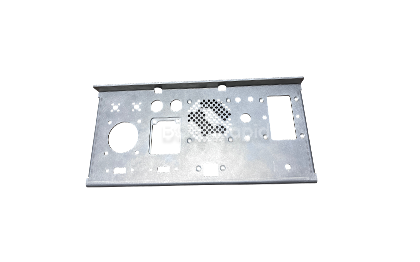
Laser cutting is great for making flat profiles out of sheet metal. CNC milling, especially 4-axis and 5-axis machining, can handle more complicated parts than laser cutting can, like three-dimensional parts with pockets, bores, threaded features, and shaped surfaces. Multi-axis setups make it possible to machine all the important parts in a single clamping, which lowers the risk of positional error and the work that needs to be done for inspection.

Procurement Insights: Choosing Stainless Steel CNC Milled Parts
People who work in procurement and get precision stainless steel CNC milled parts often talk about the same main risks: grade substitution, variation from batch to batch, and suppliers whose quality systems don't hold up under formal audit. The seller approval stage is where these risks are first dealt with.
Verifying Material Certification and Traceability
Each heat batch is accompanied by a Material Test Report (MTR) from a credible source certifying the alloy's chemistry and stating the amount of nickel and molybdenum it contains. XRF verification is usually used during the arrival inspection by buyers with ISO 13485 certification. This is a recognized difficulty in the business due to grade mix-ups ( e.g., using grade 304 instead of 316L). Batch tracking allows each final item to be tracked back to the certificate of its raw material and cutting record.
Quality System Requirements for Regulated Industries
ISO 13485 approval is not a choice for medical device OEMs; it is a requirement for suppliers to meet. Controlling documents, handling nonconforming products (NCR/CAPA), notifying engineering changes (ECN), and keeping records of the process proof must all be part of the quality system.
Lead Time and Prototyping Expectations
Suppliers who can provide a completed Supplier Qualification questionnaire, quality manual, and sample inspection reports make it much easier for the buyer to do an audit.

Common Applications of Stainless Steel CNC Milled Parts in B2B Industries
Many different industries employ precision-machined stainless steel parts, each having particular demands for the material and the manner it is manufactured.
SS316L is the standard for surgical tool bodies, IVD instrument frames, and implantable device housings since it doesn’t break down when sterilized several times. 304 and 316 grades comply with FDA sanitation regulations for food and drink equipment, and CNC cutting produces smooth forms that assist clean-in-place (CIP) systems to perform well. Robotics and automation need stainless steel structural sections and joint pieces. The dynamic performance is closely related to the accuracy of the dimensioning. 316L is utilized for valve bodies, sensor housings, and fluid manifolds in maritime and chemical processing equipment that will be exposed to seawater or harsh process fluids. Precision milling may help to provide protective materials and clean surfaces that are suitable for electronics enclosures.

Conclusion
Stainless steel CNC milled parts are a very popular option because it possesses a combination of properties that few other materials can match under regulated, demanding, or precision-critical circumstances. Choosing the proper grade, surface treatment, and the supplier’s quality infrastructure directly affects how well completed parts perform as designed. For procurement managers, engineers, and original equipment manufacturers (OEMs), working with a supplier that can machine parts and has established quality processes decreases the technical risk and audit expenses throughout the product development cycle.
FAQ
1. What is the best stainless steel grade for corrosive environments?
SS316L is usually the best choice for places that are chloride-rich, acidic, or sterilizable. Compared to SS304, its molybdenum content makes it less likely to pit. When 316L is electropolished, it makes the surface resistant to chemicals and meets sanitary standards for use in food contact and pharmaceutical applications.
2. What tolerances can CNC milling achieve on stainless steel?
In general, ±0.02 mm accuracy is reached with standard CNC cutting on stainless steel. Tolerances of ±0.01 mm can be reached for critical measurements like hole sizes, mating surfaces, and positional tolerances when the right tools and checking methods are used. Full-dimension inspection records can be used to make sure that the work matches the customer's plans.
3. What is the typical lead time for custom stainless steel machined parts?
Depending on the shape and surface treatment after machining, prototype lead times are usually between 3 and 15 working days. Most low-volume production runs are finished in two to four weeks. The first review of the RFQ is done in 24 hours.
4. Is passivation required after CNC machining?
Yes, during machining, tiny bits of free iron from the cutting tools are embedded into the surface of the part. Passivation according to ASTM A967 gets rid of these impurities chemically and restores the chromium oxide inactive layer, which is needed for uses in medicine, food, and drugs.
5. Does BOEN Rapid provide material test reports?
Yes, BOEN Rapid sends out MTRs for all material heat lots to confirm the alloy's chemistry. For companies in controlled industries and for ISO 13485 audit needs, full-dimension inspection reports and batch traceability records are available.
Request a Quote from BOEN Rapid — Your Stainless Steel CNC Milled Parts Supplier
BOEN Rapid offers precise stainless steel CNC milled parts made of stainless steel. Their methods are ISO 9001 and ISO 13485 certified, and they provide full MTR paperwork. Prototypes are delivered in 3–15 business days. Our engineering team looks over your drawings within 24 hours, whether you need 304 food-grade housings or SS316L medical parts. To begin, email your RFQ to contact@boenrapid.com.
References
1. ASM International. ASM Handbook, Volume 16: Machining. ASM International, 1989.
2. ASTM International. ASTM A967: Standard Specification for Chemical Passivation Treatments for Stainless Steel Parts. ASTM International, 2017.
3. ASTM International. ASTM A276/A276M: Standard Specification for Stainless Steel Bars and Shapes. ASTM International, 2017.
4. ISO. ISO 13485: Medical Devices — Quality Management Systems — Requirements for Regulatory Purposes. ISO, 2016.
5. Kalpakjian, S., & Schmid, S. R. Manufacturing Engineering and Technology. 7th ed. Pearson, 2014.
6. Boothroyd, G., Dewhurst, P., & Knight, W. A. Product Design for Manufacture and Assembly. 3rd ed. CRC Press, 2010.