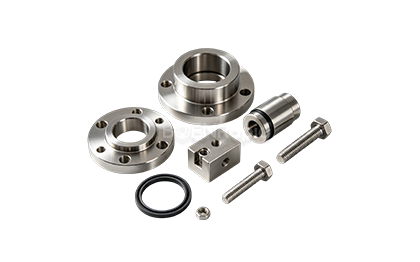
CNC Milling Components: Optimizing Performance and Reducing Lead Times
As your project schedule is tight and part quality cannot suffer, the manufacturing process you pick is critical. Precision CNC milled components are machined parts that are manufactured using high-speed rotary cutters under the guidance of computer numerical control technology. The material is removed in layers to achieve tight dimensional tolerances and immaculate surface finishes. At BOEN Rapid, we build these components on 3-axis to 5-axis platforms, with holding tolerances of ±0.01-0.02 mm and surface roughness down to Ra 0.4 μm. Whether you need one prototype or a batch of 200 bespoke housings, this guide takes you through what matters most.
Understanding Precision CNC Milled Components and Their Benefits
Cutting metal is just one aspect of CNC milling. Digital designs are converted into precisely machined components via a precise, repeatable process using computer-controlled equipment. Knowing the fundamentals of CNC milling enables you to choose the best supplier and establish reasonable standards for part accuracy and quality.
How the Milling Process Works
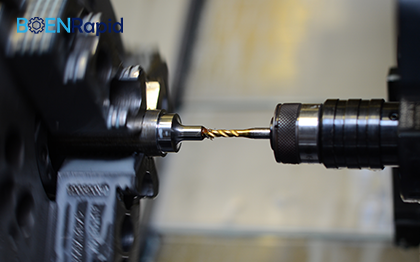
The cutting tool then whirls at high speed. A CNC milling center prepares axes that carry the workpiece through space. A. The machine reads the G-Code created from your CAD/CAM file and cuts material away in regulated increments. Every pass is based on a predetermined toolpath, so the deviation of the dimensions remains in the acceptable range for the whole run.
Achievable Tolerances and Surface Quality
Standard CNC milling should be able to handle a tolerance of ± 0.02 mm for most forms. The proper fixtures and equipment enable you to retain key features like bearing bores and sealing faces to ±0.005 mm. It begins at Ra 1.6 μm for rough machined surfaces and ends up at Ra 0.4 μm after the fine finishing passes. These statistics are not a guess; they are backed up by CMM inspection reports that accompany every order.
Materials Covered
BOEN Rapid may be used on a wide variety of materials including aluminum alloys (6061 and 7075), stainless steel (304 and 316), carbon steel, brass, copper, and industrial plastics such as PEEK, POM, PTFE, and Nylon. For each operation, the toolpath approach, feed rate, and coolant choice are adjusted since various materials respond differently to heat and cutting forces. Aluminum can take rough feeds for fast cycle times, whereas PEEK requires precise tools and less heat to prevent surface degradation.

Optimizing CNC Milling Performance and Lead Times: Challenges and Solutions
Many organizations lose customers during lead time. The speed at which the machines operate in a business is not always the only factor in how long it takes to send the final product after you have sent your sketch.
Common Bottlenecks in CNC Workflows
A lot of the time you really spend doing anything is setup, creating fixtures, and changing equipment for precision CNC milled components. According to research published by the International Journal of Advanced Manufacturing Technology, low-volume job shops may account for 30–50% of total machine time on non-cutting time. You cut this number and your lead time will go down instantly.
How Multi-Axis Machining Cuts Setup Time
Five-axis machining centers tilt and rotate the workpiece during cutting, allowing them to reach complicated angles without reclamping. At BOEN Rapid, complex brackets and valve bodies that used to need three separate sets may now be manufactured in one. Less set-up time implies less chance of alignment problems and quicker throughput. A medical device integrator was required to do five distinct face procedures on a housing. Compared with the initial 3-axis sequence, one single 5-axis set-up reduced the manufacturing time by about 40 %.
Process Standardization and Fast Quoting
Our engineers can accelerate toolpaths utilizing standardized CAM templates for common material and process combinations. Send us a STEP or IGS file and our team will review the manufacturability and respond within 48 hours with a full quote. This speed is critical when your project manager requires pricing to complete a list of providers before a bid deadline.

Comparing Precision CNC Milling With Other Manufacturing Methods
The selection of a production process is both an engineering and commercial decision. Here are several typical alternatives to CNC milling for performing modest to medium quantities of accurate work.
CNC Milling vs. Injection Molding
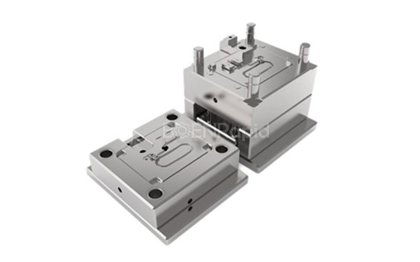
Injection molding can manufacture a lot of things fast, but you need hard equipment that costs thousands of dollars and takes weeks to construct. If you just need a few thousand pieces, or your concept is still evolving, CNC cutting saves you the money required to acquire tools. “You can change the shape without having to throw away a mold and get the first parts faster.
CNC Milling vs. CNC Turning
Turning is good for manufacturing things shaped like cylinders, such as shafts, bushings, and threaded fittings. Milling allows you to deal with angular and free-form shapes that a lathe doesn’t. Both are beneficial for numerous parts, cutting features for holes, pockets, and flat faces, and turning features for circular portions. BOEN Rapid can turn and grind, so both operations are done in-house.
CNC Milling vs. 3D Printing (Metal Additive)
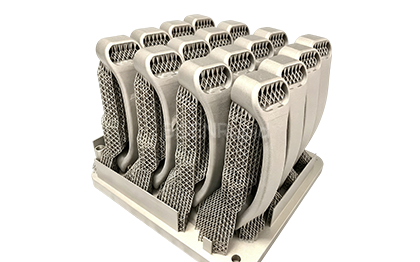
Metal additive manufacturing enables you to create parts with interior channels and organic forms, but they frequently need additional work after they’re manufactured to achieve the surface polish and tolerances of a milled item directly off the machine. For fluid manifolds and housings that need to be built to accurate specifications and verified materials, CNC milling remains the most trustworthy choice for structural brackets.

How to Choose the Right Supplier for Precision CNC Milled Components
Not every machine shop can meet project deadlines for small-batch orders of a lot of different types of parts. Here are some ways to tell the difference between suppliers who can help and those who will slow things down.
Certifications and Quality Documentation
Getting ISO 9001 certification means that you have a written quality control system for precision CNC milled components. The quality requirements for medical devices that regulators want are added by ISO 13485. BOEN Rapid has both. For aerospace and military users, it is necessary to be able to provide CMM full-dimensional reports, material certificates, and first article inspection (FAI) paperwork. Before you place your first order, ask any possible seller to show you an example of an inspection report.
Engineering Access and Drawing Confidentiality
One thing that bugs automation integrators a lot is when technical questions get pushed down the sales chain before they reach an engineer. At BOEN Rapid, our customers talk to our process engineers directly. Before plans are shared, non-disclosure agreements (NDAs) are signed, and we have strict rules against cross-quoting to keep your design from getting to rivals.
Flexibility for Small Batches and Partial Deliveries
Our normal range for batch sizes is 20 to 200 pieces. We can do phased deliveries that are tied to your project's milestones, and we'll let you know ahead of time if a material substitution or process change is needed. We'll never make changes without your permission.

Applications and Industry Use Cases of Precision CNC Milled Components
Tightly toleranced cut parts are used in many fields where physical accuracy is important for function.
- Aerospace structural brackets: Aluminum 7075 components machined to GD&T callouts, shipped with material certifications and CMM reports for traceability.
- Medical device housings: Stainless steel 316L enclosures held to ±0.01 mm on critical sealing surfaces, produced under ISO 13485 process controls.
- Hydraulic manifolds and valve bodies: Multi-port fluid blocks with intersecting drilled passages and threaded ports, requiring leak-proof mating surfaces and precise port positioning.
- Robotics motor housings and sensor brackets: High-volume, repeatable aluminum parts where consistent bore diameters and mounting hole patterns directly affect assembly alignment.
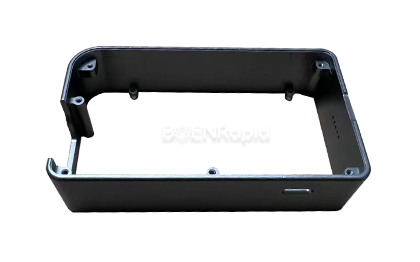
- Electronics enclosures: Precise connector cutouts and display apertures where clean edges and accurate positioning prevent assembly rework.
All of these areas need the same thing: the part has to arrive the first time with the right dimensions, because parts that are late or wrong slow down whole production lines.

Conclusion
CNC machining is still one of the most dependable techniques to produce parts that are precise and perform well over a wide range of materials and geometries. Multiple-axis setup reduces errors, and stringent process controls guarantee consistent sizes, and comprehensive inspection documentation provides you with the peace of mind to send parts directly into crucial assemblies. If you’re looking for custom machined precision CNC milled components for an automation project, need to check out a new supplier of parts for a military program, or need to make a prototype of a medical enclosure, working with the proper manufacturing partner makes it quicker and less hazardous.
FAQ
1. What tolerances can CNC milling realistically achieve?
For most part shapes, standard CNC milling holds ±0.02 mm. Tolerances of ±0.005 mm can be reached for important parts like bearing seats, sealing faces, or precision bores by using the right fixtures and finishing passes. Always write down the tolerances you need on the drawing so the supplier can make sure it's possible before giving you a quote.
2. How long does it take to receive milled parts?
Lead time varies on how complicated the part is, how much material is available, and the size of the batch. Prototype parts are usually sent out by BOEN Rapid within 3–15 business days. Most low-volume production runs are finished in two to four weeks. If you tell us your goal ahead of time, we can make plans to meet it.
3. Can CNC milling handle complex geometries that other processes cannot?
Yes. Five-axis machining can work with curved surfaces, undercuts, and compound angles that three-axis setups and most other subtractive processes can't. Because of this, it works really well for aircraft braces, hydraulic manifolds, and medical housings that need to connect multiple surfaces tightly.
4. What file formats do you accept for quoting?
BOEN Rapid works with PDF, STEP, IGS, and DWG files. For 3D geometry, STEP files are best. For pricing and review, a 2D drawing with GD&T callouts along with the 3D file gives the most complete picture.
Partner With BOEN Rapid for Your Next Precision Machining Project
For more than 15 years, BOEN Rapid has provided high-precision CNC milled parts to companies in the automobile, robotics, aircraft, and medical device industries. As a reliable company that makes precision CNC milled components, we back up every order with processes that are ISO 9001- and ISO 13485-certified, direct engineering communication, handling of drawings that are protected by NDAs, and full documentation of CMM inspections. Send us your drawings right now, and we'll get back to you within 48 hours with a full price.Email: contact@boenrapid.com
References
1. Boothroyd, G., Dewhurst, P., & Knight, W. A. — Product Design for Manufacture and Assembly, CRC Press, 2010.
2. Kalpakjian, S., & Schmid, S. R. — Manufacturing Engineering and Technology, Pearson, 2014.
3. Tönshoff, H. K., & Denkena, B. — Basics of Cutting and Abrasive Processes, Springer, 2013.
4. International Journal of Advanced Manufacturing Technology — "Non-cutting time reduction strategies in CNC job shop environments," Springer, 2018.
5. ASM International — Metals Handbook: Machining, Vol. 16, ASM International, 1989.
6. ISO 9001:2015 — Quality Management Systems — Requirements, International Organization for Standardization, 2015.