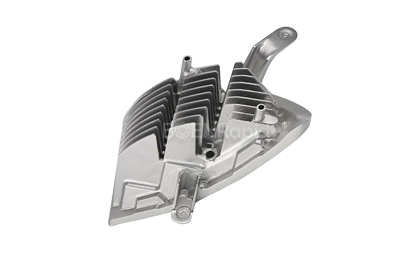
4-Axis Machining parts
Details
Precision 4-Axis Machining Parts | Advanced CNC Manufacturing Services
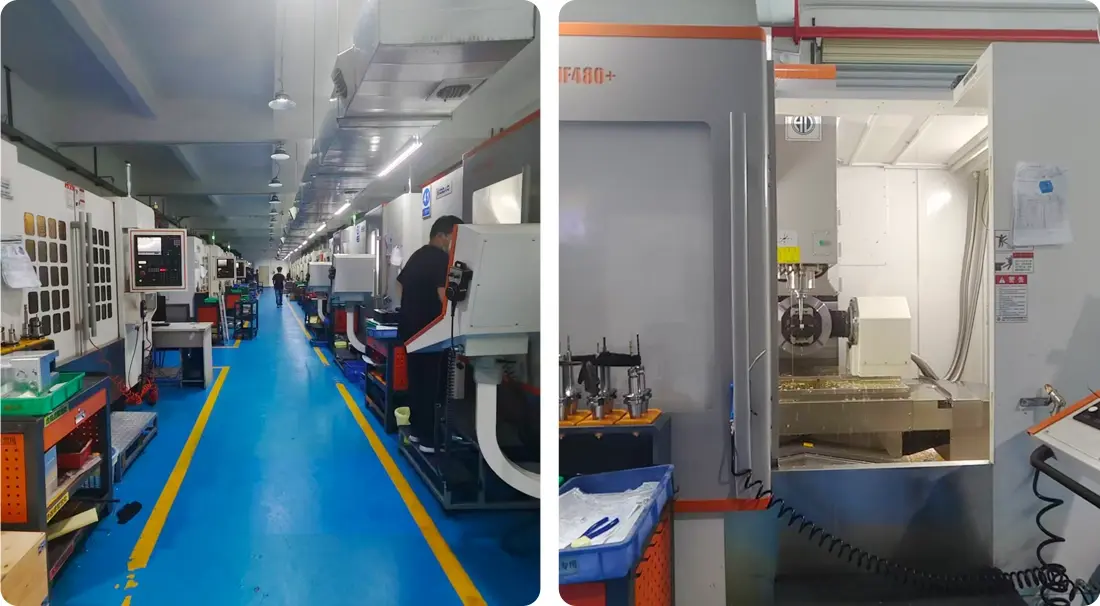
DongGuan Bohao Industrial Co., Ltd. delivers enterprise-grade 4-Axis Machining parts engineered for complex geometries and multi-sided processing requirements. With our 4-axis CNC capabilities and over 15 years of experience in precision production, we are able to minimise setup times by 60% compared to traditional 3-axis operations, while achieving tolerances of ±0.005mm. Our ISO 9001 and ISO 13485 certified facilities machine aluminium, stainless and titanium and technical plastics with CMM inspected dimensional correctness. Standard prototype delivery is 3–15 working days, low-volume production is 2–4 weeks, for the automotive, aerospace, medical device, and robotics industries worldwide.
What Are 4-Axis Machining Parts?
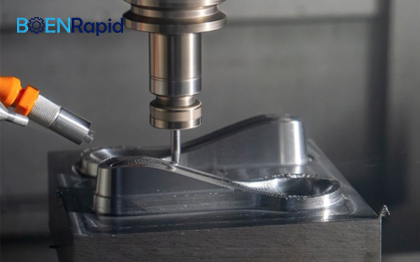
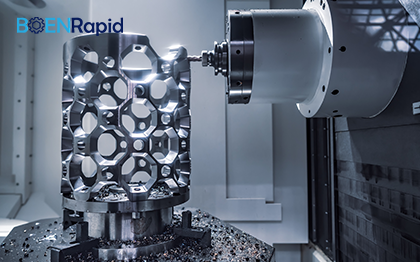
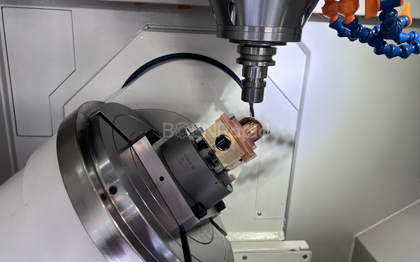
These are goods made by CNC machining and the rotating axis is added to the linear X, Y and Z axes (A axis or B axis). The extra axis allows the workpiece to be turned continuously as it is being cut.
The technology tackles key manufacturing problems. Complex geometries requiring slanted features, curved surfaces or multi-face processing generally need numerous setups and hand repositioning. Each repositioning brings alignment issues and prolong production cycles.
Our 4-axis systems remove these inefficiencies. The work piece alignment during machining processes is maintained by the rotary axis. This guarantees the geometric uniformity of all surfaces and reduces the human errors related to manual handling.
You gain from efficient workflows. What took 4 to 6 distinct setups to complete can be done in 1 or 2. This consolidation has a direct impact on reducing labour costs and improving turnaround times.
Technical Specifications
| Parameter | Specification |
|---|---|
| Machining Type | 4-Axis CNC Milling with Rotary Axis |
| Axis Configuration | X, Y, Z Linear + A/B Rotational Axis |
| Materials Supported | Aluminum Alloys, Steel, Stainless Steel 303/316, Titanium, ABS, PEEK, Nylon |
| Tolerance Capability | ±0.005mm to ±0.05mm (Depending on Geometry) |
| Surface Finish | Ra 0.4µm – Ra 3.2µm |
| Maximum Part Dimensions | 600mm × 400mm × 300mm (Standard Capacity) |
| Production Volume | Prototypes to 10,000+ Units |
| Quality Standards | ISO 9001, ISO 13485, ASTM, DIN, JIS Compliant |
Key Advantages of 4-Axis Machining
Improved Machining Efficiency
The continuous rotary axis eliminates any downtime between setups. Your parts go from raw material to final component in far fewer operations. On parts with angles or curves, manufacturing cycles are reduced 40 to 50 percent.
Better Accuracy for Multi-Sided Parts
Processing in a single setup maintains constant datum references on all machined surfaces. This removes all the accumulated inaccuracies in placement for different setups. Offers excellent fit and function in assembly applications.
Less Manufacturing Time
Less setups = faster project completion. Our 4-axis systems machine complex features in minutes, not hours. If necessary, rush prototypes ship within 3-5 business days.
Decreased Manufacturing Costs
Consolidated operations mean less labour and less fixture investment. You pay for productive cutting time, not for setup and re-positioning. You’ll save 25–35% compared to identical 3-axis workflows.

Applications Across Industries
Aerospace Components
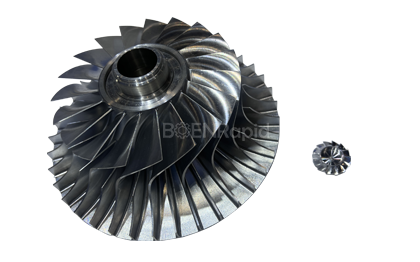
4-axis precision is useful for turbine housings, mounting brackets, and structural components with compound angles. We machine aluminium 7075 and titanium Ti-6Al-4V alloys to aerospace tolerances.
Manufacturing of Medical Devices
Surgical tools, orthopaedic implant components and diagnostic equipment housings need biocompatible materials and micron-level accuracy. Medical grade parts are manufactured to ISO 13485 approved techniques for regulatory compliance.
Automotive Prototyping
Engine components, gearbox housings and bespoke brackets with complex geometries are moving from design to testing phases faster and faster. You prove out form, fit and function before tooling investments.
Robotics & Automation
4-axis operations efficiently machine actuator housings, sensor mounts and gripper components with angled attachment points. For weight-sensitive applications we provide aluminium and engineered polymers.
Our Manufacturing Process
Design Review and DFM Analysis
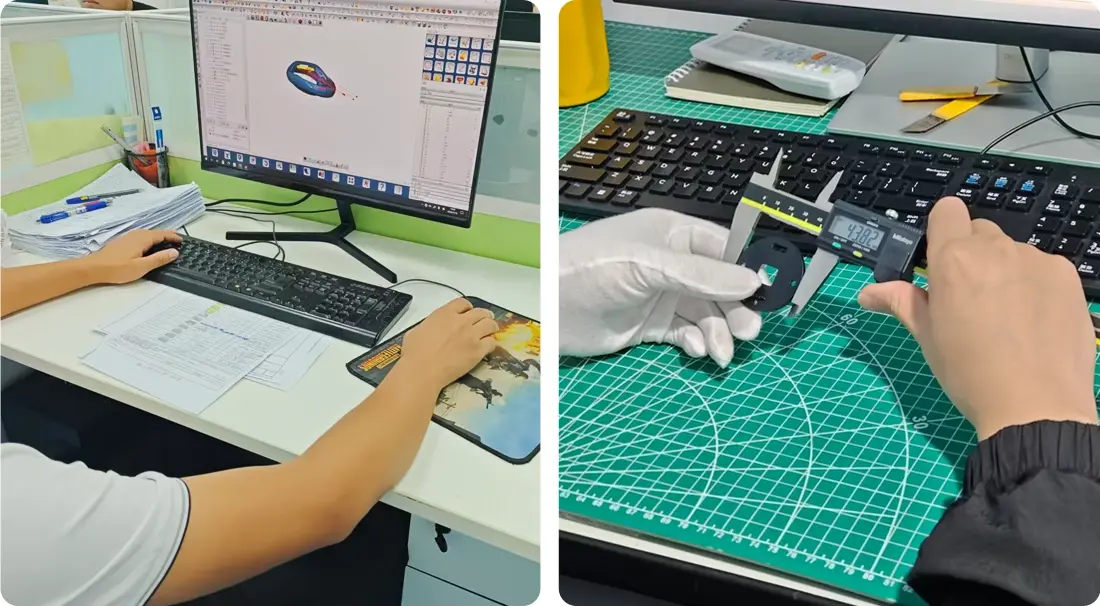
Our technical team will review your CAD files within 24 hours. We highlight chances for better geometries for 4-axis processing, suggest alternatives in materials, and explain tolerance requirements.
Precision Machining Services
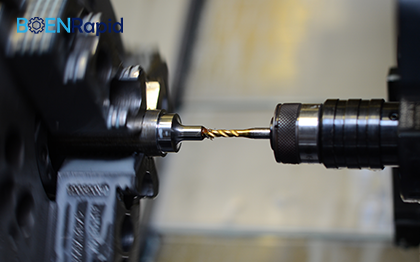
Your designs are programmed utilising optimised tool paths and cutting parameters for advanced 4-axis CNC systems. Tool life and surface quality are helped by high-pressure coolant systems and variable-helix end mills.
Inspection of Quality
CMM dimensional verification, surface roughness testing and visual examination confirmed compliance with specifications. You will get detailed inspection reports, with material certificates upon request.
Surface Treatment and Assembly
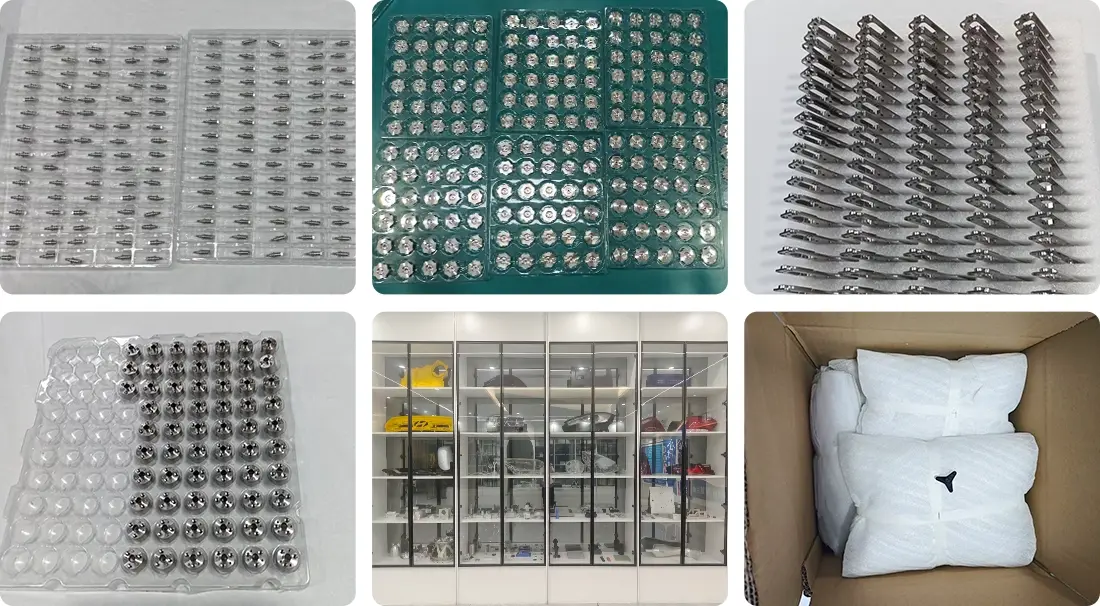
Anodizing, powder coating, passivation, and custom finishes complete your 4-Axis Machining parts. We provide precision assembly services when your project requires multi-component integration.
FAQ
Q: What is the difference between 3-axis and 4-axis CNC machining?
A: 3-axis systems move cutting tools along X, Y, and Z linear axes only. They excel at flat or prismatic geometries but require manual repositioning for angled features. 4-axis machines add a rotational axis (A or B), enabling continuous workpiece rotation during cutting. This eliminates multiple setups for parts with curved surfaces, angled holes, or features on multiple faces.
Q: When should I use 4-axis machining?
A: Choose 4-axis processing when your design includes angled features, radial patterns, helical grooves, or requires machining on multiple part faces. It's particularly valuable for cylindrical components, complex brackets, and parts where maintaining tight tolerances across different surfaces is critical. If your current 3-axis process requires more than two setups, 4-axis likely reduces costs and improves accuracy.
Q: What materials work best for 4-axis operations?
A: We process aluminum alloys (6061, 7075), stainless steels (303, 316), carbon steel, titanium grades, brass, and engineering plastics (ABS, PEEK, Nylon). Material selection depends on your application requirements for strength, corrosion resistance, biocompatibility, or weight constraints. Our engineering team assists with material optimization during design review.
Q: How do tolerances compare to 3-axis machining?
A: The products typically achieve tighter tolerances than equivalent 3-axis multi-setup processes. Single-setup operations eliminate cumulative positioning errors from workpiece repositioning. We maintain ±0.005mm tolerances on critical dimensions while standard features hold ±0.025mm. Complex geometries benefit most from improved accuracy consistency.
Q: What are typical lead times for 4-axis projects?
A: Simple prototype parts ship within 3–7 working days after design approval. Complex components requiring specialized tooling or exotic materials extend to 10–15 days. Low-volume production runs (50–500 units) typically complete within 2–4 weeks depending on part complexity and finishing requirements.
Contact Us for Your Next Project
Ready to optimize your manufacturing with precision 4-Axis Machining parts? Contact our engineering team at contact@boenrapid.com for project evaluation and quotation within 24 hours.