3-Axis CNC Machining: How It Works and What Parts It Can Produce
3-axis CNC machining is one of the most widely adopted subtractive manufacturing methods in modern industrial production. By controlling a cutting tool along the X, Y, and Z linear axes, this process removes material from a solid block to create precise geometries — pockets, slots, holes, and contoured surfaces. Whether you need aluminum structural brackets or PEEK functional prototypes, 3-axis machining parts deliver consistent dimensional accuracy without the overhead of dedicated tooling. At BOEN Rapid, we leverage over 15 years of CNC production experience to help engineers and procurement teams source reliable, tight-tolerance components from prototype through low-volume production.
Understanding 3-Axis CNC Machining Technology
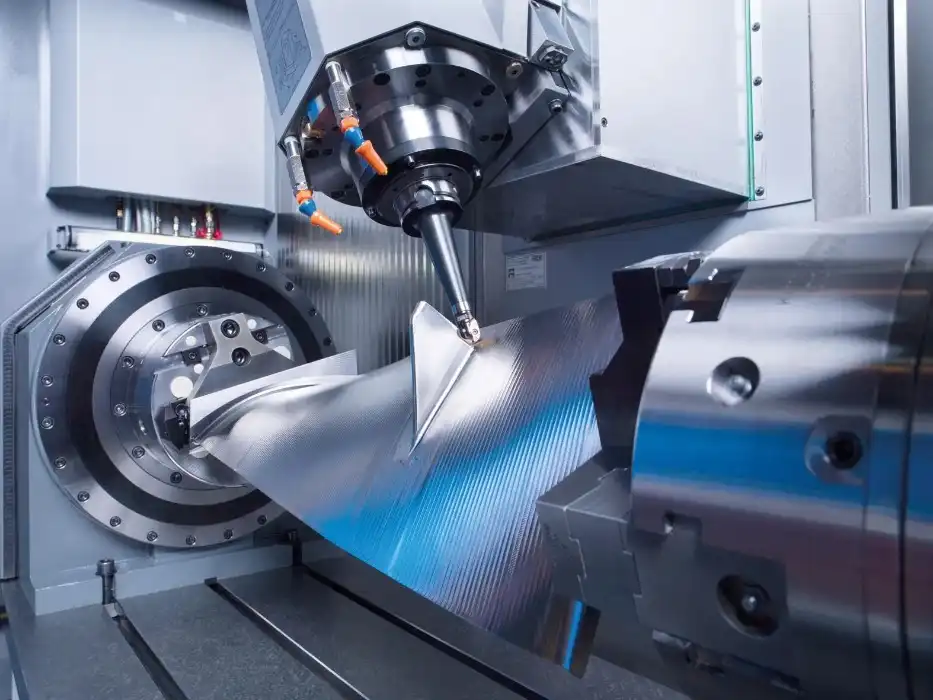
How the Three Axes Work Together
It moves along the X-axis (left to right), the Y-axis (front to back), and the Z-axis (up and down). The piece of work stays still on the table while the cutting tool follows pre-programmed paths. Flat surfaces, drilled hole arrays, rectangular pockets, and curved profiles can all be machined with tolerances as small as ±0.005 mm using this setup. The Manufacturing Engineering magazine from SME says that 3-Axis machining is still the usual method for making triangular parts because it has a good cycle time-to-accuracy ratio.
Materials Compatible with 3-Axis Processing
The choice of material affects both cost and function. Our machining tools at BOEN Rapid can work with a wide range of metals and industrial plastics, depending on your needs:
- Aluminum alloys (6061, 7075, and 2024): Strong, lightweight, and easy to machine. They can be used to make structural housings and jig bases, which are often needed in non-standard automation assemblies.
- Stainless steel (303, 304, and 316): Doesn't rust and is great for industrial equipment's frames, fittings, and parts that come into touch with fluids.
- Titanium (Grade 2, Grade 5): Has a high strength-to-weight ratio and is biocompatible. It meets ASTM F136 and AMS 4928 standards for use in medical and structurally demanding situations.
- Engineering plastics (ABS, Nylon, PEEK, Delrin, and PTFE): A cheap way to make functional prototypes and low-friction mechanical parts that don't need metal properties.
Every project our engineering team does a DFM (Design for Manufacturability) study on it. This helps you balance mechanical needs with the ability to machine the material and the total cost of procurement, which is a very important thing to keep in mind when handling yearly sourcing budgets for many SKUs.
Key Design Considerations and Geometric Limits
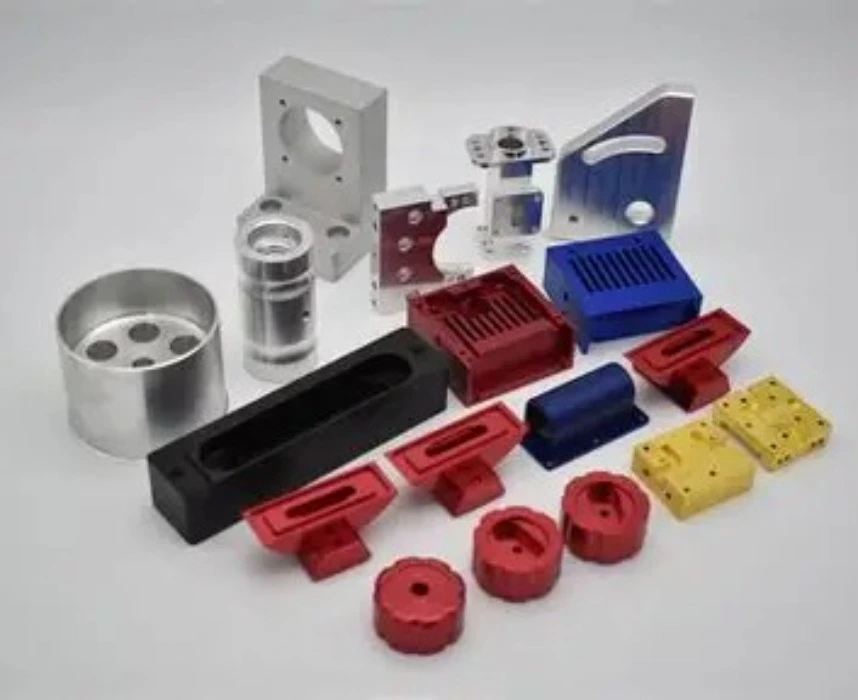
When all of the important parts of a part face up toward the spindle, 3-Axis cutting works best. Undercuts, features on opposite sides, and deep internal cavities that need tool access from more than one direction may need extra setups or a switch to 5-Axis processing. Practical design guidelines, like making sure that the minimum slot width is 1.5 times the tool diameter and that standard hole sizes are used, cut down on setup time and keep unit costs low, especially for repeat orders that range from one sample to 1,000 units.
Benefits and Applications of 3-Axis Machining Parts
Three things that keep 3-Axis machining parts at the center of industrial procurement decisions are accuracy, repeatability, and clear cost information. Compared to manual cutting, CNC automation gets rid of human variation, ensuring consistent batch-to-batch dimensions that can be proven by CMM inspection reports.
The main benefits of this production method that make it useful in many fields are listed below:
- No investment in tools: Unlike casting or injection molding, 3-Axis machining doesn't need molds to be made. This makes production cost-effective from a single prototype to more than 1,000 units, since there is no pressure to pay off fixed costs over time.
- Fast iteration cycles: Engineering changes are made straight to the CAM tool, which speeds up the iteration cycle. Functional testing can lead to changes in the design that can be put back into production within days, which speeds up the product development process.
- Surface finish versatility: Post-machining treatments like anodizing, powder coating, bead blasting, electroplating, and precision polishing give you more options for the surface finish's look and function without adding to the lead time.
These benefits take care of the real problems that buyers have when they have to deal with non-standard automation suppliers: tight delivery windows, frequent design changes, and orders with a lot of units that need to be priced per unit. 3-Axis machining parts like mounting plates, fixture bases, sensor brackets, actuator housings, valve bodies, and custom jig components are often made. These are the basic parts that make up whole machine assemblies.
Comparing 3-Axis Machining with Other Machining Methods
When to Choose 3-Axis Over 5-Axis
With 5-Axis machining, you can make features with compound angles and surfaces with complex shapes all in one setup. It has longer processing time and higher hourly machine rates. For most prismatic non-standard parts, like rectangular pockets, bolt-hole shapes, and stepped profiles, 3-Axis cutting gives the same level of accuracy at a much lower cost per part. The best way to cut down on manufacturing costs without lowering quality is to choose the right process for the part's actual geometry.
Evaluating Supplier Capability
When looking for CNC made parts, ISO 9001 approval shows that a supplier has a written quality management system. ISO 13485 applies this to places that make medical devices as well. Both licenses are valid at BOEN Rapid, and every package comes with inspection reports, material certificates, and dimensional records. Quality Progress (ASQ, 2022) says that buyers who check the certification status of suppliers before awarding contracts have much lower rates of parts that don't meet requirements.
Procurement Guide: Sourcing 3-Axis CNC Machining Parts
It takes more than just comparing unit prices to find solid 3-Axis machining parts CNC made parts quickly. Total purchase cost and supply chain security are affected by the following real-world factors:
- Certification and experience: A provider with 10 years or more of experience in precision machining and current ISO certification lowers the risk of qualification for new part numbers.
- Lowest order quantity (MOQ): BOEN Rapid can take orders as low as a single sample piece, which means we can work with the inquiry-to-trial-order procurement cycle that is popular in non-standard automation procurement.
- Lead time transparency: BOEN Rapid takes 3–15 working days to deliver a standard prototype, and 2–4 weeks to finish a low-volume production batch. Once you get a quote, these dates can't be changed after the fact.
- Logistics dependability: You can see the progress of shipments going through DHL, UPS, and FedEx. Protective packing rules keep dimensions from getting damaged during shipping.
After the first trial order, procurement teams can compare inspection reports to see if the dimensions match up and confidently place another order. Because we respond to RFQs 24 hours a day, even last-minute reorders don't stop assembly schedules.
Maintenance, Design Optimization, and Future Trends of 3-Axis Machining
Keeping Machined Parts Accurate Over Time
When stored properly, away from corrosive environments and mechanical impact, machined metal parts keep their shape. Surfaces made of anodized metal and coated steel last a lot longer. Checking the mating surfaces and threaded parts of high-cycle fastener parts on a regular basis can help find wear before it leads to assembly slip.
Design Optimization for Cost and Quality
Standardizing hole widths to common drill sizes, avoiding tight tolerances on non-critical features, and planning tool-clearance zones that are big enough all cut down on cutting time and cost per unit. Our DFM feedback lets us know about these chances before production even begins, which is especially helpful when it comes to keeping track of total costs across big annual procurement amounts.
Industry 4.0 Integration
Digital twin simulation, in-process measurement systems, and automated tool-condition monitoring are becoming more and more a part of CNC machining. These technologies raise the rate of first-article acceptance and lower the rate of scrap. Manufacturing Technology Insights (2023) says that when companies use real-time process tracking, physical non-conformances go down by up to 30%. BOEN Rapid keeps putting money into improving the production process to help customers who need uniform quality across multiple versions.
Conclusion
3-Axis machining parts are still the most useful and cost-effective way to make prismatic parts for non-standard automation, industrial equipment, and prototype development. As it doesn't require any equipment investment, has tight tolerances that can be repeated, works with a wide range of materials, and can be finished on the outside in a variety of ways, it's a good choice for engineers who need to get unique parts quickly. We have been making things for more than 15 years, are dual ISO certified, and can give you a quote within 24 hours. This makes BOEN Rapid a reliable manufacturing partner for both one-time prototype orders and high-frequency repeat production.
FAQ
What tolerances can 3-axis CNC machining achieve?
General tolerances of ±0.01 mm to ±0.05 mm can be safely reached with standard 3-Axis cutting. Critical dimensions can be held to tolerances as low as ±0.005 mm with the right fixturing and tooling strategies, which is what we do at BOEN Rapid.
What is the typical lead time for 3-axis machined parts?
Depending on the shape and material, prototype parts usually ship within 3–15 business days. Low-volume production runs are finished in two to four weeks. Lead times are confirmed when you get a quote.
Is 3-axis machining suitable for small batch orders?
Yes. At BOEN Rapid, there is no minimum order size. You don't have to pay for tooling for single-piece samples or small amounts of 1 to 1,000 units.
What surface finishes are available?
You can choose from different finishes, such as anodizing (Type II and Type III), powder finishing, bead blasting, electroplating, and precise polishing, based on your needs for function and style.
How do I submit a quote request?
You can send your drawings to contact@boenrapid.com or upload your CAD files at boenrapid.com. Within 24 hours, our tech team finishes the first review of a project.
Start Your Next Project with BOEN Rapid's Precision CNC Machining Services
As little as three working days, BOEN Rapid can deliver precise, production-ready 3-Axis machining parts made from aluminum, stainless steel, titanium, and industrial plastics. They can hold tolerances of up to ±0.005 mm and are certified by ISO 9001 and ISO 13485. As a reliable 3-Axis machining parts maker, we help with the smooth transfer from concept to production. Your quote will be sent to you within 24 hours after you upload your drawings to boenrapid.com or email our engineering team at contact@boenrapid.com to receive your quote within 24 hours.
References
1. Society of Manufacturing Engineers. Manufacturing Engineering Journal — "Three-Axis Machining: Process Efficiency and Tolerance Benchmarks." SME, 2021.
2. Kalpakjian, S., & Schmid, S. Manufacturing Engineering and Technology, 7th ed. Pearson, 2014.
3. American Society for Quality. Quality Progress — "Supplier Certification and Non-Conformance Reduction in B2B Procurement." ASQ, 2022.
4. National Institute of Standards and Technology. NIST Advanced Manufacturing Series — "Dimensional Metrology and CNC Process Capability." NIST, 2020.
5. Manufacturing Technology Insights. "Real-Time Process Monitoring in CNC Environments: Performance Impact Report." Manufacturing Technology Insights, 2023.
6. International Organization for Standardization. ISO 9001:2015 Quality Management Systems — Requirements. ISO, 2015.