Everything You Need to Know About 4-Axis CNC Machining
If you're sourcing precision components for robotics, automation equipment, or automotive assemblies, understanding 4-axis CNC machining is no longer optional — it's a competitive advantage. This guide breaks down how the technology works, where it outperforms other machining methods, and how to source quality 4-axis machining parts that meet your batch consistency and tolerance requirements. Whether you're a process engineer evaluating a supplier transition or a procurement manager building a quarterly framework, the insights here will sharpen your decision-making.
Understanding 4-Axis CNC Machining and Its Components
What Makes the Fourth Axis Different?
A standard 3-Axis CNC machine moves a cutting tool in straight lines along the X, Y, and Z axes. A 4-Axis system has an A-axis (or B-axis) that rotates and keeps turning the workpiece while it is being cut. This one feature changes what can be done in one setting in a big way. Angled bores, helical features, and multi-face profiles are some examples of complex geometries that no longer need to be repositioned by hand between operations. The piece of work stays in place, the datum references don't change, and the geometry is the same on all surfaces.
Materials and Part Types
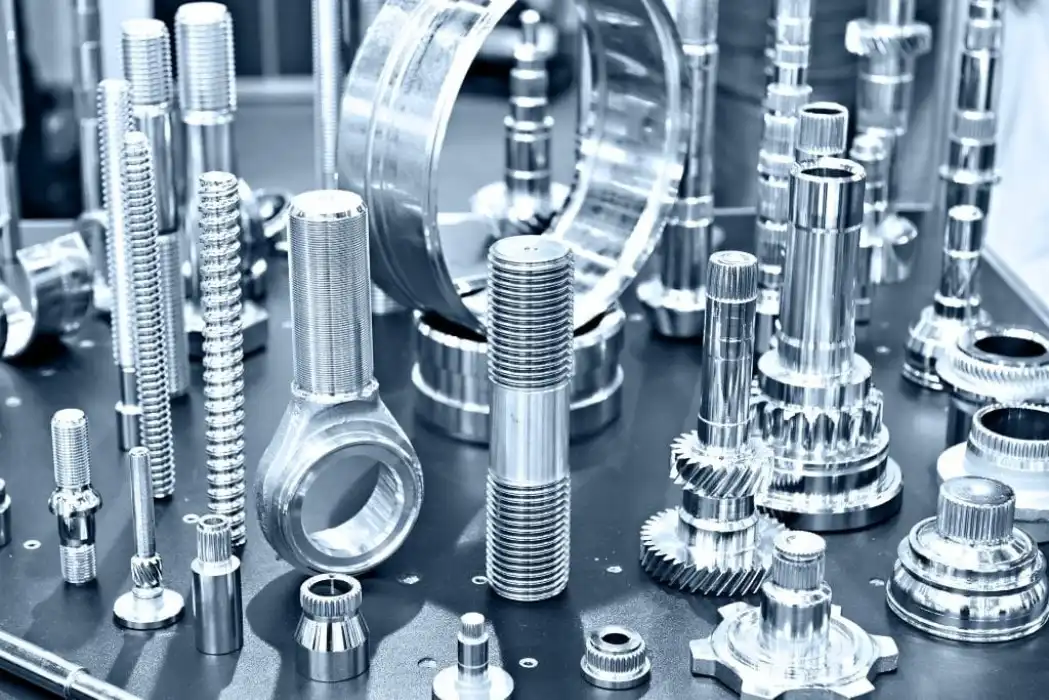
Stainless steel (303/316), titanium Ti-6Al-4V, engineering plastics like PEEK, Nylon, and ABS are just some of the materials that 4-Axis systems can work with. Because it is so flexible, the process works well for making actuator housings, sensor brackets, gripper arms, gearbox components, and structural mounts. These are the kinds of parts that make up mid-volume OEM and ODM manufacturing programs in robotics and industrial automation.
Comparing 4-Axis CNC Machining with Other Multi-Axis Solutions
Picking between 3-Axis, 4-Axis, and 5-Axis machining isn't just a matter of what you can do; it's also a matter of how much it costs and how complicated it is, which has a direct effect on your unit economics and wait time.
3-Axis machining works well for flat-faced and simple-profiled parts, but it doesn't work well when your design has angles or needs more than two setup orientations. Each extra setup adds to the alignment mistake and makes the cycle time longer. For parts with multiple sides or a helical shape, 3-Axis workflows usually need four to six separate operations, and each one can cause batch variation.
5-Axis machining gives you the most geometric freedom by moving multiple axes at the same time. However, it's more difficult to design and costs more per hour, which might not be worth it for 4-Axis machining parts with modest complexity that are made in batches of 100 to 10,000. Most of the time, the cost doesn't pay off unless your math calls for full simultaneous contouring.
In a sense, 4-Axis cutting is the middle ground. It can handle most of the complex angles and multiple faces that 3-Axis systems have trouble with, and it doesn't cost nearly as much as 5-Axis operations. When looking at quotes from suppliers, make sure the company has CMM inspection records, a stated tolerance capability (±0.005mm is possible on well-maintained 4-Axis equipment), and certification qualifications. ISO 9001 is a good starting point, and ISO 13485 is needed if your parts are going to be used in controlled assemblies.
Benefits and Applications of 4-Axis Machining Parts in B2B Manufacturing
It is not just a theory that 4-Axis processing makes things more efficient; they can be measured. When making things in large batches, these are the main benefits that matter:
- Setup consolidation: What used to take four to six separate hardware processes is now only one or two. This cuts down on the number of hours needed to work on each part and gets rid of the positioning errors that build up and lead to batch scrap. Manufacturers say that cycle times are 40–50% shorter for multi-face components than for similar 3-Axis processes.
- Datum integrity across surfaces: All machined surfaces share the same reference origin because the workpiece never moves from the fixture to the next operation. This makes geometric tolerances much tighter for things like perpendicularity, angularity, and true position, which is very important for parts that need to fit together properly at volume.
- Cost reduction at batch scale: Costs go down at the batch level because consolidated operations mean less work, fewer specialized fixtures, and faster machine usage times for each part. Over a production run of 500 to 5,000 units, the savings per unit add up to a lot. Compared to similar 3-Axis multi-operation workflows, benchmark tests show a 25–35% drop in costs.
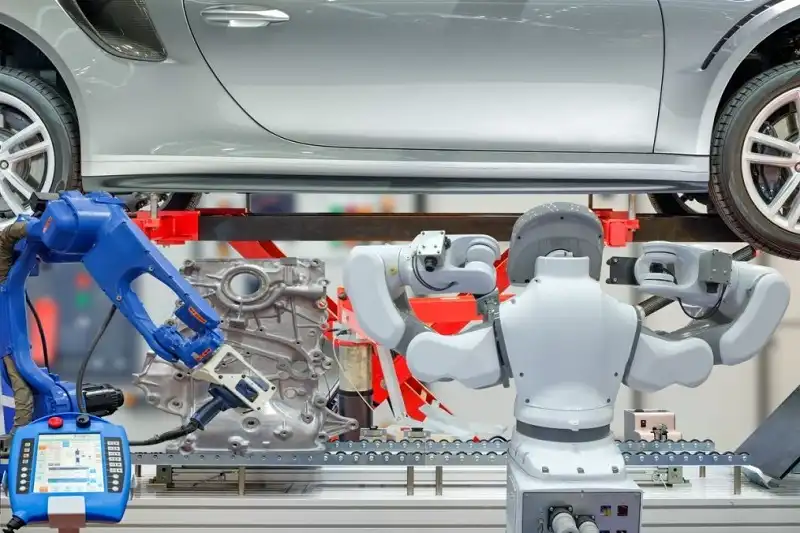
These benefits directly address the problems with quality and cost that often come up in mid-volume OEM buying. For robotics installers that work with actuator housings and mounting brackets or Tier 2 car suppliers that make gearbox parts, the consistent precision and lower scrap rate lead to gains that can be seen over three-month production runs.
Real-life uses include robotics (actuator housings, sensor mounts with compound attachment angles), automotive (engine brackets, transmission housings), aerospace (mounting structures with compound angles machined from aluminum 7075 or titanium) and medical devices, where the production of surgical instrument parts that are ISO 13485-compliant needs to be accurate to the micron level and have a documented process traceability.
How to Source and Procure Quality 4-Axis Machining Parts?
Getting good sources starts a long time before the RFQ. Usually, the steps for getting complex precision parts are process engineering evaluation, trial production, PPAP submission, and volume order release. At each stage, there are different requirements for suppliers to meet.
When looking for a 4-Axis machining parts supplier, these things should come first:
- Certification credentials: ISO 9001 certification proves that there are process control methods in place. If parts go into medical or controlled systems, they need to be ISO 13485-certified. Check to see if the qualifications are up-to-date and related to the job.
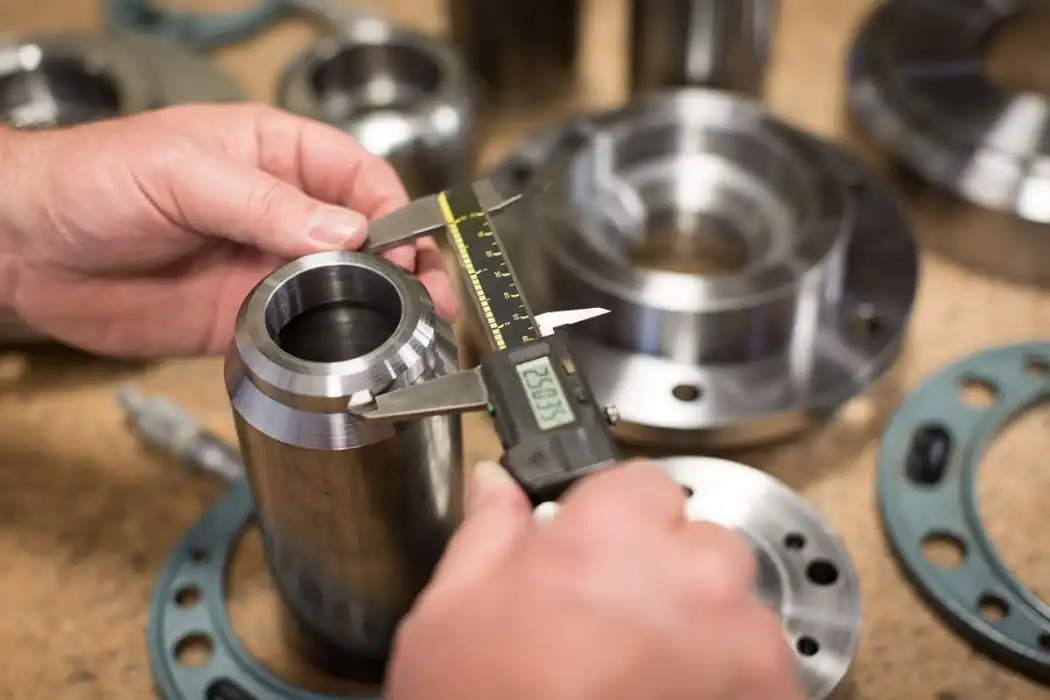
- CMM inspection capability and reporting: For batch qualification, full dimensional verification with written CMM reports is the norm. Find out if inspection records are included in the price or if you have to pay extra for them.
- DFM analysis response time: A good provider looks over your CAD files and points out problems with how they can be made before they start cutting. The fact that a 24-hour DFM turnaround shows both technical skill and quick account management is important.
- Batch consistency track record: Ask for recorded Cpk data or PPAP records from production programs that are similar to yours. A good benchmark is a consistent Cpk of 1.33 or higher across 500 or more unit runs.
Expected lead times: prototype parts usually ship within 3–15 working days, based on how complicated the design is; low-volume production runs of 100–5,000 units usually finish in 2–4 weeks. Plan your first-order qualification schedule accordingly. From RFQ to approved production release, most supplier transitions take 4–8 weeks.
Making Informed Decisions: Choosing the Right 4-Axis Machining Solutions
Not picking the wrong axis count is the most common buying mistake; sending in specs that aren't complete is. When there aren't clear tolerance callouts, missing datum references, or surface finish standards, providers have to make guesses that lead to extra work and delay PPAP approval.
Before sending out an RFQ, make sure that your models clearly show the GD&T requirements, the material grade and certification needs, the surface finish values (Ra in µm), the batch number, and the delivery schedule. Suppliers who can look at CAD files and do DFM analysis can find shape features that work better with a 4-Axis approach, like angled holes, undercuts, and spiral grooves, and suggest cheaper ways to make the part without sacrificing its function.
In the future, AI-assisted CNC toolpath optimization and automatic in-process gaging will change what is possible in precision production for medium volumes. In the near future, suppliers who invest in these skills will offer more consistent batches and faster PPAP cycles. This will make them stand out when your production program grows from trial orders to quarterly framework orders.
Conclusion
When OEMs and automation integrators buy complex, multi-face parts in medium to large quantities, 4-Axis machining parts give them a clear advantage. Less setups mean better geometric consistency, less waste, and lower costs per part, all of which directly improve your production economics. The important thing is to find the right method and a provider whose certifications, testing infrastructure, and DFM responsiveness meet your needs. With the right manufacturing partner, switching from 3-Axis processes with multiple steps to 4-Axis single-setup production is easy to do technically and makes good business sense.
FAQ
What tolerances are achievable with 4-axis CNC machining?
Tolerances of ±0.005mm can be reached for fine features on well-kept 4-Axis tools. Depending on the shape, material, and size of the part, general measurement limits are usually between ±0.01mm and ±0.05mm. Any batch where tight specs are practically important should have a CMM check done on it.
How does 4-axis machining reduce scrap in batch production?
With 4-Axis machining, the part stays in place during all processes, so there are no mistakes in moving that could lead to surface misalignment and dimensional shift. The main reason why batch scrap rates are lower than multi-setup 3-Axis workflows is that the datum stays the same across surfaces.
What is PPAP and why does it matter for precision component sourcing?
The Production Part Approval Process (PPAP) is a written qualification process that makes sure that a supplier's process always makes parts that meet specifications. In the supply lines for cars and robots, this is normal behavior. Usually, dimensional reports, material certificates, and process capacity data (Cpk) make up a full PPAP package.
When should I choose 5-axis over 4-axis machining?
When a part's geometry calls for simultaneous multi-axis contouring, like on complex turbine blades or surfaces with a lot of different shapes, 5-Axis machining is the only way to go. For many industry parts with multiple faces and compound angles, 4-Axis machining gives the same useful results at a lower cost per part.
Partner with BOEN Rapid for Precision 4-Axis Machining Parts
BOEN Rapid has been making precision parts for more than 15 years and has methods that are ISO 9001 and ISO 13485 certified, as well as specialized DFM technical help and CMM inspection. Our 4-Axis machining parts are trusted by customers in robotics, automotive, and automation. We can hold tolerances of up to ±0.005mm and deliver prototypes in 3–15 working days. Visit boenrapid.com or email contact@boenrapid.com to send us your CAD files. Within 24 hours, we'll get back to you with a detailed price.
References
1. Todd, R. H., Allen, D. K., & Alting, L. (1994). Manufacturing Processes Reference Guide. Industrial Press.
2. Kalpakjian, S., & Schmid, S. R. (2014). Manufacturing Engineering and Technology (7th ed.). Pearson Education.
3. Modern Machine Shop. (2023). "Multi-Axis Machining: When to Step Up from 4-Axis to 5-Axis." Modern Machine Shop.
4. SME (Society of Manufacturing Engineers). (2022). Fundamentals of CNC Machining. SME Publications.
5. Automotive Industry Action Group (AIAG). (2023). Production Part Approval Process (PPAP) Manual (4th ed.). AIAG.
6. Wohlers Associates. (2023). Wohlers Report 2023: Additive Manufacturing and Advanced Production Trends. Wohlers Associates.