5-Axis CNC Parts Manufacturing: The Guide To Precision, Cost & Supplier Selection
If you work in aircraft, medical devices, or military procurement, you already know normal machining typically falls short. Complex cavities, complex angles, and close tolerances need a different technique. This article has everything you need to know about 5-axis machining parts, including how they are created, what they cost, where they are used, and how to find a provider that can really deliver. Whether you are sourcing a single prototype or developing a long-term supply chain, the choices you make here have a direct impact on your product’s quality, compliance, and speed to market.
Understanding 5-Axis CNC Machining: Precision and Production Fundamentals
How 5-Axis Technology Works
In 5-axis CNC machining, a cutting tool is able to move along three straight axes, X, Y, and Z. It may also rotate around two additional axes, often A and B or A and C. This allows the tool to reach practically any angle on the surface without the need for manual manipulation of the job. You may make deep holes, undercuts, and compound angles in one step. Regular 3-axis setups can’t do that since they need to be set up in numerous phases.
The Role of CAD/CAM Software
The right CAM programming turns a complex technical design into a completed item. Modern CAD/CAM systems simultaneously calculate optimal tool trajectories in all 5 axes. This reduces vibration, maintains chip load, and provides consistent contact with the surface. This software layer is where design intent meets the actual world. Without it, even the finest machine will not run properly.
Tolerance Standards and Material Compatibility
The range of precision commonly required for the job is between ±0.005mm and ±0.05mm. Typical materials include aluminum alloys (6061 and 7075), titanium grade 5 (Ti-6Al-4V), stainless steel grades 304, 316 and 17-4PH, and technical polymers such as PEEK and POM. Because the reaction of various materials to cutting forces and to thermal expansion is not the same, the choice of material has to be made with the aim and the strategy of the machining in mind from the very beginning.

Cost Analysis and Value of 5-Axis CNC Machining Parts
Key Cost Drivers to Understand
Many factors influence the pricing of multi-axis precision parts directly. These are the key things to consider for procurement teams:
- Material grade: Titanium and high-alloy steels need slower feed rates and specialized equipment, which increase cycle time and per-unit cost compared to aluminum.
- Part complexity: Deep internal channels, thin walls, and tight tolerance clusters take more time to program and require more rigorous process control.
- Batch size: Prototype and low-volume runs have higher per-unit cost owing to amortized setup. 5-axis machining parts single setup efficiency helps compensate for this disadvantage.
Knowing the drivers of procurement teams, procurement teams can better budget and minimize surprises later in the sourcing process.

5-Axis vs. Alternative Methods
5-axis machining reduces the total number of positioning errors by 30-50%. In comparison to 3-axis machining, which produces complicated designs with fewer setups. It can handle a wider variety of materials and has quicker run times than EDM (electrical discharge machining). While traditional multi-step cutting may seem less expensive at first, the expenses of re-fixturing, the waste it causes, and longer lead times frequently eat up any savings. 5-axis technology has a cheaper total cost of ownership for low-volume, high-value products.
Maximizing Long-Term ROI
Smart preparation for purchasing makes a huge difference in your return on investment. Receiving first article inspection (FAI) components early in the development cycle reduces the number of expensive rounds of rework. You have a long-term framework agreement with a reputable supplier, so you are assured of capacity and pricing stability. Multi-piece kits are combined into single-setup components, eliminating even more assembly labor down the road. This is a design strategy termed ‘part count reduction,’ which always reduces the overall cost of a program.
Applications of 5-Axis CNC Machining Parts in Key Industries
Aerospace and Defense Components
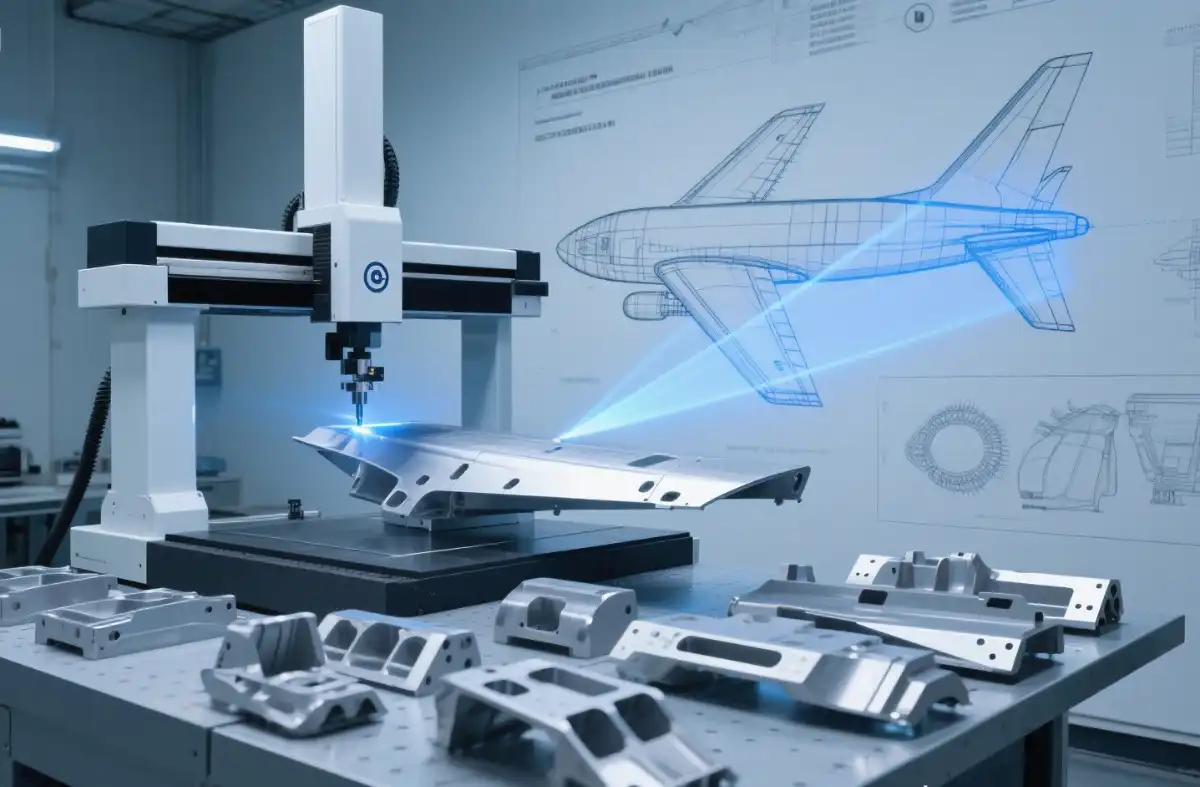
Parts of the airframe that hold things together, turbine blades, impellers, and landing gear sections need to be made with precise shapes and measurements that can only be achieved with simultaneous 5-axis machining. When buying things for the aerospace industry, sellers must be certified under ISO 9001 and, if possible, AS9100, and they must be able to fully trace materials according to AMS and ASTM standards. The FAA says that metal parts used in aerospace must show full material and process traceability throughout the supply chain. This means that the quality of the documentation is just as important as the accuracy of the measurements.
Medical Implants and Surgical Instruments
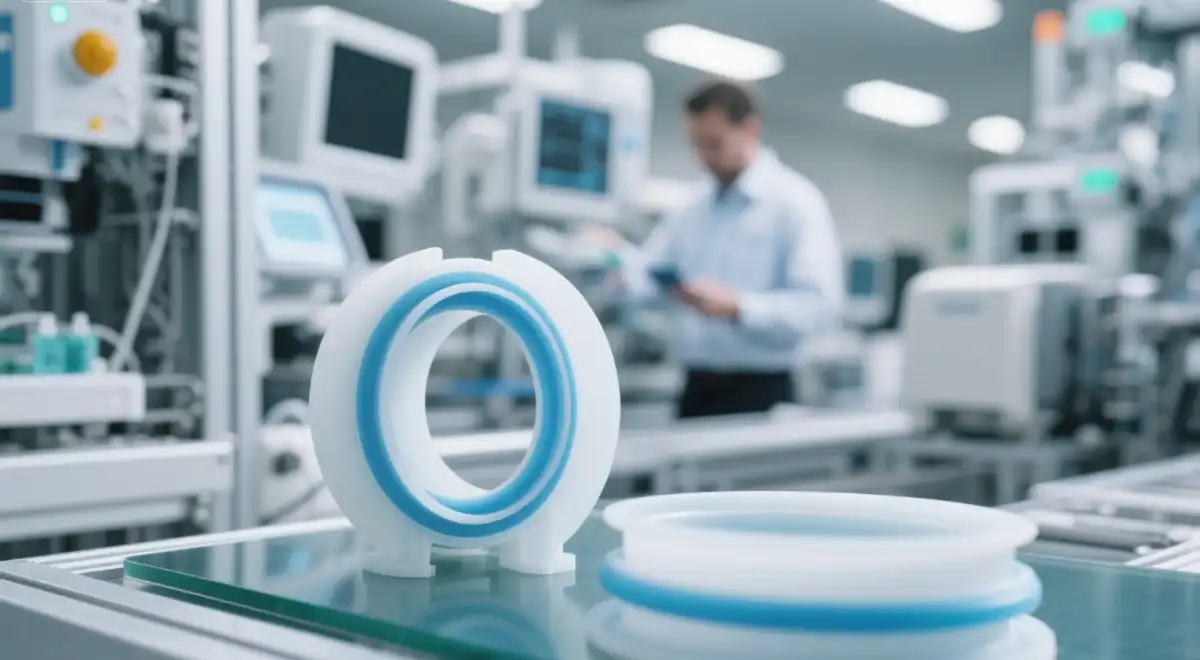
Orthopedic devices, bone plates, and surgical cutting tools need surfaces that are very precise and biocompatible. The quality control system for making medical devices is governed by ISO 13485 certification, and sellers to the U.S. market must follow FDA 21 CFR Part 820. In this field, being able to machine titanium Grade 5 and 17-4PH stainless steel to a surface finish of Ra 0.4µm without having to do any secondary grinding is a direct process advantage.
Robotics, Automotive, and Industrial Equipment
Geometric design freedom makes it easier to make robot joint housings, end effectors, and sensor mounts with fewer parts and less time spent putting them together. It is important for car designers to be able to quickly switch from making prototypes to low-volume production. 5-Axis machining parts lets them do this without having to retool. As performance requirements get stricter, multi-axis precision machining is also being used more and more in industrial energy parts like pump housings, valve bodies, and compressor rotors.
Choosing the Best 5-Axis CNC Machining Parts Supplier: Criteria and Recommendations
Define Your Procurement Requirements First
Write down your main needs before you call any 5-Axis machining parts provider. These should include the tolerance band, material grade, surface finish standard, certification needs (ISO, AS9100, ISO 13485), lead time needed, and NDA/IP protection expectations. Without this standard, judging a provider is subjective, and comparing them is not a good idea.
How to Evaluate Suppliers Objectively
When you interview a candidate, look at their talents, not simply what they state in their marketing materials. A competent supplier would provide lists of inspection instruments (e.g., a CMM or profilometer), quality certifications, and case studies of parts identical to those you are purchasing. Ask to see sample inspection records to confirm that the documentation quality is there. Supplier provides FAI (First Article Inspection) with comprehensive dimensional reports, material certificates, and process records? This is essential for medical and aerospace sourcing.
Now Chinese firms with long-established ISO licenses and export compliance records may be a low-cost source for precision parts for buyers in the U.S. and Europe. Location isn’t the only thing that counts; it’s also how well the provider can be examined and how well they maintain records.
Questions to Ask Before Signing a Contract
- Does the supplier sign and honor NDAs before reviewing drawings?
- Can they provide batch-level material traceability with mill certificates?
- What is their process for handling out-of-tolerance nonconformances?
- Do they support export compliance documentation for controlled materials (ITAR awareness)?
- What are their lead time guarantees and rework policies?
These questions tell the difference between trustworthy long-term partners and one-time buyers.

Maximizing Procurement Efficiency: Practical Tips for B2B Buyers
Use RFQ Tools and Structured Specifications
Send an RFQ with a 3D STEP file, a 2D drawing with GD&T callouts, the material standard, the surface finish requirement, and the quantity. RFQs that aren't complete lead to wrong quotes and delays in making decisions. With structured entries, providers can reply with initial evaluations in 24 hours, which is a norm that qualified makers like BOEN Rapid agree to.
Balance Prototyping and Production Timelines
With prototype lead times of 3–15 working days, you can make sure the idea works before you commit to making the tools for production. Low-volume production runs of 1,000 to 10,000 units usually end in two to four weeks. Building a connection with a source during the prototype phase helps both parties understand the process better, which lowers the number of first-pass rejections when mass production starts.
Quality Control and CMM Inspection Standards
Coordinate Measuring Machine (CMM) checks provide national standards-based data on dimensions. There should be CMM reports, surface roughness measures, and material certifications in every production run. This chain of paperwork backs up your internal quality management system and meets the needs of government audits. Set up a feedback loop with your supplier so that you can deal with repeating problems before they cause delivery delays.
Conclusion
5-Axis machining gives complex aerospace, medical, and industrial 5-Axis machining the accuracy in measurements, material compatibility, and production flexibility they need. It's not enough to just look at price when choosing a supplier. You should also look at their technical skills, certifications, and how they handle paperwork. It's better to build a long-term relationship with a source based on openness and consistent quality than to look for the lowest price. Investing in a skilled multi-axis machining partner pays off over the lifespan of a product for procurement teams that are in charge of high-value, low-volume projects.
FAQ
1. What tolerances can 5-axis CNC machining achieve?
Tolerances of ±0.005mm to ±0.05mm are common for simultaneous 5-axis cutting, but they depend on the shape of the part, the material, and the way it is fixed in place. With the right process control and temperature-stable fixtures, ±0.005mm can be reached for medical and military uses.
2. What materials are compatible with 5-axis machining?
Aluminum alloys (6061 and 7075), titanium (Grade 2 and Grade 5 Ti-6Al-4V), stainless steel (304, 316, and 17-4PH), brass, copper, tool steels, and engineering plastics like PEEK, POM, and Nylon are all materials that are often machined.
3. How long does prototype delivery take?
Depending on how complicated they are and how quickly they can be made, prototype parts are usually sent within 3–15 working days. Batches of low-volume production usually finish in two to four weeks.
4. What certifications should a qualified supplier hold?
ISO 9001 and ISO 13485 are basic standards that must be met for most commercial and medical uses. Some aerospace projects may also need proof of AS9100 knowledge and ITAR compliance.
5. Does single-setup machining really improve accuracy?
Yes, getting rid of re-fixturing gets rid of placement mistakes that build up between setups. Studies in precision production show that single-setup 5-axis processes are 30–50% more accurate than multi-setup 3-axis methods.
Request a Quote for Precision 5-Axis Machining Parts — BOEN Rapid
BOEN Rapid offers certified 5-Axis machining parts for medical, aerospace, and industrial projects. These parts have tolerances of up to ±0.005mm, full CMM documentation, and processes backed by ISO 9001 and ISO 13485. As a company with a lot of experience making 5-Axis machining parts, we reply to RFQs within 24 hours and ship samples within 3–15 business days. Send your plans to contact@boenrapid.com to begin your project right away.
References
1. Kalpakjian, S., & Schmid, S. R. Manufacturing Engineering and Technology. Pearson, 2014.
2. Todd, R. H., Allen, D. K., & Alting, L. Fundamental Principles of Manufacturing Processes. Industrial Press, 1994.
3. American Society of Mechanical Engineers. ASME Y14.5: Dimensioning and Tolerancing. ASME, 2018.
4. ASTM International. ASTM F136: Standard Specification for Wrought Titanium-6Aluminum-4Vanadium ELI Alloy for Surgical Implant Applications. ASTM, 2023.
5. International Organization for Standardization. ISO 13485: Medical Devices — Quality Management Systems. ISO, 2016.
6. Society of Manufacturing Engineers. Tool and Manufacturing Engineers Handbook, Volume 1: Machining. SME, 1983.