What Are the Advantages of Aluminum CNC Milling Parts?
Aluminium CNC-milled parts provide a robust mix of lightweight design, dimensional precision, quick production, and surface finish quality that few other manufacturing processes can match at the prototype or low-volume stage. Precision-machined aluminium parts provide consistent performance in tough applications, from robotic arm brackets to medical device enclosures. These parts are solving genuine engineering challenges with tolerances as fine as ±0.01 mm and thermal conductivity between 120 and 180 W/m·K, without the tooling costs or lead times of casting.
Understanding Aluminium CNC Milled Parts
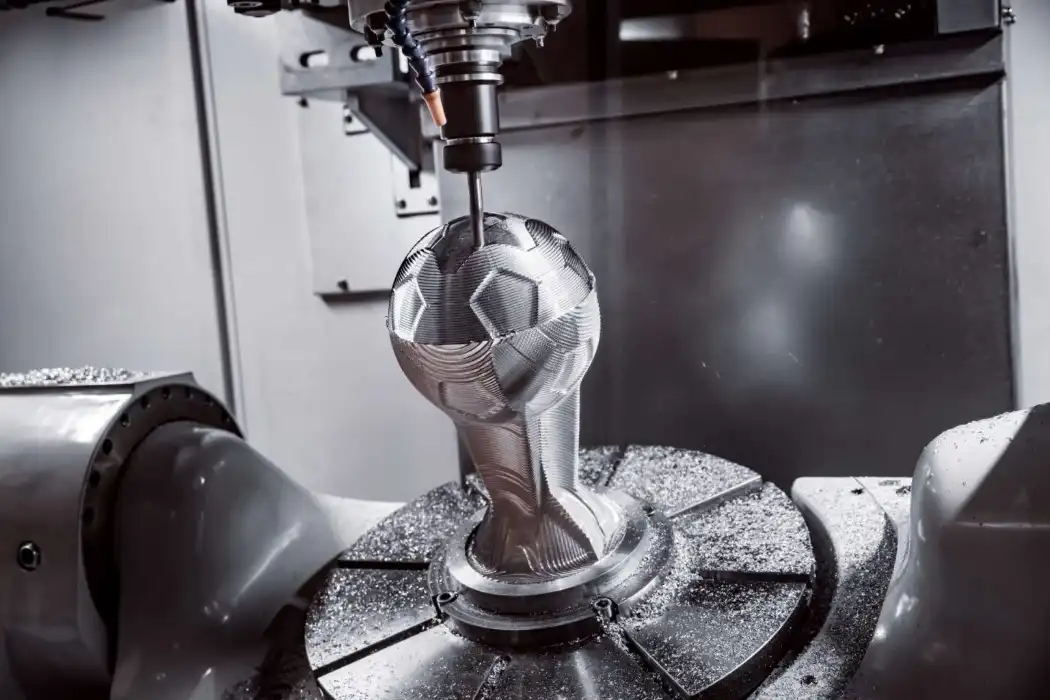
CNC milling is about cutting things off. The machine automatically moves and rotates cutting blades that shave material from a solid billet of aluminium. What you get are complicated forms like pockets, slots, curved surfaces, and drilled holes, frequently all in one arrangement.
What the Process Actually Involves
Modern 3-axis, 4-axis, and 5-axis machining centres can face mill, contour mill, and pocket mill without moving the workpiece. This reduces mistakes that pile up over time and ensures that sizes remain the same over a manufacturing run.
Common Aluminium Alloys Used
Grades are helpful for a variety of reasons. Alloy 6061 is the ideal metal for general structural parts since it does not rust, weighs roughly 2.70 g/cm³, and is simple to produce. Alloy 7075 has a yield strength similar to certain steels. It is used for aeroplane brackets and robot components carrying heavy loads. Alloy 5052 is at its finest in or around water or when it is moist.
Where These Parts Are Used
Aluminium parts are precision machined for use in consumer electronics, electric automobiles, robots, aviation, medical imaging, and semiconductor equipment. They are lightweight, and their size does not alter; they are particularly effective when weight constraints and tight fitting are needed.
Core Advantages of Aluminium CNC Milling Parts
Engineers and purchasing teams will look at numerous combinations of materials and methods, and machined aluminium always performs well in a lot of performance categories. With these primary features, it is an excellent option for development and production:
- Better strength-to-weight ratio. Aluminium is about 1/3 the density of steel; however, 6061-T6 still has a tensile strength of around 310 MPa. This balance immediately translates to weight reduction for the system without compromising load-bearing, which is critical for EV battery enclosures or drone frames.
- Close tolerances and good surface finishes. Standard features usually yield ±0.02 mm and critical features ±0.01 mm, with a surface roughness of Ra 0.8–1.6 μm in CNC milling. These figures are important when parts have to fit into assemblies on the first try.
- No tool investment. With CNC milling, you don’t need hard tooling as you do with die casting or injection molding. This eliminates a major financial barrier for hardware teams to validate a new design before committing to scale manufacturing.
- Compatible with wide surface treatments. Machined aluminium CNC-milled parts may be decorated by anodising (type II), hard anodizing (type III), bead blasting, powder coating, and polishing. Hard anodizing improves sterilising resistance for medical items. Powder coating adds color and corrosion protection for consumer goods. Each finish has a particular function.
- Short iteration cycles. There is no tooling to edit; therefore, to change a part geometry, you need to change a CAM toolpath file. Design revisions may lead to prototype runs in days, ensuring that R&D timetables stay on track.
— High strength-to-weight ratios. Aluminium is just 1/3 the density of steel, although 6061-T6 is rated to a tensile strength of 310 MPa. This balance leads to immediate weight reduction of the system without loss of load-bearing capability. It may be used for enclosures of EV batteries or frames of drones.
Aluminium CNC Milling vs. Alternative Materials and Methods
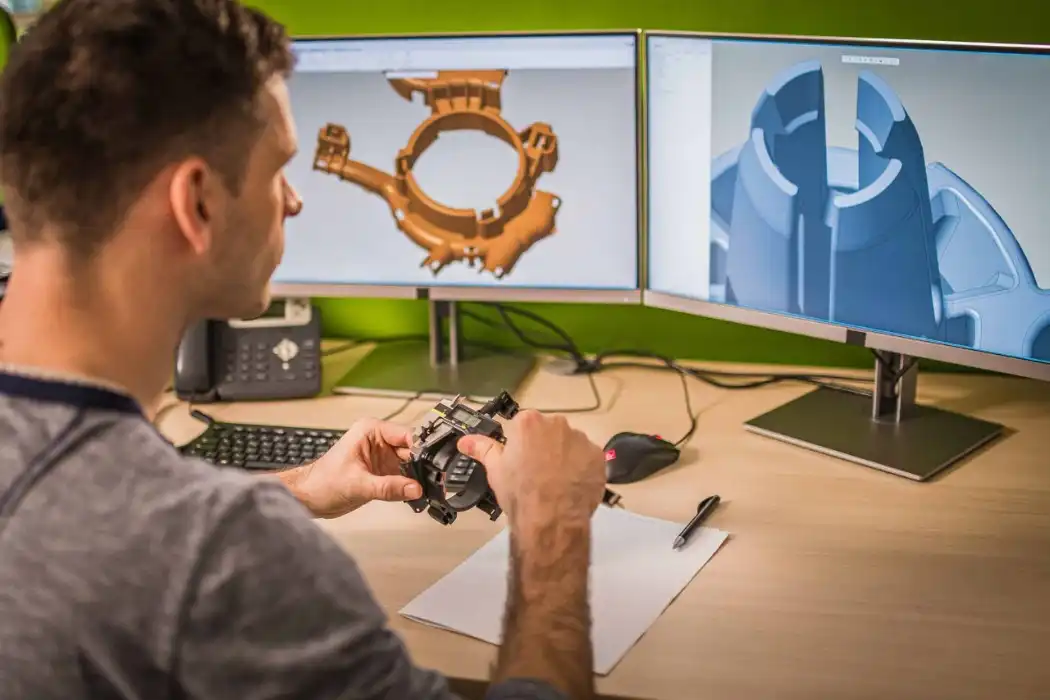
It's not always easy to decide between metal CNC milling and other choices. The right answer will depend on your tolerance needs, the amount of work you need to do, and the time frame you have.
Aluminium vs. Stainless Steel
Stainless steel is harder and stronger than regular steel, but it's also about three times heavier and harder to work with, which makes the cycle time and cost go up. As long as the strength needs are within the range of aluminium, machined aluminium is the better choice for parts that need to be light and strong.
Aluminium vs. Engineering Plastics
Plastics are cheaper and lighter in large quantities, but they don't have the ability to conduct heat well or stay the same size, which are important for making precise structural parts. Aluminium is commonly used for heat sinks and electronics cases where heat dissipation is important because it has a thermal conductivity of 120–180 W/m·K.
CNC Milling vs. Die Casting
Die casting can make a lot of metal parts quickly, but it needs expensive tools and can handle larger differences in size. CNC milling skips the whole process of making tools, so it's the best way to make prototypes (1–300 pieces) where design changes are still possible.
How to Choose the Right Aluminium CNC Milling Service
Not every company that makes aluminium CNC-milled parts can handle low-volume, quick-turnaround work that needs engineering support. Following rules help narrow the field:
Certifications and Quality Systems
At the very least, look for ISO 9001 certification. In medical or life-science settings, ISO 13485 adds an organized quality management layer that handles process paperwork and the ability to track down materials. Suppliers who are certified to both standards have already set up the inspection systems that are needed to back up claims of tolerance.
DFM Feedback and Engineering Communication
If your provider looks over your STEP or IGES file and sends you a Design for Manufacturability (DFM) report within 24 hours, you won't have to find problems when the parts are being put together. This service is especially helpful for hardware teams that are iterating quickly between different versions of a design.
Minimum Order Quantity and Scheduling Flexibility
Some shops have minimum order quantities that keep buyers out of the trial stage. An MOQ-free seller will take orders as low as one piece and as high as many as are needed. This keeps the costs of early-stage R&D in line with what is actually needed. Changes to the amount can also be made during development with a flexible schedule, without having to start the quoting process all over again.
Maximising Value from Aluminium CNC-Milled Parts in Your Supply Chain
It takes more than one order to get consistent value from precision aluminium components. Building a long-term relationship with a supplier is beneficial during multiple design cycles.
Long-Term Partnership vs. Spot Purchasing
A supplier who knows your product's architecture can spot tolerance issues before they happen in production, suggest alloy replacements that lower weight or cost, and keep material certificates for audit purposes. Over time, this built-up knowledge cuts down on the number of reworks and shortens lead times.
Sustainability Considerations
Aluminium is an industrial metal that is recovered a lot. It is possible to reuse and recycle scrap from CNC cutting, which is in line with green buying policies. When a company has to report Scope 3 pollution or work toward supply chain sustainability goals, getting materials from a maker that can be tracked back to the source helps them reach their goals.
Conclusion
Machined aluminium CNC-milled parts provide a unique combination of lightweight, exact dimensions, thermal performance, and surface treatment possibilities not available in any other material. They get rid of the issues of early-stage hardware development tools and make it easier to transfer to low-volume production runs. Precision aluminium CNC machining may have your demands and provide verified, recorded outcomes. Whether your team requires a functional sample for a product presentation or a certified structural component for a regulated application, this is true. The trick is finding a supplier that can provide both quality and speed, and getting the correct alloy and processing variables.
FAQ
1. Which aluminium alloy is best for CNC milling?
6061-T6 is the alloy that is most often used for general CNC milling. It is easy to machine, takes anodising well, and is very resistant to corrosion. For uses with more stress, like aircraft braces and robotic joints, 7075-T6 has a higher yield strength. 5052 is better when protection against salt spray or humidity is the most important thing.
2. How does anodising affect final part dimensions?
Anodising makes the surface stronger. Type II (standard) adds about 5–10 μm per side, and Type III (hard coat) can add up to 30–50 μm. To make up for the fact that they will be a little too small after treatment, parts that are going to be anodized should be made a little smaller than they need to be.
3. How does CNC milling compare to 3D printing for metal prototypes?
CNC milling makes parts from approved metal stock that have surface finishes and tolerances that are good enough for production. Metal 3D printing is more adaptable to internal shapes, but the results are usually less dense and need to be processed afterwards. CNC milling is the more reliable choice for making functional aluminium prototypes that need to fit into real assemblies.
4. What are typical lead times for custom aluminium parts?
Depending on how complicated they are, prototypes of 1 to 10 pieces usually ship within 3 to 15 working days. Low-volume production runs of 50 to 300 pieces usually take two to four weeks to finish. A flexible schedule often makes it possible to meet urgent requests.
Get a Quote from BOEN Rapid — Aluminium CNC Milled Parts Manufacturer
The precision of BOEN Rapid's aluminium CNC-milled parts is within ±0.01 mm, and the company's processes are ISO 9001 and ISO 13485 certified. There is no minimum order quantity, and DFM feedback is given within 24 hours. You can send your STEP file today and get a detailed quote with an engineering review right away. To get your project going, email our team at contact@boenrapid.com.
References
1. ASM International. ASM Handbook, Volume 2: Properties and Selection—Nonferrous Alloys and Special-Purpose Materials. ASM International, 2018.
2. Kalpakjian, S., & Schmid, S. Manufacturing Engineering and Technology. Pearson Education, 2020.
3. Modern Machine Shop. "Five-Axis Machining: Process Advantages and Application Strategies." Gardner Business Media, 2022.
4. ASTM International. ASTM B209: Standard Specification for Aluminum and Aluminum-Alloy Sheet and Plate. ASTM International, 2021.
5. ISO. ISO 2768-1: General Tolerances—Part 1: Tolerances for Linear and Angular Dimensions Without Individual Tolerance Indications. International Organization for Standardization, 2019.
6. Manufacturing Engineering Magazine. "Aluminum Alloy Selection Guide for CNC Machined Components." Society of Manufacturing Engineers, 2023.