Precision CNC Milling: Complete Guide to Manufacturing High-Quality Parts
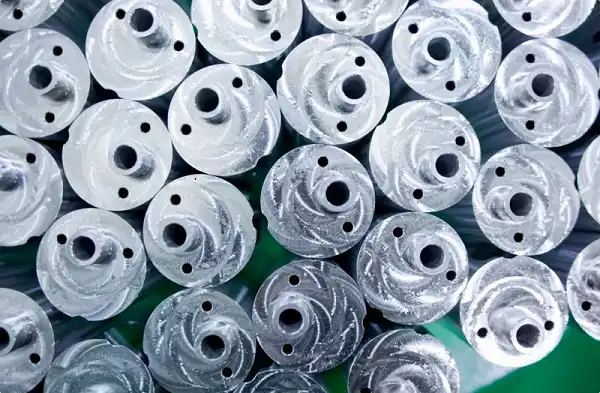
Precision CNC milled components are designed parts made using computer-controlled rotating tools that remove material from a block of material to form precise shapes. Milled parts can handle smooth surfaces, curved profiles, cavities, and multi-face features in one setup, unlike turned parts or castings. BOEN Rapid maintains tolerances as tight as ±0.005 mm on essential features, down to ±0.01 mm, and achieves surface polishes as fine as Ra 0.4 μm. This book leads procurement managers and design engineers through each step, from the basics of the process to choosing suppliers, so that you may acquire high-quality CNC machined parts with confidence.
Understanding Precision CNC Milled Components
What CNC Milling Actually Does
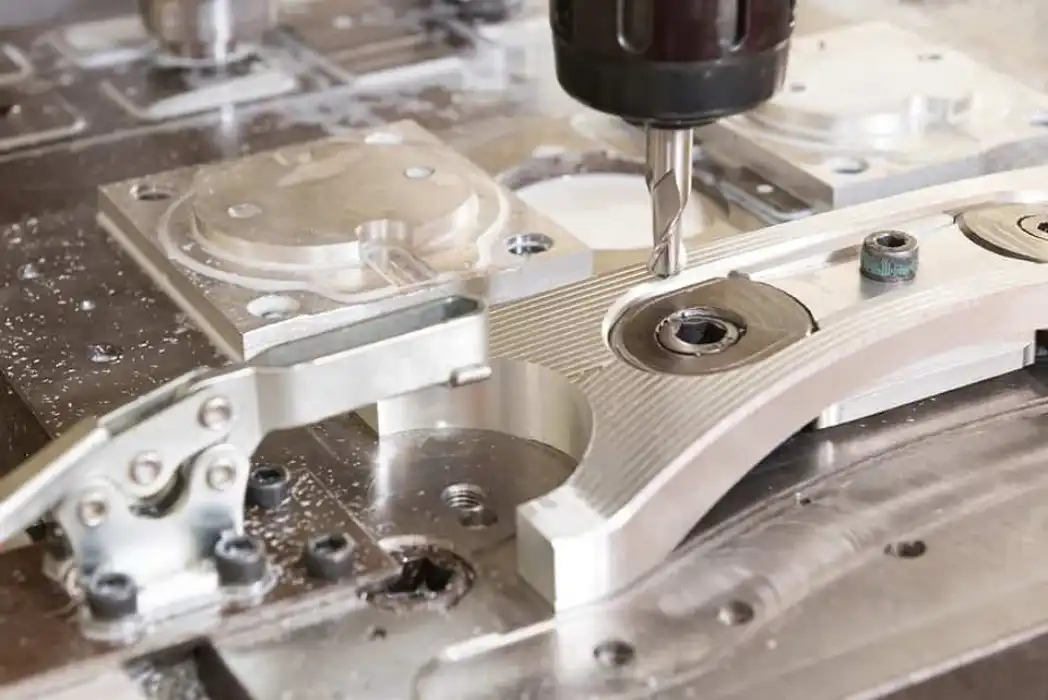
In CNC milling, computer algorithms guide fast-moving cutters on how to cut material away from a piece of work. The route of each toolpass is known; hence, measured values are the same for each section of a batch. Face milling, pocket milling, contour profiling, drilling, and tapping all in one arrangement. This eliminates the need for repeated preparations and the potential for error while relocating the workpiece.
Tolerances and Surface Finish Standards
Standard CNC cutting can produce most features within +/-0.01-0.02 mm of the real size. In areas where geometry dictates, such as bearing seats, sealing faces, and locating pins, we push to ±0.005 mm. Surface roughness is from Ra 1.6 μm for general structural parts to Ra 0.4 μm for precision mating surfaces. This implies that the surface can satisfy practically all practical purposes without further grinding.
Materials Suited to CNC Milling
The method may be used on many different materials. Aluminum 6061 and 7075 are utilized in space exploration and robotics to construct lightweight structures. 304/316 stainless steel can withstand the toughest medical and maritime environments. Copper and brass are also used for heating and power. Where weight or chemical resistance is necessary, engineering polymers such as PEEK, POM, PTFE, and Nylon are utilized in place of metal. Various materials are affected in various ways by cutting speed and form of tool. Therefore, the knowledge of how to arrange the procedure directly affects the quality of the final product.
Benefits and Applications of Precision CNC Milling
Accuracy, Repeatability, and Design Freedom
Multi-axis machining centers can approach a piece of work from almost any angle. This means that complicated curves, undercuts, and compound angles don't need special tools or more than one machine. Because of this freedom in geometry, designers can choose traits that would be hard to successfully cast or stamp. During a production run, part-to-part variation stays within a known tolerance band because the same precision CNC milled components program runs each cycle.
Cost Efficiency for Low-to-Medium Volumes
CNC milling doesn't require you to buy expensive tools like injection molding or die casting does. The time and materials you use are what you pay for, not the mold's amortization. This structure keeps per-unit costs low for batches of 20 to 500 parts, which is common for automation integrators and Tier-2 aerospace suppliers. It also lets design changes happen between batches without having to pay for retooling.
Industry Applications at a Glance
Precision Machined Parts are used in a broad spectrum of demanding applications and industries. Here are the primary areas where CNC cutting is beneficial and measurable:
Aerospace structural frames and housings. Parts machined to GD&T requirements in aluminum 7075 and stainless steel. Full CMM inspection reports and material certifications.
- Aerospace structural brackets and housings. Aluminum 7075 and stainless machined parts to GD&T callouts with comprehensive CMM inspection reports and material certs.
- Medical device enclosures and instrument bodies: Traced using ISO 13485-certified methods; biocompatibility-compliant stainless steel 316L and PEEK.
- Industrial valve bodies, pump housings Hydraulic manifolds: Leak-proof mating faces and precision-threaded ports need tolerances that cannot be maintained by simply casting.
- Robotics motor housings and sensor brackets: Consistent assembly alignment across high manufacturing quantities is maintained via repeatable bore diameters and mounting interfaces.
Electronics enclosures: Precise display apertures and clean connection cuts created in single configurations ensure alignment during manufacturing runs.
All these applications need the same thing: reliable measurements that can withstand real-world stress. CNC milling can achieve it, and it doesn’t take as long as casting tools.

Comparing Precision CNC Milling with Alternative Manufacturing Methods
CNC Milling vs. CNC Turning
Turning is a fast and efficient way to make things that are cylindrical or rotationally uniform. Milling can make multidimensional and complicated 3D shapes that turning can't, like flat faces, holes that aren't in the center, pockets, and features with more than one side. A lot of parts need both processes. Figuring out which one dominates the geometry helps with decisions about cost and lead time.
CNC Milling vs. Casting and Injection Molding
When you make a lot of parts, the cost of the tools for casting and injection molding is spread out over thousands of parts. When the number of bits is less than 1,000, grinding is often faster and cheaper. Milled parts also have better interior material stability and tighter size tolerances than sand or die castings, which is important for aircraft and hydraulic uses that need to hold a lot of weight.
CNC Milling vs. 3D Printing and Laser Cutting
3D printing works well for concept models and very small quantities, but the material properties aren't uniform, and the surface quality isn't great. Laser cutting can be used to make flat sheet shapes, but it can't make 3D or depth models. For useful precision parts, precision CNC milled components are the only way to get isotropic material qualities from certified stock, as well as tighter tolerances and better surface finishes than 3D printing.
How to Choose the Right Precision CNC Milling Supplier
Certifications and Quality Systems
Getting ISO 9001 certification means that you have a written quality control system. ISO 13485 adds rules that are specific to medical devices. If you need to do work in aerospace OEM or Tier-2, find suppliers that can give you First Article Inspection (FAI) reports and full CMM dimensional reports with GD&T callout verification. Both ISO 9001 and ISO 13485 are held by BOEN Rapid, and they always include CMM reports and material certificates with their shipments.
Technical Capability and Engineering Support
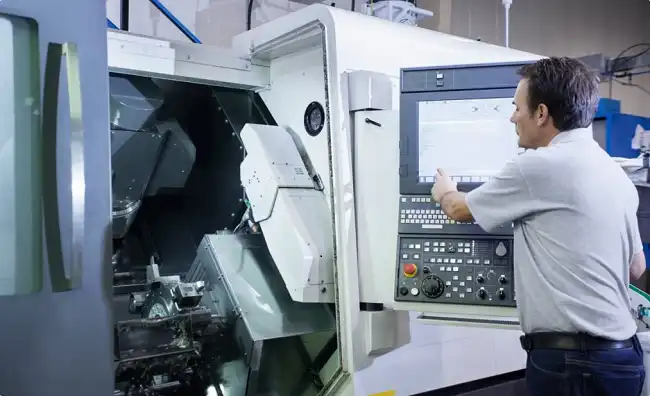
A good supplier gives quotes within 48 hours, assigns an engineering contact instead of just a sales rep, and gives DFM feedback before the cutting starts. Multi-axis (3-axis to 5-axis) capability is important when your parts have complex angles or deep holes. Check to see if the shop does in-process inspections as well as checks at the end of the line. Real-time repair keeps scrap from building up.
Service Flexibility and Delivery Reliability
Automation developers and buyers who are driven by projects need providers who can handle mixed-SKU small batches and stage deliveries to meet project deadlines. Before you share files, find out about NDA guidelines and image privacy rules. Lead times should be confirmed for both prototypes (3–15 working days) and production runs (2–4 weeks for standard volumes). Logistics partnerships with DHL, UPS, or FedEx make sure that packages are delivered from door to door around the world.
Design Guidelines for Precision CNC Milled Components
Geometric Constraints That Affect Machinability
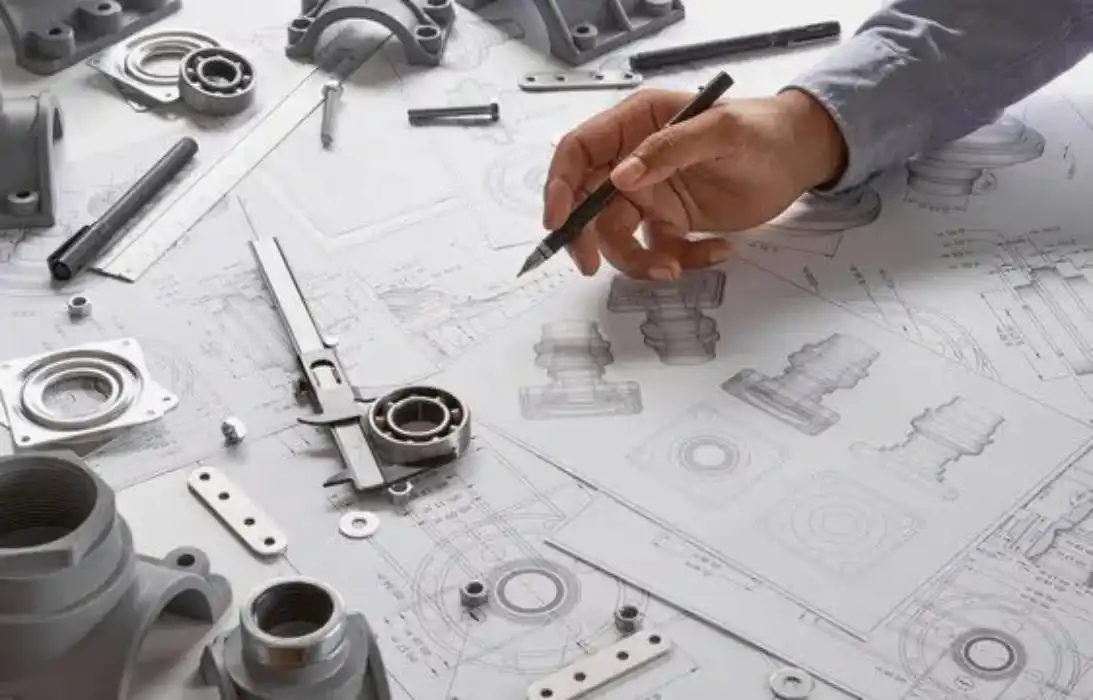
Internal corner angles should be set to conventional end mill sizes, often between 1 and 6 mm, to prevent lengthy finishing passes or bespoke tools. Deep narrow holes with aspect ratios greater than 6:1 increase the probability of tool deflection and tolerance. If you can, put these sort of features on two sides of the part and machine each side independently in the same clamps.
Tolerance Assignment and Feature Prioritization
Not all surfaces require a tight call-out. Allow just ±0.005 mm inaccuracy for important surfaces such as bearing bores, sealing grooves, locating datums. The general dimensions of a profile may be kept within 0.05 mm without any further labor. Over-tolerancing adds expense and cycle time with no technical benefit; thus, compare each callout to how the assembly really functions.
Material Selection Tied to Design Intent
The material choice impacts both its performance and ease of machining. Aluminum cuts fast and cuts deep, so your cycle times stay low. PEEK machines well; however, it is necessary to use sharp tools and regulated feeds to avoid micromelting of the sidewalls. Stainless steel will work-harden if the feed rates are too low. That implies the toolpath method is as crucial as the grade of material. Select the material of your machine partner early on to ensure the design goal and process efficiency are in sync.
Conclusion
Precision CNC milled components are a dependable means to move from a design file to a functional item in electronics, aircraft, medicine, robotics, and industry. This approach to manufacturing things provides you with precise tolerances, verified surface finishes, and the ability to track down resources that other methods of making things can’t match when making small to medium numbers. The necessary certifications, the capacity to work on various axes, and timely engineering assistance from a supplier may transform that potential into outcomes that are always on time and consistent results. Here are some design tips to offer your project the best chance of getting it out on time and on budget. Use appropriate corner radii, provide selected tolerances, and plan your toolpaths with material knowledge in mind.
FAQ
1. What materials work best for CNC milling precision parts?
Most people choose aluminum metals (6061 and 7075) because they cut quickly and have good strength-to-weight ratios. 304/316 stainless steel works well in corrosive or clean environments. When chemical protection or weight reduction are important, engineering plastics like PEEK and POM are used instead of metal. The choice of material is based on its function, its exposure to the environment, and the surface treatment that is needed.
2. How does CNC milling compare to 3D printing for prototypes?
CNC milling makes parts from approved stock that has mechanical qualities that are the same everywhere and limits of ±0.005 mm. For concept models, 3D printing is faster, but the layers aren't all the same, and the surfaces are rougher. CNC milling gives more accurate results for making working prototypes that will be tried under load or put together with matching parts.
3. Can CNC milling meet aerospace-grade tolerance requirements?
Yes. The positional accuracy of five-axis machining centers is in the micron range. CNC cutting meets the needs for First Article Inspection for structural and functional aircraft parts when combined with CMM testing and full GD&T reporting. Customers who need AS9100D-aligned processes can use BOEN Rapid's FAI documentation and material certificates.
4. What is a realistic lead time for a small batch of milled parts?
Depending on how complicated the shape is, prototype numbers usually ship within 3–15 working days. Usually, it takes 2–4 weeks to finish a batch of 20–200 pieces. Flexible timing makes it possible to work around tight project windows; talk about timeline needs during the RFQ stage.
Start Your Next CNC Project with BOEN Rapid
BOEN Rapid has been making precise parts for more than 15 years and brings that experience to every order, from single prototypes to mass production. As a reliable company that makes precision CNC milled components, we offer 3-axis to 5-axis machining, quality systems that are ISO 9001 and ISO 13485 approved, CMM inspection reports, and full NDA protection for your plans. We get back to RFQs from our engineering team within 24 hours. To get a price right away, email your images to contact@boenrapid.com.
References
1. Kalpakjian, S., & Schmid, S. R. Manufacturing Engineering and Technology. Pearson Education, 2014.
2. Boothroyd, G., Dewhurst, P., & Knight, W. A. Product Design for Manufacture and Assembly. CRC Press, 2011.
3. Odd, R. H., Allen, D. K., & Alting, L. Manufacturing Processes Reference Guide. Industrial Press, 1994.
4. American Society of Mechanical Engineers. ASME Y14.5: Dimensioning and Tolerancing. ASME, 2018.
5. International Organization for Standardization. ISO 9001:2015 Quality Management Systems — Requirements. ISO, 2015.
6. Groover, M. P. Fundamentals of Modern Manufacturing: Materials, Processes, and Systems. Wiley, 2020.