CNC Machining of Aluminum Alloy Parts: A Complete Guide
CNC machining of aluminum alloy parts uses computer-controlled milling, turning, and drilling to cut precise shapes from solid aluminum stock such as 6061-T6 or 7075-T6. The process suits lightweight structural components, housings, and heat-dissipating parts. Aluminum has about one-third the density of steel and cuts quickly. At BOEN Rapid, we hold tolerances from ±0.005mm to ±0.1mm, depending on the feature. Good results come from four choices: the right alloy, a design that suits machining, controlled surface finishing such as anodizing, and documented inspection. This guide covers each choice so you can request quotes with confidence.
Understanding Aluminum Alloy Parts in CNC Machining
What Makes Aluminum Alloys Suitable for Machining?
Aluminum weighs about 2.7 grams per cubic centimeter, while steel weighs about 7.85 grams per cubic centimeter. Compared to steel, which has an elastic modulus of about 200 GPa, this one is only about 69 GPa. So, the ratio of stiffness to weight is about the same for both metals. For example, designs made of aluminum can reach the same stiffness with thicker sections while having a much lower mass. The metal cuts quickly, doesn't need much force, and can handle high spinning speeds. This cuts down on cycle times and tool wear. The thermal conductivity of 6061-T6 is about 167 W/m·K, which means that it moves heat away from motors and electronics. The surface is also protected from corrosion by a thin film of natural oxide.
Common Alloys: 6061, 7075, 6082, 5052, and 2024
Each score is good for a different job. It's best to use 6061-T6 because it's easy to machine, weld, and anodize, and the finish is uniform. 7075-T6 is an alloy made of zinc that has a normal yield strength of about 503 MPa. It is often used in the frame of airplanes. 6082 is often used in European standards because it is as strong as 6061-T6. 5052 is a common grade of sheet metal because it doesn't rust and shapes well. However, heating it doesn't make it stronger. 2024 has high fatigue resistance, but it needs a protective finish because it is not as resistant to corrosion. BOEN Rapid can make all five types.
Typical Product Categories
Most aluminum alloy parts can be put into three groups. Some examples of structural parts are UAV arms, robot joint housings, mid-frames for consumer goods, frame parts for e-bikes, and fastener bases. Brackets, pipes, valve bodies, and hydraulic fittings are all examples of precision parts. Fabricated parts include frames, enclosures, and clamps that are cut and bent from sheets that are 0.5 mm to 6 mm thick. Our machine sizes range from 5 mm to 1200 mm, and we can make anything from a single sample to over 10,000 units. In that price range, a hardware team can buy a few test pieces first and then use the same source for big orders.
The CNC Machining Process for Aluminum Alloy Parts
Core Techniques: Milling, Turning, Drilling, and Multi-Axis Work
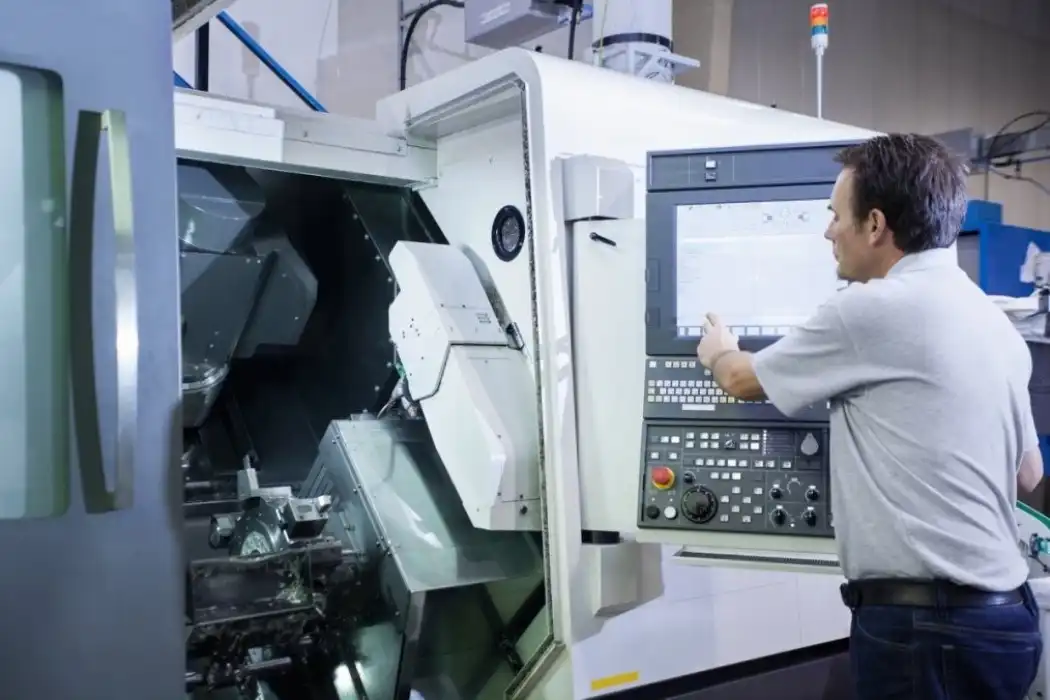
A rotating cutter is used in milling to remove material and make pockets, slots, and flat faces. When you turn, the workpiece spins around a fixed tool. This is good for making shafts, bushings, and round housings. When you drill and tap, you make holes and threads. These jobs can be done on our 3-axis, 4-axis, and 5-axis machines. A 5-axis machine can work on complex surfaces with fewer setups, and when there are fewer setups, there is less chance that features will not be lined up correctly. That can affect whether the holes line up on a UAV arm with mounting sides that are at an angle. Surface roughness can be anywhere from Ra 0.4 to Ra 3.2μm, depending on the needs of the feature and the finish.
From CAD File to Finished Part
What's first in the process? It's your CAD file and drawing. Within 24 hours, our experts look them over and finish the first project evaluation. Then we let DFM know about the width of the walls, the radiuses of the corners, and the access to the tools. Once you're happy with the metal and finish, we set up the machine, cut the aluminum alloy parts, smooth it out, apply the finish, check it over, and pack it. Based on how complicated they are, prototypes are sent out in 3–15 business days. Production of a small amount usually takes two to four weeks. To make sure it fits, many teams print a model first out of plastic or metal. For that step, we offer both 3D printing and CNC cutting.
Quality Control and Inspection
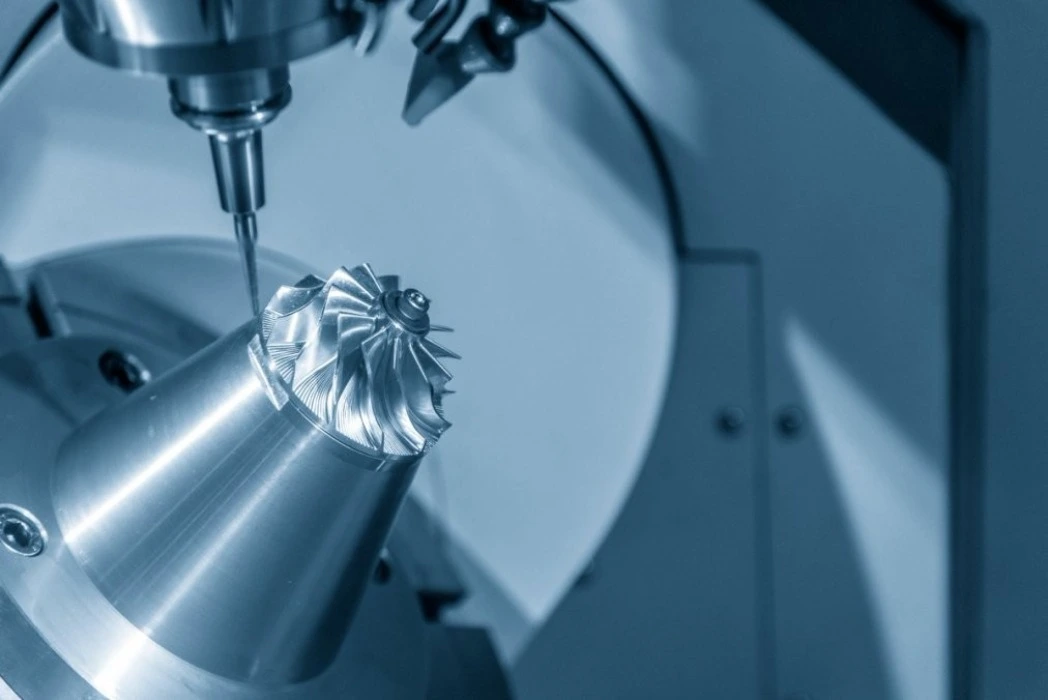
We follow the quality systems ISO 9001 and ISO 13485. A coordinate measuring machine (CMM) is used to check the sizes of each batch. The surface finish is also looked at, and the materials are certified. When you get the parts, they come with inspection reports and shipping paperwork. A CMM records the measured values next to the drawing, which lets you check the approved sample against the parts that will be made. When you go from making 100 pieces to making several thousand, this is important because the paperwork shows if the sizes changed. There is also proof of the metal grade on the material certificate, which allays a common worry that cheaper 7075-T6 stock might be used instead.
Comparing Aluminum Alloy Parts with Other Materials
Aluminum vs. Steel
It is true that steel is stronger and harder, but it is also almost three times as thick. Aluminum parts can be as stiff as steel parts with bigger cross-sections and still weigh a lot less because their stiffness-to-weight ratios are similar. For moving parts, that trade works well. Lower mass lowers the inertia of robot arms, increases the payload capacity of planes, and makes vehicles more efficient. The oxide sheet that aluminum makes itself means that it doesn't need an extra coating for many indoor and light outdoor uses. Steel is still the best material for surfaces that get worn down quickly, thin sections that carry weight, and use at very high temperatures.
Aluminum vs. Plastics
It is cheaper to buy a lot of plastics at once because they are cheaper per piece and weigh less than aluminum. In terms of stiffness, heat resistance, and thermal conductivity, they are not as good as aluminum. A drone motor base or a heat spreader needs a metal that can both hold weight and move heat. Plastic isn't good at either of those things. Also, CNC machining doesn't need a mold, so if you want to change the design, you just need to change the CAD file instead of making a new tool. It works for early stages of a product where designs are still being changed. For parts that aren't solid, injection molding can make sense once the design is set and the number of parts ordered grows. We also offer this process.
6061 vs. 7075: Choosing Between Them
The main differences between the two alloys are their strength and how they react to corrosion. In general, 6061-T6 has a stress strength of about 276 MPa. 7075-T6 can handle up to 503 MPa of force, making it good for load-bearing arms, gimbal parts, and structural brackets. 6061-T6 can be welded, doesn't rust as easily, and turns a more even color when anodized. It's harder to weld 7075-T6, and the color of polished surfaces can be a little different from 6061-T6. As a general rule, use 7075-T6 when the design needs to be strong and 6061-T6 for housings, covers, and welded assemblies. Send us the load case if you're not sure. During DFM review, our engineers will give you a grade.
Procurement Insights for Aluminum Alloy CNC Machined Parts
What to Check in a Supplier?
Start with quality processes and then ask about machine capabilities and paperwork. We recommend that you ask any CNC supplier the following questions:
- What kinds of certifications apply, and can they show them?
- Within what range of errors do they work, and what tools do you use to make sure?
- Will inspection records and material certificates be sent with every shipment?
- Does the supplier offer DFM review before cutting?
- Can they sign an NDA for your drawings?
BOEN Rapid has ISO 9001 and ISO 13485 systems, limits from ±0.005mm to ±0.1mm, CMM checks on every batch, DFM analysis, and NDA protection. These tests let you know if a supplier can keep the quality high from the first sample to the next order.
Anodizing Color and Finish Consistency
A lot of buyers have trouble with anodizing because the color can be different from lot to lot. Some of the things that cause it are the alloy and temper, the pretreatment (like bead blasting), the condition of the dye bath, and the thickness of the coating. Type II is thinner and comes in a wide range of colors. Type III hardcoat is more durable and won't wear down as quickly. Because the coating grows into and out of the surface, you should say which sizes are correct after finishing. As much as possible, run all of the aluminum alloy parts for a single assembly in the same lot, use the same metal and temper, and make sure you're happy with a color sample first. We can do bead blasting, powder coating, chromate conversion, and polishing. The colors we offer are natural, black, gold, and custom.
Lead Time, Scaling, and Shipping
The price is based on the amount, tolerance, finish, time it takes to machine, and the number of sets. Some of these can be controlled by making features easier to use and lowering tolerances where the function allows it. We finish the first review in 24 hours, send out samples in 3–15 business days, and finish low-volume production in 2–4 weeks. We can make anything from samples to more than 10,000 units, so you can get everything you need from one source. You can watch your package and get it delivered right to your door with DHL, UPS, and FedEx. Machined surfaces and anodized finishes are kept safe during shipping with secure packaging.
Applications and Real-World Use Cases of CNC Machined Aluminum Alloy Parts
UAV, Robotics, and Consumer Electronics
In these areas, style is based on weight. 7075-T6 is often used for UAV arms and motor mounts because it is strong but not heavy. The lighter material lowers inertia, which lets the robot's joints, end effectors, and mounting plates move more quickly. Aluminum is used in the mid-frames of consumer electronics to make them rigid, give them a clean anodized look, and spread heat from processors and batteries. Heat dissipation modules depend on the ability of aluminum to transfer heat. Startups in these areas often buy a few at a time, test them, and make changes to the design before ordering more. That's how our prototype and low-volume services work.
Automotive and Industrial Equipment
Aluminum is used by auto teams to make engine parts, gearbox housings, suspension parts, and parts for aftermarket modifications. Less mass makes it easier to speed up, turn, and use fuel efficiently. The same is true for electric two-wheeler frames and brackets: less weight means more range per charge. Aluminum is used for automation fixture bases, pipes, valve bodies, pneumatic parts, and custom fittings in plants. Because it doesn't rust and is easy to work with, these parts are cheap to make. Aluminum cuts much more quickly than steel, and production teams often need replacements right away. This means that fast cutting is also good for fixture bases.
Aerospace and Medical Equipment
Aluminum is used in aerospace designs for structural brackets, mounting fixtures, and parts of the airframe that aren't very important. The 7075-T6 metal has a yield strength of about 500 MPa, which makes it good for parts that are stressed over and over again. One big reason why airplane manufacturers choose it is that it doesn't wear down easily. Diagnostic device housings, tool handles, and parts of mobility aids are all made of metal. The type of alloy and surface treatment determine how well a part cleans, wears, and holds its weight. Our ISO 13485 system lets us work on medical devices, and our inspection reports give engineers the data they need for design files to keep track of measurements.

Conclusion
CNC cutting of aluminum alloy parts works best when the material, design, finish, and inspection are all picked at the same time. Aluminum is only about one-third as dense as steel. It cuts quickly, moves heat well, and naturally makes a metal film that protects it. Steel is still the strongest material, and plastics work well for parts with low loads and a lot of them. 7075-T6 is for high-load parts, while 6061-T6 is for general housings and welded assemblies. Milling, turning, and multi-axis machining, along with CMM inspection and material certificates, make sure that the dimensions and alloy grade can be checked. Anodizing color varies on the metal, the lot, and the pretreatment, so it's important to plan the lot and make clear drawing notes. When these factors are matched to the job, like for UAV arms or electronics housings, the parts are lighter and more uniform.
FAQ
What is the typical lead time for CNC machined aluminum parts?
Depending on how complicated they are, prototypes usually ship in 3–15 business days. Making a small amount of something takes two to four weeks. We finish the first review of the job 24 hours after getting your files.
How can I confirm that my parts use the alloy I specified?
Ask for a certificate of material. We give you material certificates, inspection reports, and shipping papers, and for every batch, we use a CMM to check the sizes. These records let your team check the grade, like 7075-T6, and the sizes that were tested.
Are aluminum alloy parts suitable for outdoor use?
Yes, most of the time. Anodizing makes the oxide film that aluminum naturally makes stronger so that it doesn't rust. Grades like 5052 and 6061-T6 work well in damp conditions. Because it is less resistant to corrosion, 2024 needs a protective finish.
CTA
Email your plans to contact@boenrapid.com, and our engineers will look over your project within 24 hours. We offer DFM feedback, anodizing, inspection reports, and NDA protection all in one place if you need an aluminum alloy parts supplier for samples or small runs. To learn more about our CNC machining services, go to boenrapid.com.
References
1. ASM Handbook, Volume 2: Properties and Selection: Nonferrous Alloys and Special-Purpose Materials, ASM International, 1990
2. Machinery's Handbook, 31st Edition, Industrial Press, 2020
3. International Alloy Designations and Chemical Composition Limits for Wrought Aluminum and Wrought Aluminum Alloys (Teal Sheets), The Aluminum Association, 2018
4. MIL-A-8625F, Anodic Coatings for Aluminum and Aluminum Alloys, U.S. Department of Defense, 1993
5. Manufacturing Engineering and Technology, 7th Edition, Kalpakjian and Schmid, Pearson, 2013
6. Aluminum: Properties and Physical Metallurgy, John E. Hatch (Editor), ASM International, 1984