CNC Prototype Machining: Everything You Need to Know
If you're an engineer or startup founder racing toward a product launch, understanding CNC prototype machining can save you weeks of wasted iteration. Rapid CNC prototyping parts are precision-machined components produced directly from your CAD files using computer-controlled cutting equipment. Unlike 3D printing, CNC machining works with production-grade metals and engineering plastics, delivering functional prototypes that genuinely reflect your final design intent. At BOEN Rapid, we've spent over 15 years helping hardware teams move from digital model to physical part in as few as three working days.
Understanding Rapid CNC Prototyping Parts
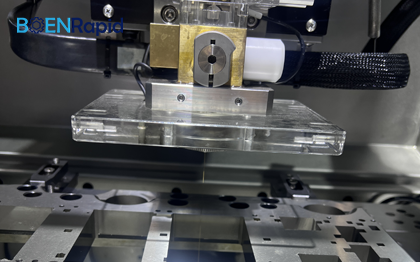
The process of CNC prototype machining is called subtractive manufacturing. The machine holds a solid block of metal or plastic in place while spinning cutting tools, drills, and lathes remove material using software that has already been set. This process continues until the shape you want is achieved. Rapid CNC prototyping is different from regular machining because the timeline is shorter and the engineering process is easier.
Core Equipment and Process Steps
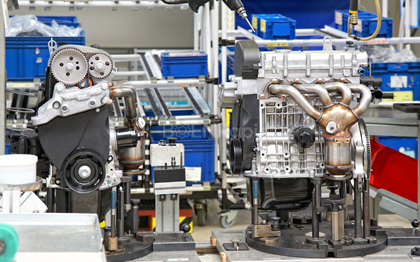
These days, CNC prototype shops use 3-axis machines for simple prismatic parts and 5-axis machining centers for complicated shapes with many surfaces. The process includes CAD programming, making toolpaths, cutting, and finishing the surface. When it comes to metal parts, CNC is much better than most additive methods at getting accurate measurements with errors as low as ±0.01 mm.

Material Selection for Prototype Parts
Everything that comes after is driven by material decisions. Aluminum 6061 and 7075 are still the most common types of aluminum used for structural hardware samples because they are easy to make and have the same qualities as production aluminum. When corrosion resistance or conductivity are important, you can use stainless steel, titanium, or copper. ABS, PEEK, POM, nylon, and polycarbonate are all types of plastic that can be used for everything from low-cost idea testing to high-temperature functional testing. Picking the right material for the sample keeps you from having to deal with bad surprises when you go to scale.

Rapid CNC Prototyping vs Other Manufacturing Techniques
There are pros and cons to every modeling method. Knowing about these trade-offs helps you make smart decisions about how to spend your money and time.
CNC Machining vs 3D Printing
Concept models and visual mockups are what FDM and SLA printing do best. Layer-based building, on the other hand, lowers the quality of the surface finish and adds uneven mechanical properties that aren't present in the finished machined or injected produc. On the other hand, CNC-machined prototypes of rapid CNC prototyping parts have isotropic material properties, tighter dimensional tolerances, and surface finishes that are exactly the same as production parts. Machined prototypes are the only way to go if you want to do full load testing or regulatory reporting.
CNC Prototyping vs Injection Molding
Only when you buy a lot of injection casting does it become cost-competitive. The cost of the tools alone can reach tens of thousands of dollars, and it can take six to ten weeks to get steel tools. CNC prototype machining doesn't need any tools, can handle orders for just one piece, and can deliver in days. For pre-launch testing, crowdfunding demos, or builds for trade shows, machining is faster and cheaper.

Design Tips and Best Practices for CNC Prototype Parts
Everything goes faster with a well-prepared CAD file. When engineers send fully limited STEP or IGES files with clear tolerances, thread callouts, and surface finish standards, they get bids faster and parts that are more accurate.
Applying DFM Principles Early
Design for Manufacturability analysis is the most important task in the early stages of hardware development. DFM review finds features that are geometrically possible but hard to make mechanically. These include deep, narrow slots, sharp internal corners, very thin walls, or tolerances that are too tight on areas that aren't important. When a file is sent to BOEN Rapid, our engineering team gives DFM feedback within 24 hours. When teams use DFM early on, they often cut the number of prototype iteration rounds from three to two. This can save weeks on a tight development schedule.
Here are the most impactful design practices for CNC prototype machining:
- Specify tolerances only where they matter. Using a ±0.01 mm margin on a whole part makes it take longer to machine without improving its function. Tough callouts should only be used for mating surfaces, bearing seats, and socket contacts.
- Avoid deep, narrow cavities. Features with depth-to-width ratios higher than 4:1 need special tools and take longer to make. Costs are cut by a large amount when these features are redesigned as accessible pockets.
- Design internal corners with radii. For production to go faster, an internal corner that is square needs to be EDM or corner milled. By choosing a radius that matches normal end-mill sizes (for example, R0.5 mm and R1 mm), the gear stays the same.
- Confirm material compatibility early. Aluminum can't be cut with the same tools as titanium or hardened stainless steel. If you mark your material choice during the design phase, you can avoid delays in getting quotes.
Applying these practices consistently doesn't just lower cost for rapid CNC prototyping parts—it compresses the gap between your design intent and the physical part you receive.

Procurement Guide for CNC Prototype Machining
The procurement journey for machined prototypes is shorter than most B2B buyers expect, but it's important to choose a reliable partner to make sure the job is done right the first time.
How to Evaluate a CNC Prototyping Supplier
Getting certified is the first step. ISO 9001 makes sure that methods for quality control are written down and checked. ISO 13485 adds rigor to the level of medical devices by covering process validation and traceability. In addition to certification, you should also look at the skills for dimensional inspection. Every delivery should come with material documents and CMM measurements.
BOEN Rapid is a company that makes rapid CNC prototyping parts. They have CNC milling, turning, drilling, 3D printing, sheet metal production, vacuum casting, and injection molding all under one roof. This integration is important because it lets you compare different ways of making things while prototyping and move directly to low-volume production without having to find a new supplier and get their approval again. Quotes are sent out within 24 hours, and normal lead times range from 3 to 15 working days, based on how complicated the job is.
Common Applications and Future Trends in CNC Prototype Machining
Prototypes that are machined are used to make new products in the auto, aerospace, robotics, medical devices, and consumer electronics industries. A robotics startup testing a custom end-effector, a medtech team sending a surgical instrument for pre-submission review by regulators, or a consumer electronics company making trade-show housings—all depend on CNC machining to make sure the dimensions are correct and the material is real.
In the future, AI-assisted toolpath optimization is already cutting down on the time it takes to program complicated 5-axis work. First-article acceptance rates are going up thanks to automated in-process measurement, in which tools check measurements in the middle of the cycle and make real-time adjustments to offsets. As supply lines are put under more pressure to be environmentally responsible, sustainable machining methods like dry cutting, minimum-quantity lubrication, and reusing aluminum chips are becoming the norm. For procurement teams, this means that prototypes can be delivered more quickly, with more consistency, and with less carbon emissions.

Conclusion
Few other methods can compare to CNC prototype machining when it comes to speed, accuracy in the material, and ability to make exact measurements between a CAD model and rapid CNC prototyping parts that are ready for production. Machined prototypes give you trust based on facts, whether you're trying a mechanism before a crowdfunding campaign or a structural part before investing in tooling. For prototyping to become a competitive edge, it needs to be done with the right manufacturing partner. This partner should offer DFM help, certified quality methods, and a clear path from prototype to production.
FAQ
How fast can I receive a machined prototype?
At BOEN Rapid, standard lead times range from 3 to 15 working days, depending on the complexity of the part, the material, and the level of finish that is needed. Most of the time, simple metal parts that don't need any extra work can be shipped in three to five days.
What materials are available for CNC prototype machining?
We can work with aluminum (6061 and 7075), titanium, brass, copper, ABS, POM, PEEK, nylon, polycarbonate, and engineering plastics. Every order comes with a certificate of materials.
What is the minimum order quantity?
One piece. Because there is no minimum order size, iterative prototype development can be done by anyone on any budget.
How do you ensure dimensional accuracy?
Before being sent out, every part is inspected using a CMM to check its dimensions and surface finish. Tolerances for the parts are ±0.01 mm to ±0.1 mm, and every order comes with full quality paperwork.
Can BOEN Rapid support the transition from prototype to production?
Yes. Our facility is fully equipped with CNC machining, injection molding, sheet metal, and vacuum casting. This means that your design files and quality standards can be used directly for both low-volume and OEM/ODM production, without having to switch suppliers.
Start Your Prototype with BOEN Rapid Today
BOEN Rapid speeds up the development process for hardware teams without affecting the accuracy of measurements or the purity of the materials. We are a reliable rapid CNC prototyping parts supplier. From the first sample to full-scale production, we offer 24-hour quotes, DFM-backed engineering help, and certified quality documentation. Send your CAD files to boenrapid.com or email our engineering team at contact@boenrapid.com to get your project going right away.
References
1. Kalpakjian, S., & Schmid, S. R. (2014). Manufacturing Engineering and Technology (7th ed.). Pearson Education.
2. Formlabs. (2023). The Ultimate Guide to Rapid Prototyping. Formlabs Blog.
3. Boothroyd, G., Dewhurst, P., & Knight, W. A. (2011). Product Design for Manufacture and Assembly (3rd ed.). CRC Press.
4. International Organization for Standardization. (2015). ISO 9001:2015 Quality Management Systems — Requirements. ISO.
5. AT Machining. (2023). Automotive Prototyping Guide. AT Machining Blog.
6. Tlusty, J. (2000). Manufacturing Processes and Equipment. Prentice Hall.