Engineering Plastic Parts vs. Metal Components: Key Differences
Engineering plastic parts and metal components differ mainly in weight, stiffness, heat tolerance, corrosion behavior, and manufacturing route. Steel and aluminum offer higher stiffness and handle higher temperatures. Engineering plastic components parts made from POM, PA66, PEEK, or PTFE weigh far less, resist chemicals, insulate electricity, and run quietly in sliding contact. The right choice depends on load, temperature, media, tolerance, and order volume. In this guide I compare both options with real material data, so you can decide when plastic replaces metal and when it does not.
Overview of Engineering Plastic Parts and Metal Components
What Each Material Family Includes
Titanium, carbon steel, brass, aluminum, or steel are used to make most metal parts. To make engineering plastic components parts, polymers are used. These polymers are very strong and keep their shape better when they are loaded than ordinary plastics like polyethylene. At BOEN Rapid, we cut and shape PEEK, Nylon (PA6 and PA66), POM (Delrin), PC, PTFE, UHMW-PE, PPS, and reinforced grades. There are good things about everything. It is easy to machine accurately with POM because it has low friction. PA66 is strong and doesn't break down quickly. A lot of materials can be used with PEEK, but not all of them can be used with PTFE. If you know about these changes ahead of time, you can keep your review of the material short and on track.
Where Each Material Works Best
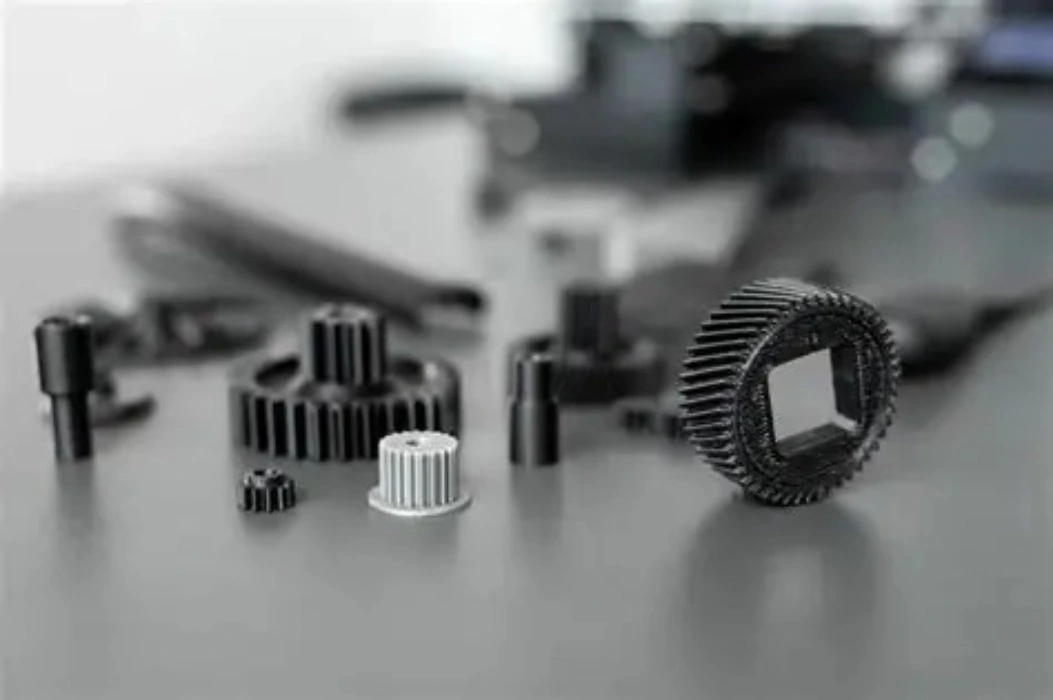
Parts that need to handle high temperatures, carry heavy loads, or get rid of heat quickly should be made of metal. Plastic is better for places that get wet, move around a lot, or pick up electricity. Plastic is often used to make gears, bearing cages, chemical valve parts, connecting insulators, and guides for food machines. Metal is often used to make frames, shafts, pressure housings, and heat sinks. Both are used in many situations, like when a steel tube turns inside a POM gasket. Teams should sort each part by what it does instead of picking one material for the whole machine. That way, it's easier to decide what to buy.
Why Buyers Are Reconsidering Metal?
There are three things that make people interested in plastic. Weight is the first one. Aluminum is about 2.70 g/cm³ dense, steel is about 7.85 g/cm³ dense, and POM is about 1.41 g/cm³ dense. This means that a gear made of plastic can be a lot lighter than one made of steel. Rust is the second one. The steps of coating and plating are often skipped for plastics because they don't rust. As a third point, grades that don't need as much grease make less noise and last longer. Engineers also like that plastics don't let electricity flow through them, which means they don't need to use extra insulation covers. The next part looks at the trade-offs because these gains aren't good for everything.
Key Differences Between Engineering Plastic and Metal Components
Weight, Strength, and Stiffness
Metals are stiff. Aluminum is only about 70 GPa stretchy and steel is about 200 GPa stretchy. PEEK is about 3.6 GPa and POM is about 3 GPa. Because of this, the same load makes an engineering plastic components parts bend more. To make up for this, designers often add ribs or stronger pieces. Plastics are still a good choice for small and medium-sized parts because they are strong for their weight. Adding glass-fiber or carbon-fiber reinforcement makes them even stiffer. On top of that, plastics can handle pressure and shock better than most metals. Most of the time, metal stays in place better when it's under a lot of stress. Plastic is often the best choice when you need something that is light, quiet, and strong.
Machining Behavior and Lead Time
Steel or titanium take longer to cut than plastic, but plastic isn't always easy to work with. They have a hard time getting heat away from the cutting edge, so heat builds up there. This can lead to burrs or shifts after the cut. If you want to get better, use sharp tools, cut slowly, and take a break from stressing out your grades. We talk about these needs in our DFM review before we start cutting. When the process is planned, that fact is taken into account because tools wear out faster on strengthened grades and PEEK. You need to use more force and often do extra things like heat treating, deburring, or anodizing when you cut metal. From 3 to 15 work days, BOEN Rapid can make samples, and from 2 to 4 weeks, they can make low-volume items. This method can be used to make parts that are up to 1200 mm long, 800 mm wide, and 600 mm high.
Cost Drivers: CNC, Injection Molding, and Metal
How much it costs depends on how much of it there is, what kind of material it is made of, and how it is made. Since CNC cutting doesn't need a model, it can be used for one piece or a few thousand. The plan can be changed between runs. You need a mold for injection casting. It costs money up front, but it pays off when you make a lot of parts. Parts made of metal often need extra work after they are made, like being polished or heated, but parts made of plastic don't have to. PEEK costs a lot more per kilogram than POM or PA66, so it's also important to pick the right resin. I think you should look at the total cost of ownership, which includes how much it costs to finish, put together, repair things, and keep them in good shape. Since we do both CNC machining and injection molding, we can tell you when your volume will break even.
Performance and Environmental Impact
Heat, Wear, and Chemical Exposure
Most people think that metals can only be used in cold places, but plastics can be used in more places than they think. Up to about 260°C, PEEK doesn't change. POM and PA66 also work well in this range, but the grade and load will determine how far they can go. PTFE is used in lab equipment and chemical valve seats because it doesn't react with many solvents, acids, and bases. Chrome steel can pit and carbon steel rusts when chloride is present. UHMW-PE and nylon tend to last longer than soft metals when it comes to moving wear.
Moisture and Dimensional Stability
There is a lot of worry about this because engineering plastic components parts move around a lot more than metals. It takes 23 µm of aluminum to grow one meter for every degree Celsius, but 100 to 120 times as much POM to grow itself. PA66 also takes in water from the air, which changes its size when the humidity does. It's not as strong for POM, PEEK, and PTFE. Our experts help you pick the right grade for tight-tolerance parts and do a tolerance analysis to find the sizes that need extra care. We machine to within ±0.01 mm to ±0.1 mm, and we use a CMM to check the most important parts. Please show us on your picture where you plan to work so that we can give you a stable grade.
Sustainability and Recycling
Getting metals back is the best way to do it. One of the things that is recycled the most around the world is steel. It only takes about 5% as much energy to make recycled aluminum as it does to make new aluminum. Sometimes, engineering plastics can be reused or recycled. With that said, it is harder to get mixed meetings and grades that are filled in again. Parts made of plastic are lighter, so they use less energy to move and ship things. They also last longer in acidic environments, so they need fewer fixes. It's also important to have rules. People who buy things in the US and Europe often need RoHS and REACH agreements. Food or medicine-related programs may also need proof from the FDA or ISO 10993.
Practical Considerations for Procurement Managers
Compliance Documents to Request
There is a material certificate with a lot or batch number, information about RoHS and REACH, and a report on the items' size and shape in a shared core set. Most of the time, programs that make food equipment look for resin grades that meet FDA 21 CFR Part 177. This part of the rule talks about things like POM, nylon, and PTFE. Tests for biocompatibility under ISO 13485 and ISO 10993-1 are often used in medical projects. Making sure the paperwork fits the resin you buy is important because it changes based on the grade of resin and the supplier. There are inspection reports, material certificates, and records of how the materials were used that BOEN Rapid gives along with project material.
Supplier Capabilities to Verify
You should look at five things:
• material range
• tolerance capability
• batch consistency
• certifications
• lead time
A provider should be able to make PEEK and reinforced grades, as well as POM and nylon, because they use different tools and techniques. They could use a CMM to measure and check the surface finish. You should also ask how they check and if they keep track of each lot. For many engineering programs, the first ten pieces are one to ten. Make sure the order can be changed. Also, find out how many people are buying it again, since a regular supply is more important after the first batch. BOEN Rapid has ISO 9001 and ISO 13485 certifications, can handle orders of 1 to 10,000+ pieces, and the first RFQ evaluation is usually done in 24 hours.
How BOEN Rapid Supports Your Sourcing?
We've been making small amounts of things and developing quickly for more than 15 years. We cut metal and plastic with CNC machines, print 3D models in metal and plastic, use injection molding and vacuum casting, and make sheet metal. For the same assembly, we can give you prices for both metal and engineering plastic components parts in that price range. Our experts do a DFM study before getting to work. It involves picking the right materials, looking at limits, and making plans for how the product will be made. The things we make follow the rules set by ISO, DIN, ANSI, ASME, and JIS. Please let us know if you need us to sign non-disclosure agreements (NDAs), and we ship securely through DHL, UPS, and FedEx. A separate group is in charge of making plans, prototypes, and small batches for medical and OEM programs.
Design Tips for Engineering Plastic Components
Wall Thickness, Radii, and Stress
When making plastics, simple geometry works best. As much as possible, keep the walls even. Going from thick to thin causes stress inside the material, which can show up as sink marks and warping in molded parts. Make the inside radii big instead of sharp. This is because sharp corners can build up stress and crack materials that are easily damaged by cuts, such as PC. Molded parts will come out clean if you add draft angles to them. When making CNC parts, don't put places that are too deep or too small for tools to reach without having to bend. Instead of hard mass, ribs can be used when you need something to be stiff. Our DFM review has marked these risks on your picture. You can avoid changes that cost a lot later on in the production process if you do this.
Tolerances and Surface Finishing
Places like bearing seats, gear bores, and sealing faces should be the only ones that need tight tolerances. When tolerances aren't as tight, it takes less time to machine and inspect things. As little as ±0.01 mm or as much as ±0.1 mm is possible. The finish on the surface can be between 0.4 and 3.2 Ra. As a treatment, you can shine, roughen, coat, or use chemicals to fix. If you want to paint or coat low-surface-energy plastics like PTFE and POM, you should talk about how they need to stick together right away. Engineering plastic components parts also change shape when they are hot or cold, so write down the conditions you used to measure on the picture.
Hybrid Plastic-and-Metal Assemblies
The best places for each material to be used are found in hybrid forms. It has a steel or aluminum frame that keeps it rigid, and plastic bushings, gears, insulators, or wear pads that don't let electricity flow through them. Plan the joint very well. When temperatures change, press fits may not fit as well, so plan for some movement or use closures that let it happen. Self-tapping screws that are easy to break should not be bought. Instead, for parts that you will be putting together a lot, use metal inserts with threads. Also, make sure that the things you're using can make chemical and physical touch with each other. We can quote on both the metal and plastic parts at the same time. This makes sure that the whole system works well and follows all the rules.

Conclusion
They fix different kinds of problems when they make parts out of metal and plastic. This is because metals are stiffer and can handle more heat than other materials. They can also handle heavy loads and being recycled better. POM, PA66, PEEK, and PTFE engineering plastic components parts are much lighter, don't rust or react with chemicals, keep electricity flowing, and move more when it's hot or wet. The price is based on the amount, the finish, and the process that is chosen. For different amounts, both injection casting and CNC cutting work well. Plastic parts that don't work rely on things like the supplier's skills, the part's compliance paperwork, and good design details like even walls, planned tolerances, and careful hybrid joints. The best material is the one that fits the load, the area around the part, and the order size.
FAQ
Can engineering plastic parts replace metal components in heavy-duty use?
Sometimes. Parts like insulation, valve parts, gears, and bushings that need to last a long time, don't rust, or are heavy should be made of plastic. Metal should still be used for heavy loads or temperatures that are too high for the polymer because it is stiffer. Because the reinforced grades are stronger, the range is bigger.
What should I look for in a custom plastic part supplier?
If you want to find a good company, look for ones that have worked with PEEK, POM, and nylon before, keep good records of checks, have material certificates, and quality certifications like ISO 9001 or ISO 13485. Make sure that their prices include clear wait times and small loads.
Which regulations affect material selection?
A lot of electronics and industrial tools sold in Europe need to follow the rules set by RoHS and REACH. People in the U.S. also often ask for them. When parts come in contact with food, they must follow FDA 21 CFR Part 177. When parts are used in medicine, they should follow ISO 10993. Ask for papers that are made just for your grade.
Request a Quote for Engineering Plastic Components Parts from BOEN Rapid
Ready to compare plastic and metal for your next project? BOEN Rapid is an engineering plastic components parts manufacturer with ISO 9001 and ISO 13485 certified processes, 3–15 day prototypes, and 2–4 week low-volume production. Send your drawings and volume to contact@boenrapid.com, and our engineers will typically complete the initial evaluation within 24 hours. Visit boenrapid.com for more details.
References
1. Machinery's Handbook, 31st Edition, Industrial Press, 2020
2. Handbook of Plastics, Elastomers, and Composites, 4th Edition, McGraw-Hill, 2002
3. Metals Handbook Desk Edition, 2nd Edition, ASM International, 1998
4. Directive 2011/65/EU on the Restriction of Hazardous Substances (RoHS), European Parliament and Council, 2011
5. Code of Federal Regulations, Title 21, Part 177: Indirect Food Additives, U.S. Food and Drug Administration, 2023
6. ISO 10993-1: Biological Evaluation of Medical Devices, International Organization for Standardization, 2018