High Precision Machined Components – A Detailed Overview
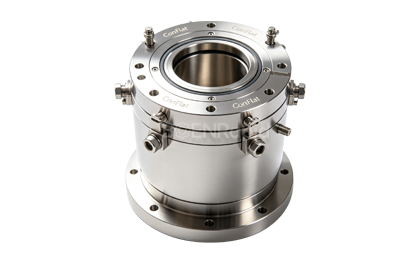
High-precision metal components represent the cornerstone of modern manufacturing excellence across industries where accuracy, reliability, and performance cannot be compromised. These specialized metal parts are manufactured to exceptionally tight tolerances—often within microns—making them indispensable for aerospace, medical devices, robotics, and advanced automation systems. Unlike conventional machined parts, high precision components undergo rigorous engineering, material selection, and multi-stage quality verification to ensure dimensional accuracy, surface integrity, and functional consistency. At BOEN Rapid, we've spent over 15 years refining our capabilities in delivering these critical components to global R&D teams and procurement departments seeking manufacturing partners who understand both the technical demands and the urgency of product development cycles.
Understanding High-Precision Machined Components
What Defines High-Precision Manufacturing?
High-precision machining goes beyond regular manufacturing by reaching tolerances of as little as ±0.001 mm. This makes sure that every part works exactly as it was meant to under tough operating circumstances. To get this level of accuracy, you need high-tech tools, skilled workers, and thorough quality control systems. Not only is the difference between normal and high-precision in terms of size accuracy, but also in terms of the quality of the surface finish, the stability of the material, and the ability to be used again and again in production runs. These strict rules are needed by industries like aircraft and medical device making to meet government rules and get safety certifications.
Materials Commonly Used in Precision Components
Choosing the right materials is a key part of getting the performance qualities you want. Aluminum has a great strength-to-weight ratio and is easy to work with, which makes it perfect for use in aircraft and robots. Stainless steel is used in many medical tools and food processing equipment because it is very resistant to rust and lasts a long time. Titanium is great at being biocompatible and working well at high temperatures, which is important for internal devices and space buildings. Copper and brass are great at conducting heat and electricity, which makes them useful in the electronics and telecommunications industries. Each material has its own specific qualities that make it suitable for different working conditions, load-bearing needs, and weather exposures.
Categorizing Components by Application and Function
Different businesses use precision parts for different tasks. Parts for aerospace systems need to be strong but light so they can withstand high temperatures and movements. To keep patients safe and make sure the medical instruments work, their parts need to be made of biocompatible materials that are accurate down to the micrometer level. Hardened surfaces and exact tooth profiles make it easier for power to flow through gears and gearbox parts in cars, and they also make them last longer. Precision shafts, connections, and actuator parts are needed for industrial automation because they allow motion and placement to be done accurately and over and over again. When buying teams know about these application-specific needs, they can choose the right materials, limits, and finishing methods.
The Manufacturing Process of High-Precision-Machined Components
Advanced Manufacturing Techniques
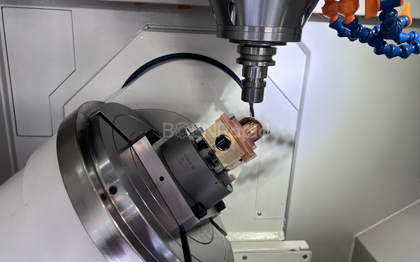
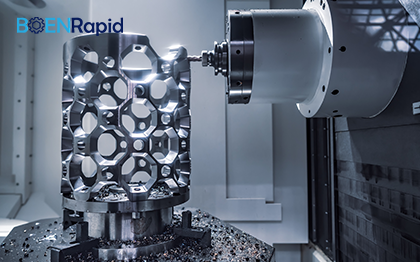
To get the best results, modern precision manufacturing combines a number of advanced techniques. The base is CNC cutting, which uses computer-controlled multi-axis tools to remove material very precisely. Complex shapes, tight tolerances, and great accuracy are all possible with this technology. Electrical Discharge Machining (EDM) is a type of machining that can be used with CNC to work with hard materials and complex holes that regular cutting tools can't reach. Precision grinding gives important surfaces better surface finishes and more accurate measurements. Milling and turning can be used to make a lot of different shapes, from simple cylinders to complicated surfaces with contours.
Each method has its own benefits. CNC cutting is flexible and a good way to save money on parts with a middle level of complexity. EDM is great at making small features in hardened steels and rare metals. Grinding gives you ends that look like mirrors and control over the smallest details of size. At BOEN Rapid, we have all of these skills under one roof, which makes it easy to switch between work streams and provides complete manufacturing solutions for parts that need more than one process.
Key Production Stages from Design to Finishing
Design analysis and DFM (Design for Manufacturability) evaluation are the first steps in the manufacturing process. Our engineering team looks over customer models, finds problems that might come up during production, and suggests ways to make things better while cutting costs. The next step is prototyping, where the first models are checked for accuracy in size and functionality to make sure the design is working as planned before moving on to production.
Next is production machining, which uses carefully designed CNC processes to turn raw materials into high-precision metal components that are close to a net shape. Real-time tracking and checks while the work is being done make sure that the dimensions are correct at all times. The part preparation is finished with finishing steps like heat treatment, surface sealing, sanding, and assembly. There are written methods and inspection places at each stage that keep track of the batches of materials, process factors, and quality measures.
Quality Control and Industry Standards
High-precision manufacturing is different from regular shops because they have strict quality control. We use CMM (Coordinate Measuring Machines), optical comparators, and surface roughness testers as part of our thorough inspection processes to make sure that every important measurement is met. Our methods are governed by quality management systems that are approved by ISO 9001 and ISO 13485. This makes sure that all of our projects are consistent and can be tracked.
We follow international standards like ANSI, ASME, DIN, and JIS when making parts that work with global supply lines without any problems. Each package comes with material certificates, inspection reports, and measurement analysis paperwork. This gives you full peace of mind and guarantees quality. This organized method cuts down on problems later on, speeds up the approval process, and builds trust between makers and buying teams over time.
Benefits and Applications of High-Precision-Machined Components
Competitive Advantages Over Standard Components
High-precision metal components improve performance in ways that can be measured, which makes their cost worth it. Better accuracy in measurements cuts down on assembly time and avoids having to make expensive changes during product integration. In sensitive uses, better surface finishes lower the risks of pollution, friction, and wear. Tighter standards mean better dependability and fewer failures, which has a direct effect on the cost of warranties and the image of the brand.
Durability increases the service life of a part, especially in high-cycle or harsh-environment situations where regular parts would break early. The long-term cost-effectiveness is clear when you look at how much less downtime, replacements, and maintenance are needed. Because these benefits build over the lifetime of a product, buying high-precision metal components is more of a strategic investment than a simple purchase choice.
Industry-Specific Applications
The aerospace and defense industries need parts that perform well and meet strict safety standards even in harsh conditions. Titanium and high-strength metals, along with precise tolerances that ensure structural integrity and working safety, are used to make landing gear modules, turbine parts, and structural fasteners.
The making of surgical instruments, implantable devices, and diagnostic equipment depends on parts that are very accurate. Biocompatibility, sterilization compatibility, and accuracy on a micron level are all requirements that can't be changed. Parts have to follow FDA rules and ISO 13485 standards, and they have to be fully traceable and backed up with paperwork.
Precision gears, valve parts, and motor parts help the automotive industry by making vehicles use less gas, put out less pollution, and last longer. High-volume production needs can be met by manufacturing that is both cost-effective and consistent in quality.
Precision housings, connectors, and heat sinks are used in the electronics and telecommunications industries. These parts need to be able to handle high temperatures and tight standards. These parts make miniaturization and high-density packing possible, which are important for current products.
Real-World Impact and ROI
When companies work with dependable precision manufacturers, they can see improvements in how quickly they can make new products and how competitive they are in the market. Time-to-market is sped up by faster prototype validation, which lets you take advantage of income opportunities before your rivals. Consistent quality cuts down on problems in the field and guarantees claims, which protects the brand's image and builds relationships with customers. Access to engineering help and DFM optimization lowers the costs of development and the risks of manufacturing. This is especially helpful for designs that are complicated or are being made for the first time.
How to Select and Source High-Precision Machined Components
Essential Supplier Selection Criteria
When looking for an industrial partner, you need to look at more than just price. Supplier approvals, such as ISO 9001 and standards related to the industry, show that quality management systems and processes are well-established and mature. How well a supplier can make your parts depends on their manufacturing capabilities, such as the types of equipment they have, how well they know their materials, and how well they can integrate their processes.
Partners who add value are different from basic production shops because they can provide engineering support. Look for providers that offer DFM analysis, advice on materials, help with optimizing tolerances, and help with developing prototypes. These services lower the risks of development and make it easier to make things, which saves time and money in the long run.
Cost advantage, communication, transportation, and protecting intellectual property are all things that need to be thought about when looking at geography. Manufacturers in China like BOEN Rapid offer low prices without sacrificing quality. They have experienced engineering teams and are certified internationally. Our 24-hour RFQ response time and English-speaking technical staff make it easy to talk to each other, even if you're in a different time zone.
Budgeting, Lead Times, and Order Flexibility
Knowing how costs are structured can help you make better decisions about what to buy. Unit prices are affected by the cost of tools, the choice of materials, and the amount of complexity. Economies of scale are affected by volume. Low-volume production usually has higher unit costs but gives you more freedom to try new products and see how they do in the market.
Lead times depend on how complicated the parts are and how many of them are ordered. It usually takes 3–15 working days to get prototype parts and 2–4 weeks to finish low-volume production runs. Setting realistic deadlines that are in line with your development milestones will help you avoid delays and hasty decisions that hurt quality.
Minimum order amounts (MOQ) and scalability choices have an effect on planning your supplies and your cash flow. Flexible MOQs from suppliers help with phased product launches and lower the risk of products going out of style. Scalable production lets you go from a prototype to mass production without having to switch suppliers or re-qualify parts.
Evaluating Supplier Reliability and Partnership Potential
Beyond professional skills, long-term success depends on how reliable the provider is. Testimonials and case studies from satisfied customers can help you figure out how well you communicate, produce, and solve problems. OEM service options, such as private manufacturing, custom packing, and inventory management, show that suppliers care about their relationships with customers.
Good writing practices show that the process is mature and that the company is committed to being open. Suppliers who give full inspection records, material certificates, and data on process proof show that they are responsible and care about quality. At BOEN Rapid, we support NDA protection and confidential production for customers who are making their own goods. This keeps their intellectual property safe throughout the relationship.
Comparison and Decision-Making Insights for Buyers
High Precision vs. Standard Metal Parts
To figure out when high accuracy is worth the extra money, you need to look at the needs of the product. Standard parts work fine for non-essential tasks where reasonable tolerances and surface finishes are enough to do the job. When tight tolerances have a direct effect on performance, assembly fit, or regulatory compliance, you need high-precision metal components.
Total lifetime costs, not just starting unit prices, should be used in cost-benefit analysis. Even though high-precision metal components may cost more at first, they save money in the long run because they last longer, don't break as often, and produce less waste. The exact investment is worth it for applications that involve safety-critical tasks, following the rules, or protecting a brand's image.
Material Comparison for Precision Needs
For structural parts that won't be exposed to toxic conditions, carbon steel is a good choice because it is strong, easy to work with, and cheap. There are different types of stainless steel that balance cost and performance. Stainless steel is used in medical, food processing, and marine uses because it doesn't rust. Titanium has a great strength-to-weight ratio and is biocompatible, but it costs more and needs to be machined by people with special skills.
The choice of material affects the cutting processes, the limits that can be used, and the quality of the surface finish. Aluminum can be machined quickly and keeps its shape well, but strengthened steels need to be worked at slower speeds and with special tools. Figuring out these connections helps make design and production specs better.
CNC Machining vs. EDM: Choosing the Right Process
CNC cutting is very good at making a lot of different shapes accurately and with a smooth surface. The process works well for most high-precision metal components that need to be moderately complicated and are made of standard materials. CNC is the best choice for mass production because it is cost-effective and has faster cycle times.
EDM is needed for materials that are very hard, internal cavities that are very complicated, and very small details that cutting tools can't reach. Instead of cutting, the process removes material through electrical discharge, which makes it possible to make complicated forms out of hardened tool steels and rare metals. Most of the time, EDM takes longer and costs more than traditional machining, but it can do things that traditional machining can't.
Surface Finishing Methods and Their Impact
Surface treatments have a big effect on how well and how long a component works. Anodizing aluminum parts makes them more resistant to corrosion and wear and allows for color coding to make the assembly easier to find. By getting rid of free iron and adding a protected oxide layer, passivation processes make stainless steel more resistant to rust. Hard coatings, such as TiN or TiAlN, make the surface harder and lessen contact in places where things tend to wear out quickly.
Polishing improves both the look and the function of a surface by smoothing out rough spots that could let germs into medical or food processing equipment. Powder coating protects outdoor or harsh-environment parts with long-lasting, uniform finishes. Choosing the right finishing methods based on operational needs increases the service life of components and keeps them performing to specifications throughout the lifecycle of a product.
Conclusion
Investing in High Precision Metal Components is a must for businesses that need to improve product quality, dependability, and competitive edge. Knowing the differences between precise and standard production, choosing the right materials and methods, and working with suppliers who can do what you need them to do have a direct effect on how quickly you can get your product to market and how well it does. There are a lot of choices when it comes to manufacturing, but suppliers who consistently provide excellent service can be told apart from those who only provide transactional services by their technical skills, quality systems, and willingness to work with others. Access to reliable precision manufacturing isn't just a matter of buying things; it's also a matter of strategy that speeds up time-to-market and encourages new ideas as global competition heats up.
FAQ
What tolerances define high-precision machining?
Tolerances for high-precision cutting are usually between ±0.001 mm and ±0.01 mm, but this can change based on the material, the shape, and the way it was made. Parts used in aerospace and medical devices usually need the tightest tolerances. Parts used in industrial automation may be able to handle slightly wider ranges. Tolerance standards should match the need for functionality with the cost and ease of production.
How do I choose between aluminum and stainless steel?
The choice of material relies on the needs of the product. Aluminum is great for aircraft and robots because it is lighter, easy to work with, and doesn't rust. For medical equipment and harsh settings, stainless steel is the best choice because it is strong, doesn't rust, and lasts a long time. When making a choice, you should think about operational conditions, strength needs, and budget limits.
What certifications should precision component suppliers hold?
Getting ISO 9001 certification means that you have built quality control systems that can be used in any industry. ISO 13485 is needed for parts of medical devices to make sure they follow the rules. Certifications specific to the industry and compliance with international standards such as ANSI, ASME, and DIN show that the company can make things and is committed to quality.
Partner with BOEN Rapid for Your High-Precision Manufacturing Needs
When you need more than just standard machining for your product development, BOEN Rapid can help. Global manufacturers trust our precision, engineering know-how, and quality assurance. Our company has been providing High Precision Metal Components for a long time and has been certified by both ISO 9001 and ISO 13485. We use modern CNC cutting, EDM, and a wide range of finishing options to make parts that meet the strictest requirements. Our engineering team can help you speed up development cycles while still meeting strict quality standards. They can do this by optimizing DFM, making fast prototypes, and providing reliable low-volume production support. We can help you with production and scientific teamwork on any project, whether it's for medical equipment, robotics systems, or aerospace assemblies. Email us at contact@boenrapid.com to talk about your needs for precision parts and find out how our services can help you with your next invention.
References
1. Smith, J.M. & Anderson, K.R. (2022). Precision Manufacturing Technologies: CNC Machining and Advanced Processes. Industrial Press Inc.
2. Chen, W. & Roberts, D.L. (2021). "Material Selection Strategies for High-Precision Components in Aerospace Applications." Journal of Manufacturing Science and Engineering, Vol. 143, Issue 8.
3. International Organization for Standardization (2020). ISO 2768: General Tolerances for Linear and Angular Dimensions. ISO Standards Catalogue.
4. Williams, P.T. (2023). Medical Device Manufacturing: Precision, Quality, and Regulatory Compliance. CRC Press.
5. Zhang, H. & Thompson, M.A. (2021). "Comparative Analysis of CNC Machining and EDM for Complex Geometry Production." International Journal of Advanced Manufacturing Technology, Vol. 115, pp. 2847-2863.
6. American Society of Mechanical Engineers (2019). ASME B46.1: Surface Texture, Roughness, Waviness, and Lay. ASME Standards Collection.