How Do Rapid CNC Prototyping Accelerate Product Development?
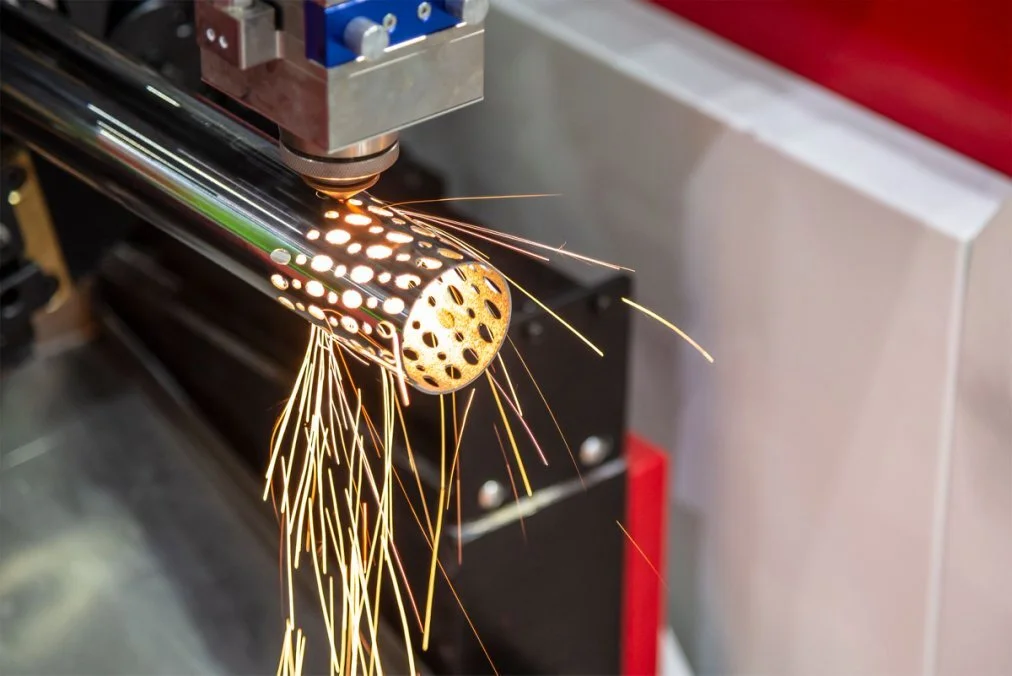
Compared to almost any other production method on the market today, rapid CNC prototyping parts can get a product from a digital design to the market faster. When a hardware startup needs to test an aluminium enclosure, confirm a robot joint, or meet a crowdfunding goal, they can't wait weeks for tooling. With computer guidance, CNC machining removes material from solid metal or plastic stock with great accuracy. Parts that work can be made in as little as three business days, and tolerances are kept to ±0.01mm. That speed, along with testing on real materials, is what makes CNC prototyping a real speed booster for product development cycles.
Understanding Rapid CNC Prototyping and Its Role in Product Development
What CNC Prototyping Actually Does
To make a part from a CAD file, computer numerical control machining guides cutting tools, drills, and lathes along axs that have already been set up. With 3D printing, shapes are added one layer at a time. CNC does not do this. It is a subtractive process that starts with a solid billet and takes away anything that doesn't belong. After this step, a part is created that is dense, has a smooth surface, and has the mechanical properties of the material that was used to make it, like 6061 aluminium, 316 stainless steel, titanium, PEEK, or polycarbonate.
It is very important that this material is real for actual proof. If you make a sample from the same aluminium metal that you plan to use for mass production, it will react the same way to changes in temperature, vibration, and assembly load. This is information that a plastic 3D-printed stand-in just can't give you.
Typical Workflow and Lead Times
An uploaded CAD file must go through a strict process before it can be shipped. This includes a design review and DFM analysis within 24 hours, confirmation of the material and process, precision machining, dimensional inspection, surface treatment, and safe shipping via DHL, UPS, or FedEx. At BOEN Rapid, this whole process can be completed in three to fifteen business days, and they can handle any number, from a single sample to low-volume production runs, with no minimum order size.
Rapid CNC Prototyping vs. Other Prototyping Methods: Making the Right Choice
Where CNC Outperforms 3D Printing
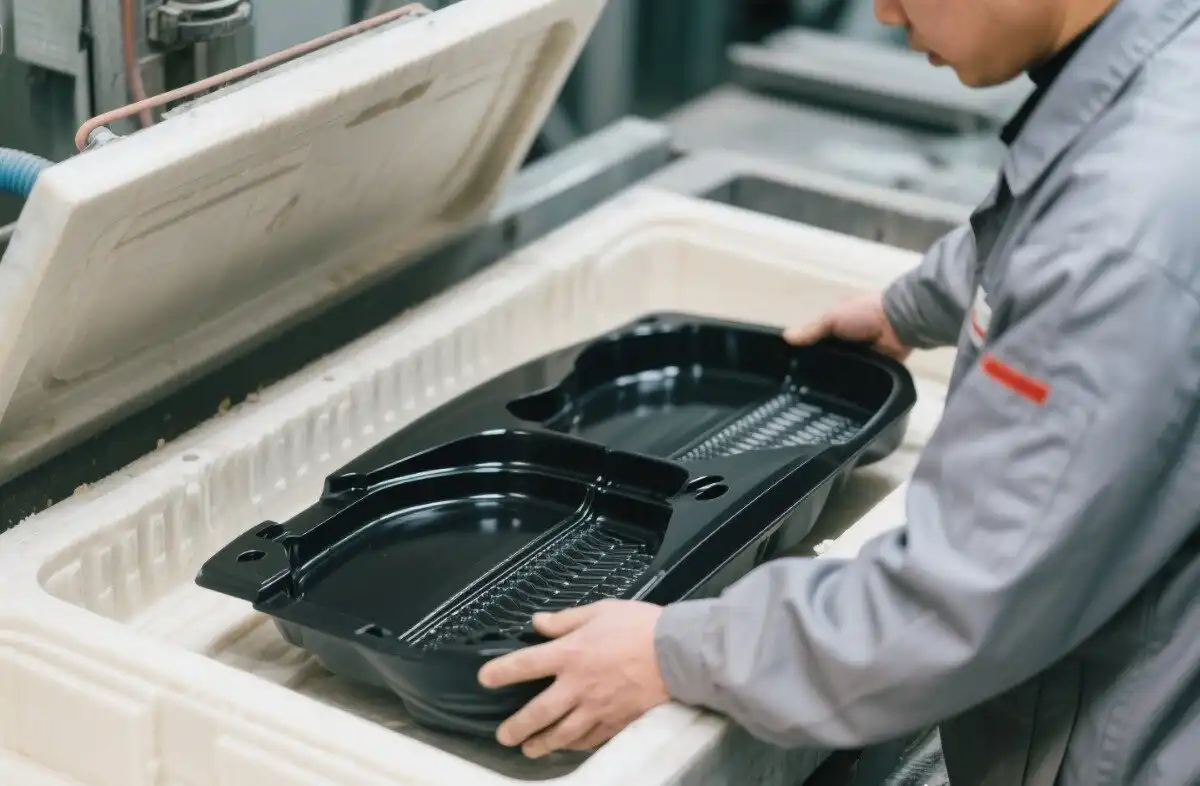
Stereolithography (SLA) and fused deposition modelling (FDM) are both fast and inexpensive ways to make complex organic shapes. Formlabs says that SLA gives the most accurate surface detail of all the plastic printing methods, which means it can be used for visual models. Rapid CNC manufacturing parts, on the other hand, are better at isotropic strength, tight dimensional standards, and a wide range of materials. FDM and SLA are not as good at these things. If you want to be sure that a part can handle a drop test, a structural load, or threaded fasteners, you should use a machined sample.
CNC vs. Injection Molding for Early-Stage Development
For injection moulding to work, you need to buy hard tools, which is a good idea for mass production but too slow and expensive for iterative design exploration. When CNC machines are used, they don't need special tools to make rapid CNC prototyping parts changes. This means that changing a design between versions only takes time to re-program, not making a new mould. For hardware startups that go through two or three design cycles before a launch, this amount of flexibility is essential for making money.
How Rapid CNC Prototyping Accelerates Product Development: Core Benefits and Applications
Speed and accuracy are the two main perks, but the full picture is richer than that. Here are the core advantages that directly shorten the time it takes to develop:
- Compressed iteration cycles: Receiving a machined aluminum bracket or stainless steel housing within days instead of waiting three to five weeks for tooling allows engineers to run multiple design loops in a single sprint. This lets them find fit-and-function problems early on before they compound downstream.
- DFM feedback before a single chip is cut: Professional manufacturability analysis flags thin walls, problematic undercuts, and tolerance stack-ups during the quote stage, preventing rework rounds that eat up schedule margins.
- No minimum order quantity: You can order just one part—or five parts across three design variants—without volume commitments, keeping validation costs proportional to the actual risk being retired at each development gate.
- True material testing: Prototypes machined from aluminum, titanium, or engineering plastics like PEEK reproduce real-world mechanical and thermal behavior, creating test data that translates directly to production specifications.
These benefits can be used in any challenging field. Robotics teams test torque loads on machined structure frames before they cast the parts in dies. For tests on sterilisation compatibility, medical device makers use titanium instrument prototypes. Before approving a tool, automotive providers use precisely machined valve bodies to check the flow characteristics.
How to Effectively Design Parts for Rapid CNC Prototyping?
Key DFM Principles That Save Time
Things like wall thickness, how easy it is to get to features, and the tolerance specification have direct effects on time and cost for rapid CNC prototyping parts. Walls that are less than 0.8 mm thick in metal or 1.5 mm thick in plastic are likely to chatter and bend. Calling out only the tolerances that functional surfaces really need stops finishing processes that aren't needed. Giving internal corners large radiuses also cuts down on tool changes. Giving a full, sized STEP or IGES file with a clear range table at the beginning cuts down on the back-and-forth that delays projects for days.
Materials to Match Your Production Intent
It is not just a formality to choose a prototype material that is the same as the alloy you want to use in production. This is the best way to make sure that test data collected during prototyping correctly predicts how the production part will behave. BOEN Rapid has parts in aluminium, steel, stainless steel, titanium, brass, copper, ABS, POM, PEEK, nylon, and polycarbonate in stock. Parts can be up to 1,200 mm long, 600 mm wide, and 600 mm high.
Procuring Rapid CNC Prototyping Parts: A Guide for B2B Clients
There's more to choosing a rapid CNC prototyping parts provider than just looking at lead times. Quality standards, such as ISO 9001 for general manufacturing process control and ISO 13485 for medical device manufacturing, show that a supplier follows written, verifiable procedures instead of relying on gut feelings on the shop floor. As normal paperwork, dimensional inspection reports, material certificates, and surface-finish records should be sent with every order, not as extras that can be chosen at checkout.
BOEN Rapid's ordering process is set up to make things as easy as possible for engineering teams that are pressed for time. You can upload CAD files to boenrapid.com and get a first evaluation of your project within 24 hours. You can also confirm your material and surface finish needs and keep track of your shipment from door to door. International standards like DIN, ANSI, ASME, and JIS are supported by the company, which can meet the needs of customers in North America and Europe. The same engineering and quality infrastructure can be used for projects that move on to low-volume or full OEM/ODM production, so there is no risk of supplier transition.

Conclusion
Rapid CNC prototyping parts speed up the development of new products by converting approved CAD models into functional components made of production materials in days instead of weeks. The combination of tight tolerances, broad material availability, zero minimum order requirements, and integrated DFM guidance makes it the most effective tool for hardware teams racing toward launch windows. Machined prototypes deliver reliable test data whether you are validating a single robot linkage or iterating through three enclosure revisions before a trade show.
FAQ
What materials are available for CNC prototype parts?
BOEN Rapid supports a wide range of metals—aluminum, steel, stainless steel, titanium, brass, and copper—alongside engineering plastics including ABS, POM, PEEK, nylon, and polycarbonate. Material selection should mirror your intended production specification so that prototype test data accurately predicts final-part behavior.
How does CNC machining compare to 3D printing for functional prototypes?
CNC machining produces parts from solid production-grade stock, delivering isotropic mechanical properties, tighter tolerances (±0.01mm), and superior surface finish compared to FDM or SLA 3D printing. 3D printing is faster for complex organic shapes and visual mockups, but machined parts are the stronger choice whenever structural integrity, material authenticity, or precise mating interfaces are required.
What is the typical turnaround time for a CNC prototype?
Lead times at BOEN Rapid range from 3 to 15 working days depending on part complexity, material, and surface finish requirements. Within 24 hours of receiving the CAD file, the first project evaluation—including DFM feedback and a quote—is returned.
Is there a minimum order quantity?
No. Orders start at a single piece, making iterative single-part validation fully accessible without volume commitments.
Start Your Next Prototype with BOEN Rapid
BOEN Rapid is a trusted rapid CNC prototyping parts manufacturer backed by 15 years of precision manufacturing experience, ISO 9001 and ISO 13485 certifications, and a committed engineering team. Upload your CAD file today at boenrapid.com, or reach our team directly at contact@boenrapid.com to receive a 24-hour quote. From first prototype to full OEM/ODM production, BOEN Rapid is built to move with your development schedule.
References
1. Todd, R. H., Allen, D. K., & Alting, L. (1994). Manufacturing Processes Reference Guide. Industrial Press.
2. BOEN Rapid. (2024). Rapid CNC Prototyping Parts — Product & Service Overview.
3. Formlabs. (2023). The Ultimate Guide to Rapid Prototyping.
4. CustomPart.Net. (2023). CNC Machining Process Overview.
5. AT Machining. (2023). Automotive Prototyping Guide.
6. International Organization for Standardization. (2015). ISO 9001:2015 Quality Management Systems — Requirements.