What Are Stainless Steel Precision Components and How Are They Made?
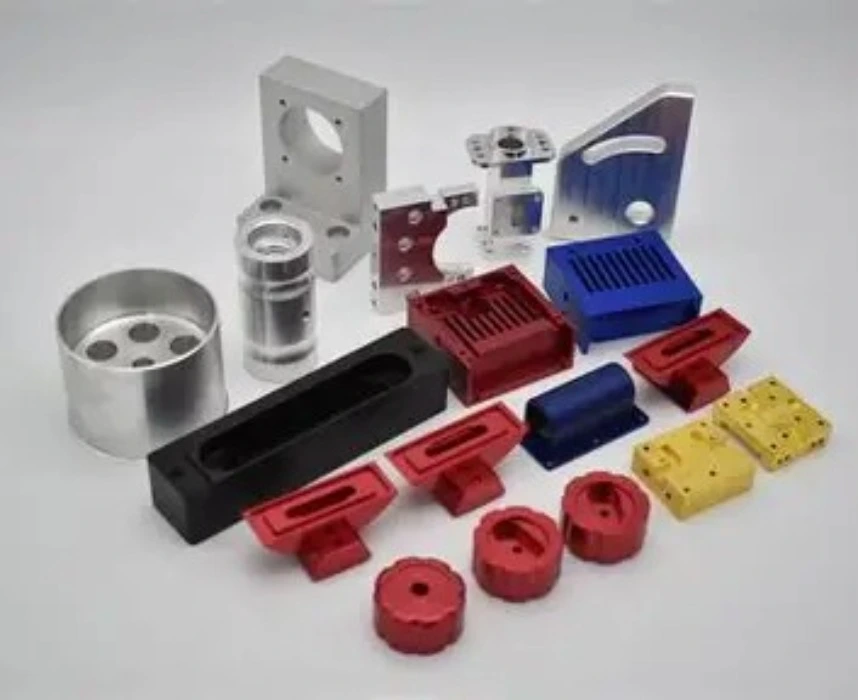
Stainless steel precision components are tightly toleranced machined parts produced from corrosion-resistant steel alloys — primarily grades 304, 316, and 316L — using CNC machining, multi-axis milling, and precision turning. They are manufactured to dimensional tolerances as tight as ±0.01 mm and subjected to controlled surface treatments such as passivation and electropolishing. These components serve as structural and functional elements in semiconductor equipment, vacuum systems, medical devices, aerospace assemblies, and industrial automation — wherever dimensional consistency, material traceability, and long service life under harsh conditions are non-negotiable.
Understanding Stainless Steel Precision Components
Before ordering a part, it's helpful to know what the difference is between a "precision component" and regular hardware, as well as why the grade of the material is more important than most buyers think.
What Defines a Precision Component
A precision component is any machined or shaped part that has to fit into very small dimensions (usually ±0.01 mm to ±0.05 mm), because any departure from these sizes has a direct effect on how well the part fits together, how well it seals, or how well it works. It's not like these parts are off the shelf. As per the customer's CAD models or engineering drawings, they are made and checked with properly calibrated metrology equipment. Full inspection records are kept for each one.
Grade 304: The General-Purpose Workhorse
18% chromium and 8% nickel make up grade 304 stainless steel. It doesn't easily rust or react with mild chemicals, which is why it's usually used for mechanical brackets, structural frames, and other industrial parts. Because it is easy to machine and easy to get, production wait times are short, and prices are low for both large-scale and prototype work.
Grades 316 and 316L: Engineered for Harsh Environments
It is worth noting that adding 2–3% molybdenum to 316 and 316L makes them much more resistant to chloride pitting and acidic media than 304. Thus, these grades are the norm for marine hardware, valves for chemical processing, pharmaceutical contact surfaces, and biomedical implants. The low-carbon 316L type also lowers the risk of sensitization during welding, which is important for vacuum chamber systems that are welded together.
Manufacturing Process of Stainless Steel Precision Components
There are several controlled process steps that go from raw bar stock to a verified precision part. Each of them has a direct effect on the final part's surface condition and accuracy of size.
CNC Machining and Multi-Axis Milling
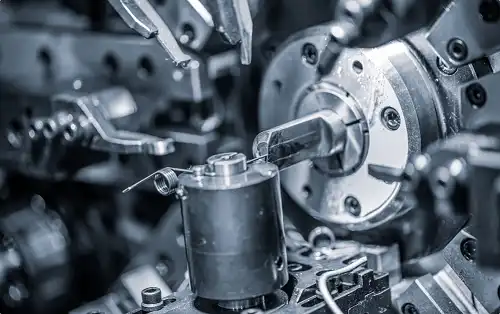
Modern five-axis CNC machining centers, like the DMG machines at BOEN Rapid's 5,000 m² facility, can cut complex shapes in a single setup, which cuts down on the mistakes that happen when multiple setups are used. Multi-axis milling makes surfaces with contours, pocket features, and complex angles that are all the same roughness across the whole part.
Precision Turning and Work-Hardening Management
While being cut, Stainless steel precision components quickly become "work-hardened." Expert machinists do this by choosing the right carbide tools, adjusting the feed rates, and using high-pressure coolant to get rid of the heat in the cut area. Multi-stage cutting (rough cut, stress relief, and finish cut) keeps the dimensions stable and stops warping in thin-walled parts like vacuum flanges and instrument housings.
Dimensional Verification and Quality Documentation
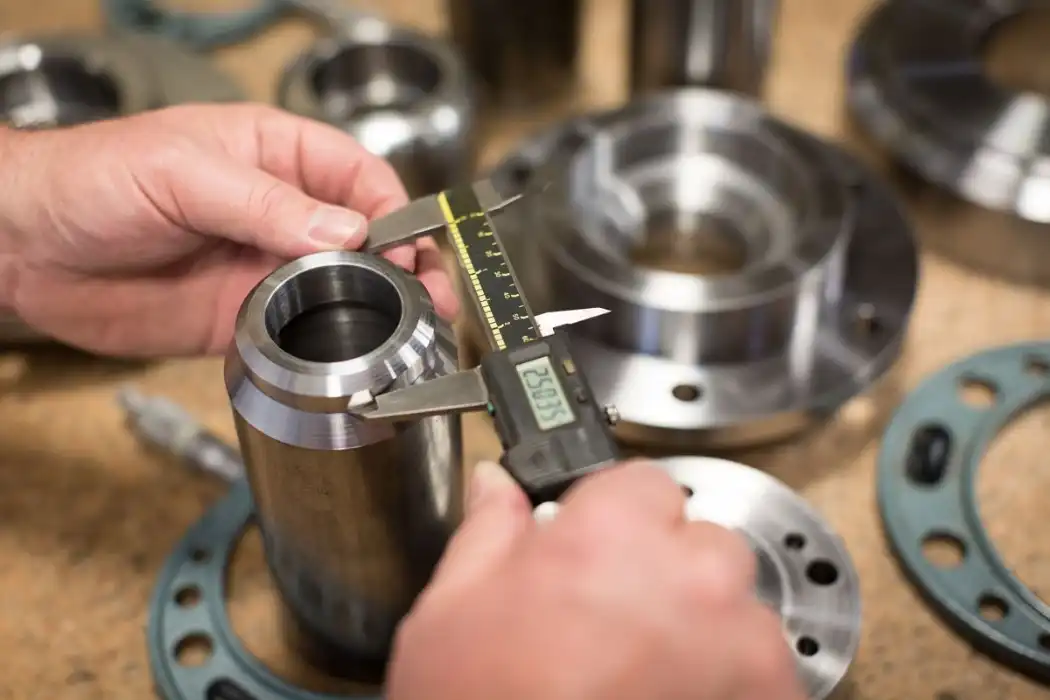
Before it is sent out, every finished part goes through a measured check. Coordinate measuring tools (CMM) check GD&T traits like parallelism, concentricity, and true position. Surface profilometers compare Ra values to the specifications given in the drawing. A full-size inspection report and a material test report (MTR) that can be traced back to the original mill certificate are sent with every shipment. This is required in the supply chains for semiconductors, medical equipment, and aerospace parts.
Comparison and Selection Criteria for Stainless Steel Precision Components
Choosing the right materials and ways to make them is a buying choice that has real effects further down the line. Below is a list of the main pros and cons of 304 SS, 316L SS, and aluminum. The corrosion resistance ratings are Good, Excellent, Moderate, and Low. The chloride resistance ratings are Limited, High, and Low. The machinability ratings are Good, Moderate, and High. The temperature range ratings are –196°C to 870°C, with a lower ceiling. The biocompatibility ratings are Limited, with Certified grades available, and No.
| Criteria | 304 SS | 316 / 316L SS | Aluminum |
|---|---|---|---|
| Corrosion resistance | Good | Excellent | Moderate |
| Chloride resistance | Limited | High | Low |
| Machinability | Good | Moderate | High |
| Temperature range | –196°C to 870°C | –196°C to 870°C | Lower ceiling |
| Biocompatibility | Limited | Certified grades available | No |
Besides the quality of the material, these are the main selection criteria that procurement teams always look at:
- Tolerance capability: Confirm the supplier's demonstrated process capability (Cpk) for your critical dimensions, not just their advertised tolerance range.
- Surface finish requirements: Semiconductor and pharmaceutical applications typically require Ra ≤ 0.4 µm on sealing faces; electropolishing achieves Ra < 0.2 µm.
- Certifications and traceability: ISO 9001 covers process control; ISO 13485 adds the design and risk management layer required for medical device supply chains.
- Batch consistency: For OEM buyers fixing parts into a production BOM, inter-batch dimensional variation is often more damaging than a single out-of-spec part.
All of these things together decide if a seller can be approved and kept in a controlled supply chain. The most reliable way to qualify samples is still to compare them to a clear acceptance standard before signing a framework agreement.
Applications and Maintenance of Stainless Steel Precision Components
Precision-made stainless steel precision components are used in a lot of different places. Knowing where they work affects both the materials they use and the plan for upkeep.
Semiconductor and Vacuum System Applications
Ultra-high-vacuum (UHV) chambers need parts that don't give off a lot of gas, don't get oily, and have sealing surfaces that don't leak. These needs are met by 316L flanges and valve bodies that have been electropolished. Any machining oils or grinding compounds left on the surface can lower the coating yield in both physical vapor deposition (PVD) and chemical vapor deposition (CVD) processes.
Medical Device and Aerospace Applications
Surgical instruments, implantable housings, and analytical instrument bodies need biocompatible grades that are processed in ISO 13485-certified conditions. For aerospace structural parts like clamps, actuator housings, and fastener plates, the mechanical features must be the same from batch to batch, and the material must be fully traceable back to its original heat number.
Maintenance Practices That Extend Component Life
Passivation according to ASTM A967 is the most important treatment that can be done after machining to make something resistant to corrosion. It removes the free iron that was left over from cutting chemically and rebuilds the chromium oxide inactive layer. Checking for crevice corrosion at threaded interfaces on a regular basis and cleaning with non-chloride solutions can help parts last longer in chloride-rich environments and avoid having to be replaced without planning to.
Procurement and Supplier Considerations for B2B Buyers
There's more to finding a new precision machining supplier than just comparing prices per piece. It is always more expensive to fix a bad qualification than to save one unit of cost. This includes rework, production line delays, and not meeting regulatory requirements.
Evaluating Supplier Capability
Ask for proof in the form of CMM inspection reports from recent production runs, passivation test results (copper sulfate or ferrozyl according to ASTM A967), and material certificates that list the alloys that were used and their makeup. Suppliers who work with ISO 9001 and ISO 13485 have organized document control systems that make this kind of paperwork normal, not unusual.
Lead Times and Order Flexibility
BOEN Rapid doesn't have a minimum order quantity (MOQ), which is helpful for engineering teams that are iterating on designs or procurement managers who are looking for a second source but don't want to commit to big inventory positions. Depending on the complexity and surface treatment needs, prototype parts are usually delivered within 3–15 business days. Low-volume production runs are finished within 2–4 weeks.
Protecting Confidentiality in Subcontract Work
When machine shops and building companies need to find extra capacity, supplier privacy is an important issue. A big screening barrier is removed if the seller is willing to sign an NDA and promise in writing not to contact end customers directly. It is standard practice for BOEN Rapid to support NDA agreements and secret manufacturing agreements.
Conclusion
Stainless steel precision components bridge the gap between material science and manufacturing. Whether they work or not in service depends on how well they are made: the right grade, controlled machining, confirmed surface treatment, and clear documentation of their history. The buyer qualification process is worth the time it takes for procurement teams that want to build reliable supply chains in the medical, military, semiconductor, or industrial automation fields. Because BOEN Rapid has approved methods, technical support, and a flexible production model, it can meet these standards from the first sample all the way through long-term production.
FAQ
1. What tolerance can BOEN Rapid hold on stainless steel parts?
Critical measurements usually have a range of ±0.01 mm during production. If you do a DFM review first, you can get tighter limits on some features. All tolerances are checked with a CMM, and the results are written down in the inspection record that is sent with every order.
2. Is passivation always necessary for machined stainless steel?
Yes, for most functional applications, especially those that involve fluid contact, vacuums, or corrosive media. During machining, free iron from the tools is pressed into the surface. The particles erode and make the part less clean and useful without passivation according to ASTM A967.
3. What is the difference between passivation and electropolishing?
Passivation is a chemical bath process that gets rid of free iron and puts back the passive oxide layer. An electrochemical process called electropolishing removes a thin layer of material from the surface. This leaves the metal with a micro-smooth finish (Ra < 0.2 µm) and makes it more resistant to rust. Electropolishing is often used in semiconductor and medical applications because it keeps things clean.
4. How does BOEN Rapid handle material traceability?
Each order comes with a material test report (MTR) that can be linked to the original mill certificate and confirms the grade of the metal and its mechanical properties. Batch records are kept and can be used for supplier checks.
5. Can BOEN Rapid support OEM/ODM customers with NDA protection?
Yes. We sign non-disclosure agreements (NDAs) before looking at plans, and we keep production records secret. We don't talk to end customers directly.
Get Precision-Machined Stainless Steel Components From BOEN Rapid
Industrial, semiconductor, and medical equipment teams all over the world use BOEN Rapid's services to make approved stainless steel precision components. We can help with anything from single prototypes to qualified production runs. Our DMG five-axis equipment, tolerances of ±0.01 mm, and no minimum order quantity mean that we can cover all of your needs. To get a price within 24 hours, email your drawings to contact@boenrapid.com.
References
1. ASM International. Stainless Steels for Design Engineers. ASM International, 2008.
2. ASTM International. ASTM A967: Standard Specification for Chemical Passivation Treatments for Stainless Steel Parts. ASTM International, 2017.
3. British Stainless Steel Association. Machining Stainless Steels — Technical Guidance. BSSA, 2019.
4. International Organization for Standardization. ISO 13485: Medical Devices — Quality Management Systems. ISO, 2016.
5. Metals Handbook Desk Edition. Properties and Selection: Irons, Steels, and High-Performance Alloys. ASM International, 1998.
6. Outokumpu Stainless. Corrosion Handbook: Stainless Steel. Outokumpu, 2015.