Titanium Machining Parts: Types, Processes, and Applications
Titanium machining parts are precision-manufactured components produced from titanium alloys—most commonly Grade 2 and Grade 5 (Ti-6Al-4V)—through subtractive CNC processes including milling, turning, and grinding. These parts deliver an exceptional strength-to-weight ratio, natural corrosion resistance, and proven biocompatibility, making them the material of choice across aerospace, medical, marine, and industrial sectors. This article covers the core material properties, key machining processes, common part types, material comparisons, and practical procurement guidance to help engineers and sourcing teams make informed decisions.
Understanding Titanium Machining Parts: Materials and Properties
Titanium Grades and Their Core Differences
Most of the time, two kinds are used for CNC cutting. Grade 2 titanium is more likely to not rust in chemical and sea environments where strength is not as important. Grade 5 Ti-6Al-4V metal has a tensile strength of over 895 MPa, but it is only 4.43 g/cm³ dense, which is about 60% less dense than steel with the same strength. Buyers need to know the difference between how well a material fits parts that need to hold weight and how well it fits parts that need to be flexible and not rust.
Strength, Corrosion Resistance, and Thermal Stability
Titanium's surface is covered in a thick layer of TiO2 oxide, which keeps it safe from chloride-filled seas, body fluids, and acidic workplaces. Up to 400°C, Ti-6Al-4V doesn't lose its strength, so it can be used in places where aluminum would become less strong. Grade 2 titanium can pit or stress-corrode no matter what chemicals are used on it. Grade 3 titanium can do the same.
Biocompatibility and Its Medical Significance
Tin is safe to use and won't make you allergic. When bone tissue joins directly to the metal surface, this is called osteointegration. The metal helps with this. ISO 10993 says that this material is naturally good for what it's used for, so it's used for bone screws, spine implants, and tooth parts. Managers who buy materials for implants need to make sure that the materials follow ISO 5832-3. When they buy these materials, they should ask for full heat tracking paperwork and material mill certificates.
Titanium Machining Processes Explained
CNC Milling, Turning, and Grinding Fundamentals
Ti isn't good at moving heat, so it sticks on the cutting edge and doesn't reach the rest of the chip. Cutting factors that have this trait wear out quickly if they are not handled well. Because of this, the work is harder. To make titanium well, you need a high-pressure coolant to get rid of heat before it damages the tool or the surface structure of the object. You also need slower spinning speeds and faster feed rates. CBN or ceramic tools will stay sharp longer.
Multi-Axis Machining and Process Advancements
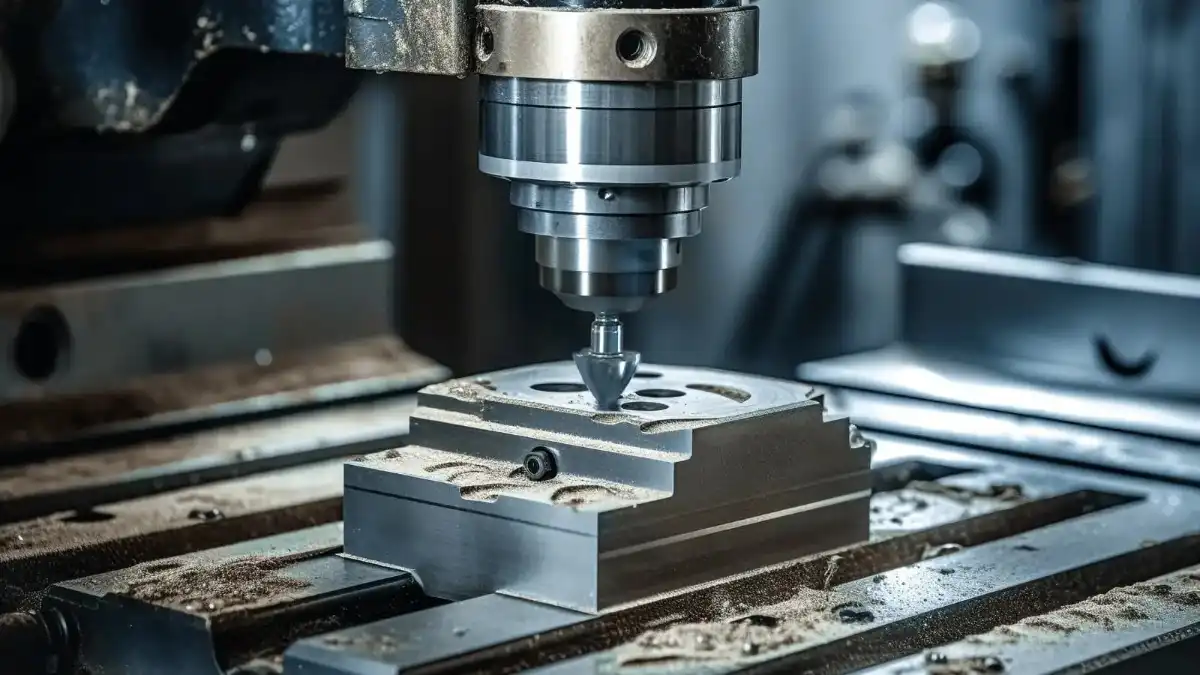
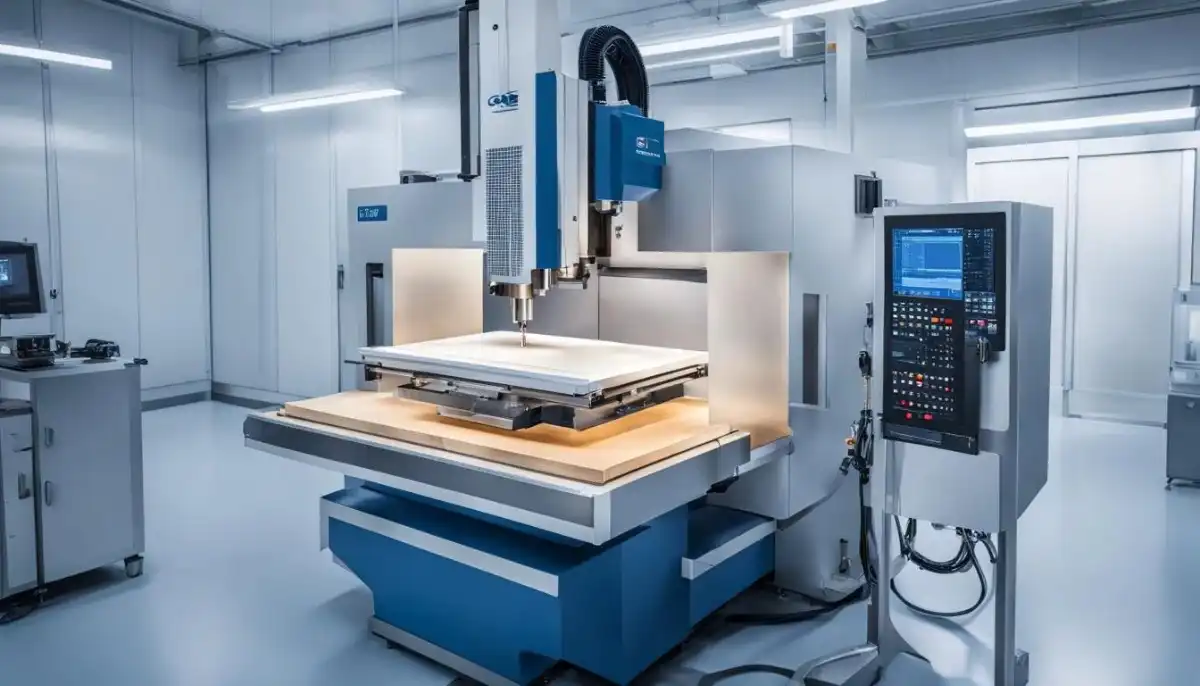
The 5-axis CNC machines of today can make difficult forms with fewer setups, like the profiles of bone plates or the undercuts in aircraft brackets, including titanium machining parts. Cutting down on the number of setups will help you get more accurate readings and wait less time. BOEN has milling machines with three, four, and five axes. Rapid can handle big groups of finished things as well as small groups of tests. With CMM proof, they can get normal tolerances of ±0.05mm and precise tolerances of ±0.005mm.
Surface Finish Options and Quality Verification
No matter what finish you choose, the part will work better or worse. A medical device needs Ra 0.4 to 0.8 µm to stick to cells, but an airplane clip can handle Ra up to 3.2 µm. Finishing can be done in a number of ways, including passivation, Type II and Type III anodizing, sanding, and bead blasting. A CMM is used to check the size of each finished part before it is sent out. The surface roughness is also measured, and the metal makeup is matched against mill certificates to help with positive material identification (PMI).
Types of Titanium Machined Components and Their Applications
Titanium parts come in many types, and each one is useful for a different industry. These are the main types and some times they've worked well:
- Structural fasteners and connectors: Ti-6Al-4V bolts, screws, and brackets appear in UAV airframes and aerospace assemblies where cyclic fatigue resistance and low weight are both mandatory requirements.
- Medical implants and surgical instruments: Bone screws, spinal fusion plates, and orthopedic trial components require precise surface finish control, full heat traceability, and ISO 13485-backed process documentation for FDA 510(k) and CE MDR registration support.
- Marine and subsea housings: Pressure housings for autonomous underwater vehicles and pump bodies for desalination systems benefit from Grade 2's resistance to continuous saltwater exposure and hydrostatic loading.
- Industrial process components: Chemical valves, heat exchanger tubes, and reaction vessel fittings perform reliably in acidic or alkaline environments where carbon steel or stainless steel faces premature failure.
This shows that titanium is better than other materials in many scenarios because of how it is made. Teams that buy things need to make sure they get the right alloy for the job and that the part is the right size when it's done.

Comparing Titanium Machining Parts with Other Materials
Titanium vs. Aluminum: Strength and Weight Trade-offs
You can get aluminum for less money and find it easier to work with, but it can't pull as hard as Ti-6Al-4V, which can handle 895+ MPa. Titanium machining parts are stronger than steel, so it is worth the extra cost and trouble of machine work for heavy parts that could break and put people in danger, like parts that hold up airplanes or surgical implants.
Titanium vs. Stainless Steel: Corrosion and Weight
Stainless steel is good at keeping its shape when the weather is warm. But titanium's passive oxide layer stays stable in biological, chloride-rich, and acidic environments. Austenitic types, on the other hand, can pit and crack due to stress corrosion. It's also about 43% lighter than 316L stainless steel, but it's still strong. What this means is a big difference in how much airframes, implant devices, and underwater systems weigh.
Selecting the Right Titanium Grade
Grade 2 is a good choice when rust protection is important but mechanical loads aren't too high. People use Grade 5 (Ti-6Al-4V) when they need something that won't break down easily, stays steady at high temperatures, and works well in light buildings. Sellers should include heat tracking records that back up the materials they choose from ASTM B348 or AMS 4928 approved stock when they send the goods.
Procurement Guide: Selecting Titanium Machining Parts Suppliers
Certifications and Compliance Requirements
Original Equipment Manufacturers (OEMs) of medical devices must be approved by ISO 13485 in order to buy parts. To be clear, this means the seller does what FDA and CE MDR inspectors tell them to do for change control, process control, and document management. These records, which meet AMS 4928 and AS9100D requirements, can be used for aircraft buying to provide the same level of security. It will make procurement teams feel better during regulatory checks if these approvals are in place before a seller is cleared.
Lead Times, MOQs, and Pricing Considerations
Models that are already in stock can't be used because each titanium part is so expensive and has to be made just for the job. You can usually order a prototype with just one piece. Lead times range from three to fifteen business days for test parts and from two to four weeks for small amounts of production. It is important for purchasing managers to make sure that the first orders come with official first article inspection (FAI) reports and that supply agreements make it clear how to handle changes before they add more orders.
Long-Term Supply Stability and IP Protection
Your secret designs will be safer while they're being made if you work with a supplier that takes NDAs and sends drawings that are encrypted. When suppliers offer specific engineering help, the job takes less time and costs less overall. Things like DFM analysis, plan review, and help choosing materials are all part of this. There should always be quality paperwork packages in every shipment that have been checked and cleared. These should have data on the surface roughness, material certificates, and CMM reports.
Conclusion
Titanium machining parts cannot rust, are safe, and are very strong for their weight. It's great for tough jobs in the war, in business, and in medicine because of this. To meet your project's performance, legal, and time goals, you need to choose the right metal type, cutting method, and source approval path. Teams should never just look at price when choosing a provider. Instead, they should work with certified providers who have record of good systems and tech help.
FAQ
Why are titanium machined parts more expensive than steel equivalents?
Titanium's raw material cost is higher than most structural metals, and its low thermal conductivity forces slower cutting speeds, more frequent tool changes, and higher coolant system demands. These factors increase machine time and consumable costs per part compared to carbon or stainless steel machining.
What tolerances can titanium CNC machining achieve?
With proper fixturing and high-precision CNC equipment, tolerances of ±0.005mm are achievable for precision-critical features. Standard production tolerances typically hold at ±0.05mm. CMM verification confirms dimensional compliance on finished parts.
Can I order custom titanium parts in small quantities?
Yes. Titanium CNC machining supports single-piece prototype orders. Suppliers experienced in medical and aerospace work routinely manage low-volume prototype runs, with delivery within 3–15 working days depending on part complexity.
What documentation should I request for medical-grade titanium parts?
Request ISO 13485 certification, full material mill certificates with heat and lot numbers, ISO 10993 biocompatibility test cooperation records, first article inspection (FAI) reports, and CMM dimensional reports as a minimum documentation package.
Partner with BOEN Rapid for Precision Titanium Components
You can trust BOEN Rapid, which has been making titanium machining parts for over 15 years. They have made medical devices, spacecraft, and industrial machinery for people all over the world. From the pilot stage to production, we keep full quality records with CMM reports and material tracking. We have a 5-axis CNC machine and our methods are approved by ISO 9001 and ISO 13485. You can get a price right away by emailing contact@boenrapid.com or visiting boenrapid.com.
References
1. ASM International. Titanium: A Technical Guide. ASM International, 2000.
2. ASTM International. ASTM B348: Standard Specification for Titanium and Titanium Alloy Bars and Billets. ASTM International, 2019.
3. SAE International. AMS 4928: Titanium Alloy Bars, Billets, and Rings Ti-6Al-4V. SAE International, 2020.
4. International Organization for Standardization. ISO 5832-3: Implants for Surgery — Metallic Materials — Part 3: Wrought Titanium 6-Aluminium 4-Vanadium Alloy. ISO, 2021.
5. Donachie, M. J. Titanium: A Technical Guide, 2nd ed. ASM International, 2000.
6. Boyer, R., Welsch, G., & Collings, E. W. Materials Properties Handbook: Titanium Alloys. ASM International, 1994.