Why Aerospace Parts Need 5-Axis Machining for Complex Geometries
When aerospace engineers push the boundaries of component design—thinner walls, deeper cavities, compound-angle surfaces—conventional machining simply cannot keep pace. 5-Axis machining parts bridge that gap by moving cutting tools across five simultaneous axes, enabling a single setup to produce turbine blades, structural brackets, and implant-grade components to tolerances of ±0.005mm. At BOEN Rapid, we have delivered over 15 years of precision manufacturing experience to aerospace, medical, and defense clients worldwide, combining ISO 9001 and ISO 13485 certified processes with complete material traceability and documentation chains that meet the most rigorous procurement standards.
Understanding 5-Axis Machining in Aerospace Manufacturing
What Makes 5-Axis Technology Fundamentally Different?
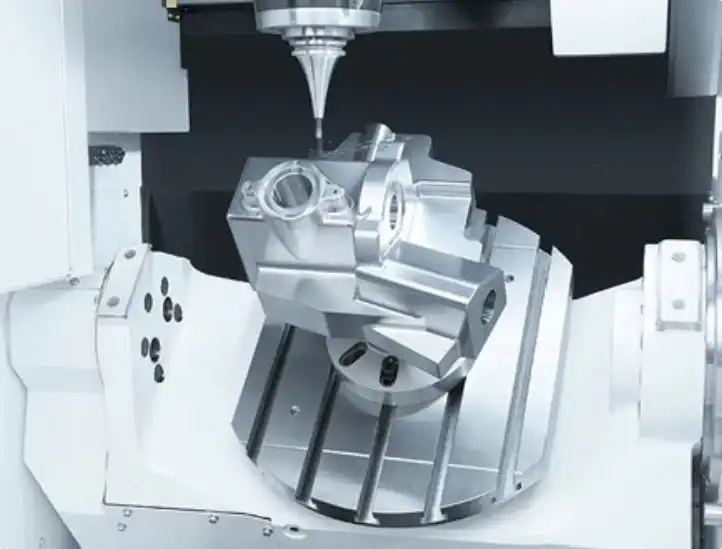
Standard CNC machines with three axes move in straight lines along X, Y, and Z. By adding two rotational axes, usually A and B or A and C, the cutting tool can approach a workpiece from almost any angle without having to be moved by hand. Today, Modern Machine Shop (2022) says that this simultaneous multi-axis movement makes fixing complicated aerospace geometries up to 60% easier. Because of this, deep holes, undercuts, and complex shapes that used to need four or five separate setups can now be made in one continuous operation.
Material and Compliance Foundations
Titanium alloys (Ti-6Al-4V / Grade 5), 17-4PH stainless steel, and high-strength aluminum alloys are often needed for aerospace parts. These are extremely hard to cut materials because they don't conduct heat well and get harder over time. Simultaneous 5-Axis machining parts movement keeps the cutting tool at the best engagement angle along the whole toolpath. This keeps the tool from getting too hot and deforming. This is very important when dealing with materials that meet ASTM F136 or AMS 4928 standards, because the purity of the grain structure cannot be compromised. These process controls are made official by certification frameworks like AS9100D and ISO 9001. These frameworks give procurement teams the written proof they need for supplier approval checks.
Overcoming Manufacturing Challenges with 5-Axis Machining
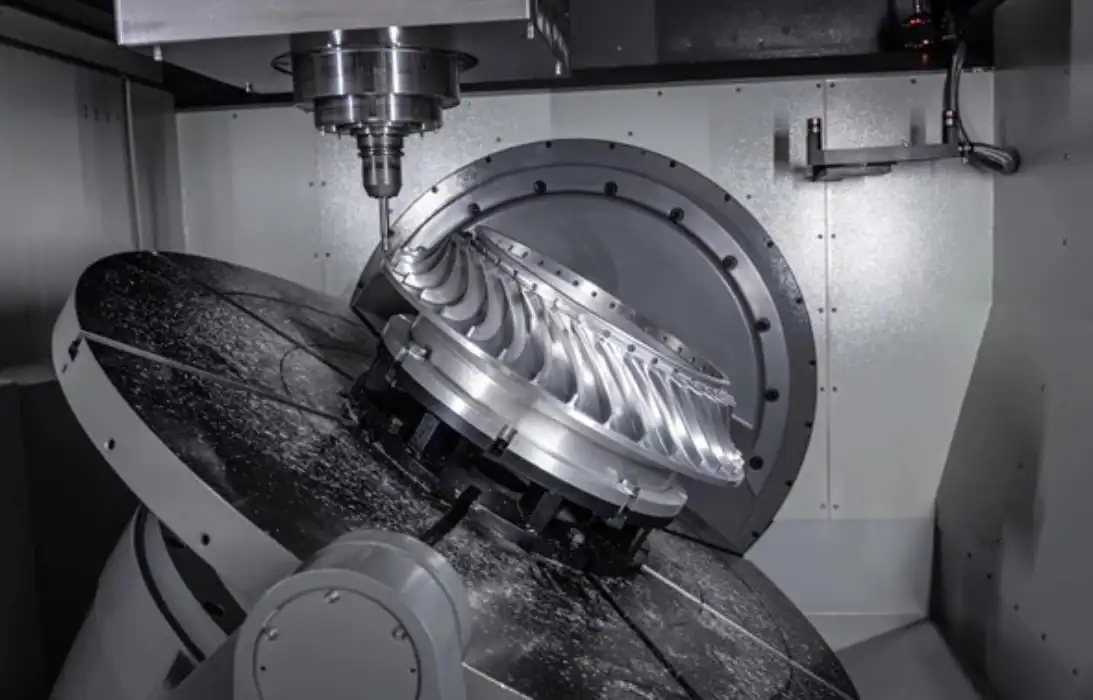
Aerospace buying teams often run into two problems: geometric complexity that is too complicated for three-axes to handle, and placement errors that build up over time from setting up the same thing over and over. Dimensional drift builds up every time a piece of work is unclamped and then re-fixed. On a normal machine, that drift can add up to several hundredths of a millimeter on a complicated airframe bracket that needs six setups. This is enough to cause a non-conformance report.
Most of those sets are unnecessary when 5-Axis machining parts are used at the same time. From rough stock to finished feature, the part stays in the same fixture, and the machine's mechanics keep the same datum the whole time. BOEN Rapid has found that its multi-setup 3-axis processes are 30–50% improvement in dimensional accuracy. This number matches what the International Journal of Advanced Manufacturing Technology released in 2021.
The quality of the surface also helps directly. With the right tool approach angles, the chip load stays stable along curved surfaces, which lowers vibration and surface waviness. When parts are inspected, they often already have Ra 0.4µm finishes, so they don't need to go through any extra cleaning steps. This saves a lot of time when lead times are days instead of weeks.
Key Benefits of 5-Axis Machining Parts for Aerospace Applications
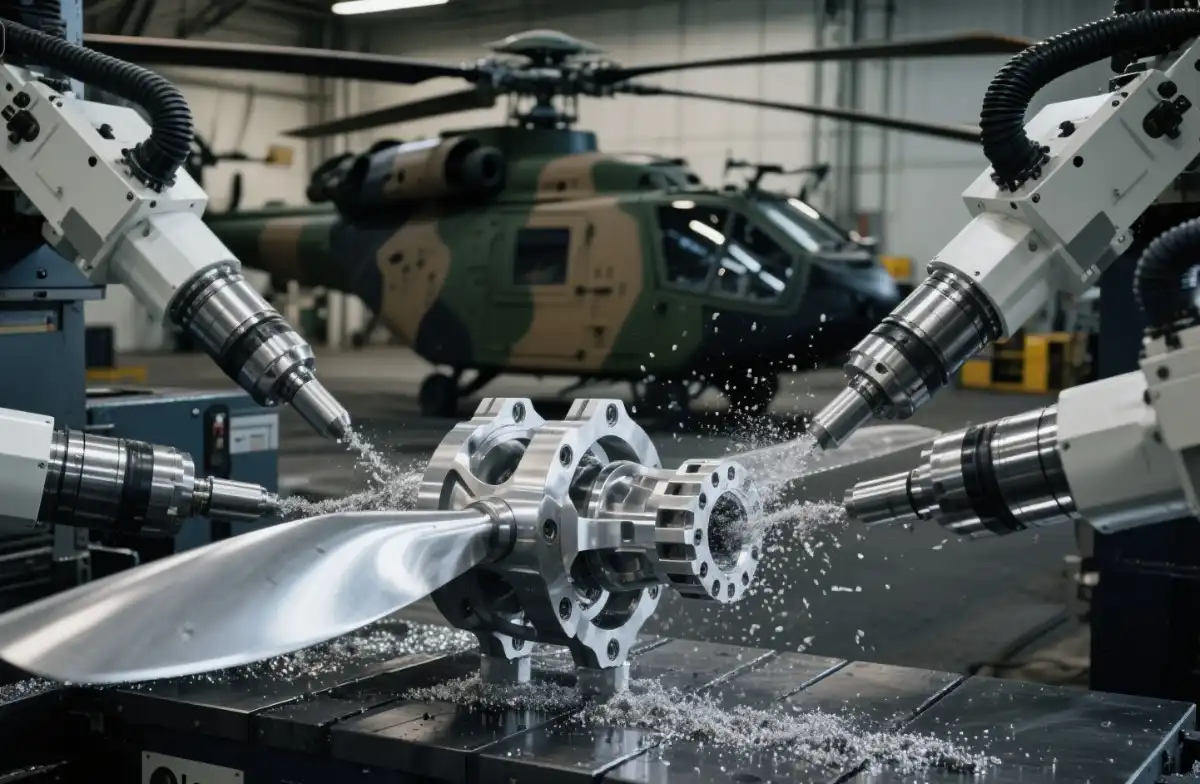
Advanced multi-axis machining has operational benefits that can be measured by the engineering, quality, and procurement teams. Here are the main benefits that matter when it comes to sourcing for aerospace:
- Single-setup accuracy: Holding a piece of work in one fixture gets rid of the error that comes from moving it around, so important features stay within ±0.005mm even on curved titanium structures. This directly raises the pass rate for first-article inspection (FAI) and lowers the number of expensive repair rounds.
- Cycle-time compression: 5-Axis machining parts cuts total production time by up to 40% by combining tasks that would normally be done on different machines. A bracket that used to take 5–7 days to make can now be shipped in 2–3 days without lowering the quality standards.
- Material efficiency: Optimized toolpaths keep stock removal to a minimum, which is very important for titanium billet, which is very expensive. On low-volume, high-value orders, cutting down on scrap directly improves per-part costs.
- Integrally machined structures: Impellers, blisks, and monolithic structural ribs are just a few of the complex parts that can be cut from a single billet. This means that there are no welded joints to add stress and fatigue risk, which is a known benefit that was written about in Aerospace Manufacturing and Design (2023).
These advantages collectively reinforce why five-axis technology has become the standard way to make structural and rotating parts for aircraft vehicles. This is also why buying teams should choose suppliers who can work on five axes at the same time over those who can only work on two axes at a time.
Choosing the Right 5-Axis Machining Partner for Aerospace Parts
Certification and Documentation Chain
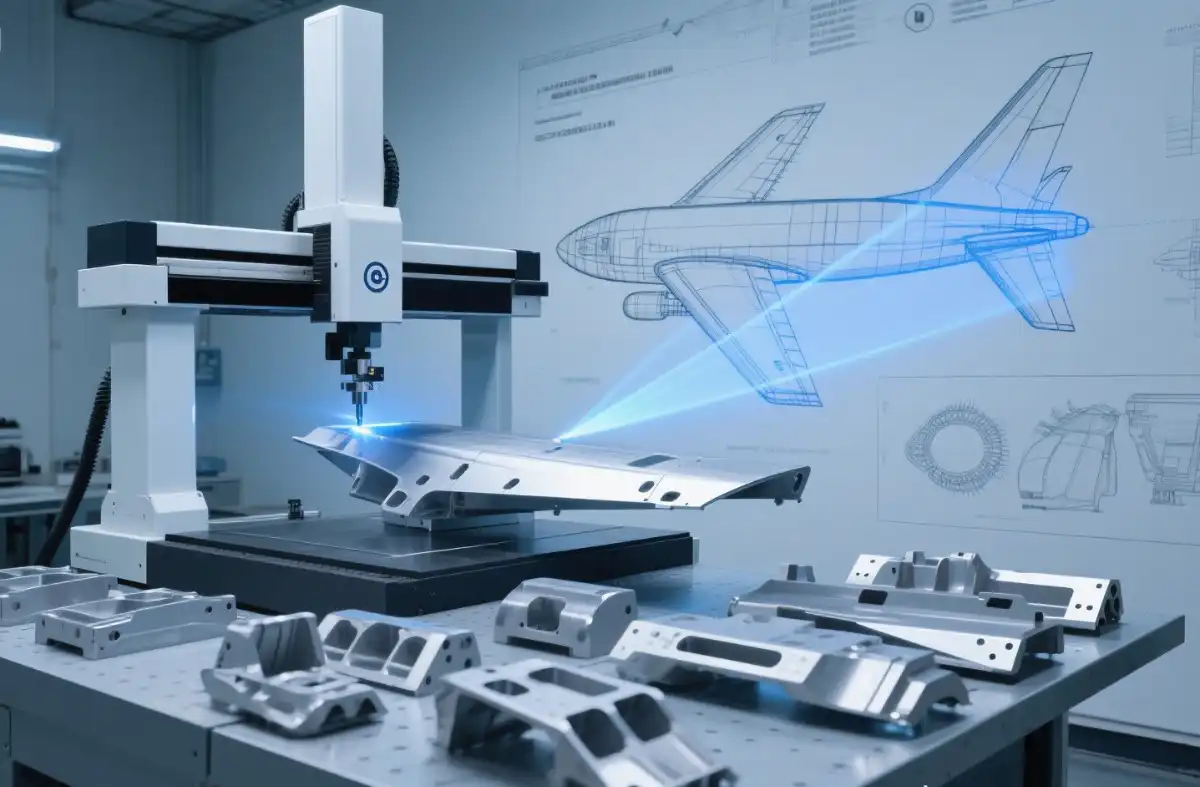
Certification isn't just a box to be checked; it shows that you have a quality management system that works. A good 5-Axis machining parts supplier should have ISO 9001 for general manufacturing quality and ISO 13485 for medical crossover. For work that is specific to aerospace, AS9100D gives the process discipline that supply lines monitored by the FAA and EASA need. The paperwork chain is just as important. Every shipment should have material mill certificates, batch tracking records, CMM inspection reports, and dimensional data files.
Technical Capability Assessment
In addition to certifications, procurement teams should look at the actual specs of the machines they are buying. Tolerance capability (±0.005mm is the acceptable minimum for precise aircraft work), maximum part envelope, and material range are some of the most important standards. BOEN Rapid can cut parts up to 1,200 mm long, 800 mm wide, and 600 mm high. It can work with 17-4PH, titanium (Grade 2), stainless steel 316, aluminum 7075, and engineering plastics like PEEK. It can work with all the materials that aircraft and medical device projects usually need.
NDA Protection and Export Compliance
It is imperative that drawing secrets are kept secret and that export rules are followed for defense-adjacent and dual-use components. Reliable suppliers have NDAs that all of their employees sign before they share any technical data, and they keep track of who can access ITAR-sensitive design files. During source audits, procurement teams shouldn't just assume that these rules are followed; they should check them.
Real-World Applications and Case Studies of 5-Axis Machined Aerospace Parts
There are many flight- and mission-critical parts that use 5-Axis machining parts technology. The standard example is turbine blades and blisks, where the airfoil shape, root form, and cooling holes all need to stay within micron-level tolerances at the same time. This can only be done safely with simultaneous five-axis interpolation. The same single-setup rule works for structural airframe brackets with compound-angle bolt patterns and built-in rib networks.
Integrally machined housings and motor mounts are being used more and more by UAV (unmanned aerial vehicle) makers to cut down on the number of parts needed and the amount of assembly error stack-up. Assemblies of three to five parts are replaced by a single solid five-axis part, which lowers the number of places where something could go wrong. According to the results of the Composites and Advanced Materials Expo (2022), the time it takes to put together solid machined structures in UAV airframes has been cut by 15–20%.
In the future, digital twin simulation and 5-Axis machining parts toolpath generation will work together to cut down on programming time and allow virtual testing before a single chip is cut. Manufacturing Engineering magazine (2023) reports that shops that use digital twin processes and five-axis platforms are getting first-part-correct rates of over 92% on complicated aircraft geometries. This number cuts down on the time it takes to qualify new suppliers.
Conclusion
Three-axis cutting is no longer reliable enough to handle the shape of aerospace parts. That gap is closed by simultaneous 5-Axis machining parts, which offers high precision in a single setup, better surface quality, and the ability to cut tough alloys to the exact tolerances needed for flight-critical parts. When purchasing teams focus on providers with certified processes, full material tracking, and full paperwork chains, their programs are set up for faster qualification cycles and better long-term supply chain resilience.
FAQ
What is the practical difference between 3-axis and 5-axis machining for aerospace parts?
3-axis tools can only move along X, Y, and Z, so complicated features have to be moved by hand. 5-Axis machining parts have two extra axes for rotation, which lets you work on multiple areas at the same time in one setting. This gets rid of mistakes caused by moving and allows limits of ±0.005mm on shapes that 3-axis machines can't reach without using multiple fixtures.
Which materials can be machined on a 5-axis platform?
You can use 5-Axis machining parts systems that are strong enough to work with titanium (Ti-6Al-4V, Grade 2), stainless steel (304, 316, 17-4PH), aluminum alloys (6061, 7075), and engineering plastics like PEEK and POM. The choice of material is based on the application's mechanical, thermal, and biocompatibility needs.
What certifications should an aerospace machining supplier hold?
For quality control, at least ISO 9001. AS9100D is the official standard for aircraft. When parts are used in medical devices, ISO 13485 is important. These certifications make sure that the corrective action protocols, process controls, and traceability systems work.
How long does a typical aerospace first-article qualification take?
The process of getting qualified usually takes three to six months, starting with the NDA and expert review and ending with FAI and small-batch approval. Early stages can be sped up a lot for suppliers with well-established paperwork processes and experienced DFM teams.
Partner with BOEN Rapid for Certified 5-Axis Machining Parts
BOEN Rapid makes precise 5-Axis machining parts for defense, medical, and aircraft projects all over the world. Our ISO 9001 and ISO 13485-certified processes, ability to hold tolerances of ±0.005mm, and full material traceability give procurement teams the paperwork chain they need for source checks. Our tech team gets back to you within 24 hours, whether you need a single sample or a small run of products. To get a private quote, email us at contact@boenrapid.com or go to boenrapid.com.
References
1. Modern Machine Shop (2022). "Five-Axis Machining: Reducing Setup Complexity in Aerospace."
2. International Journal of Advanced Manufacturing Technology (2021). "Dimensional Accuracy Improvement Through Multi-Axis CNC Machining Strategies."
3. Aerospace Manufacturing and Design (2023). "Monolithic Machined Structures: Eliminating Weld Joints in Airframe Components."
4. CAMX – Composites and Advanced Materials Expo Proceedings (2022). "Integrally Machined UAV Airframe Components: Assembly Time Reduction Data."
5. Manufacturing Engineering (2023). "Digital Twin Integration with Five-Axis Platforms: First-Part-Correct Rate Analysis."
6. ASTM International (2021). "ASTM F136: Standard Specification for Wrought Titanium-6Aluminum-4Vanadium ELI Alloy for Surgical Implant Applications."