CNC Precision Turning Parts: The Ultimate Guide to Definition, Quality, And Process
Precision CNC turning parts are cylindrical or rotational components produced by computer-controlled lathe operations, where the workpiece rotates at high speed while stationary cutting tools shape it to exact specifications. Compared to conventional turning, this technology delivers tighter tolerances—down to ±0.005mm—superior surface finishes, and repeatable accuracy across production runs. From hydraulic fittings and motor shafts to threaded connectors and bearing sleeves, precision CNC turning parts serve as foundational elements in fluid power systems, power transmission assemblies, and industrial automation equipment worldwide.
What Are Precision CNC Turning Parts?
Definition and Core Characteristics
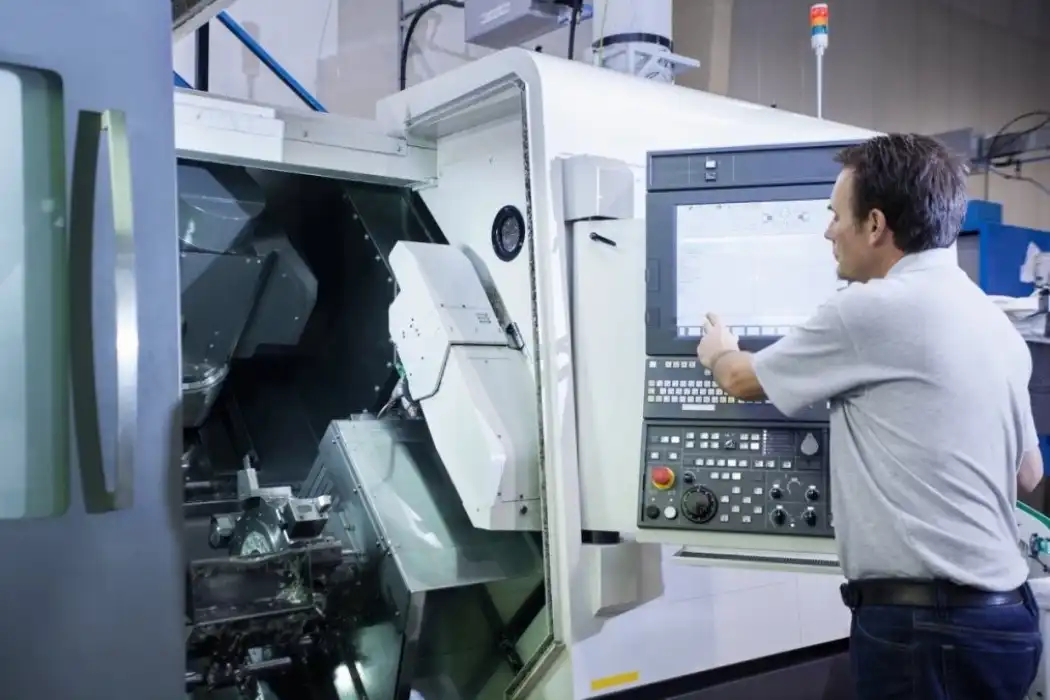
By rotating the object against a fixed cutting tool that is programmed by CNC software, precision CNC turning parts are created from raw bar stock or billets into round, symmetrical components. The process makes shafts, bushings, pins, threaded connections, stepped profiles, and eccentric features all in one setup, so there are no mistakes in shifting that happen with traditional methods that involve several steps.
The control method is what makes precision turning different from regular machine work. These days, CNC lathes read G-code programs that tell them how to move each axis, how fast to feed the material, and how deep to cut. As a result, thousands of similar parts can be made with the same dimensions. Modern Machine Shop (2022) says that CNC turning centers can now repeat positions within ±0.002mm when temperatures are stable, which is a level of accuracy that can't be reached by hand.
Materials That Drive Performance
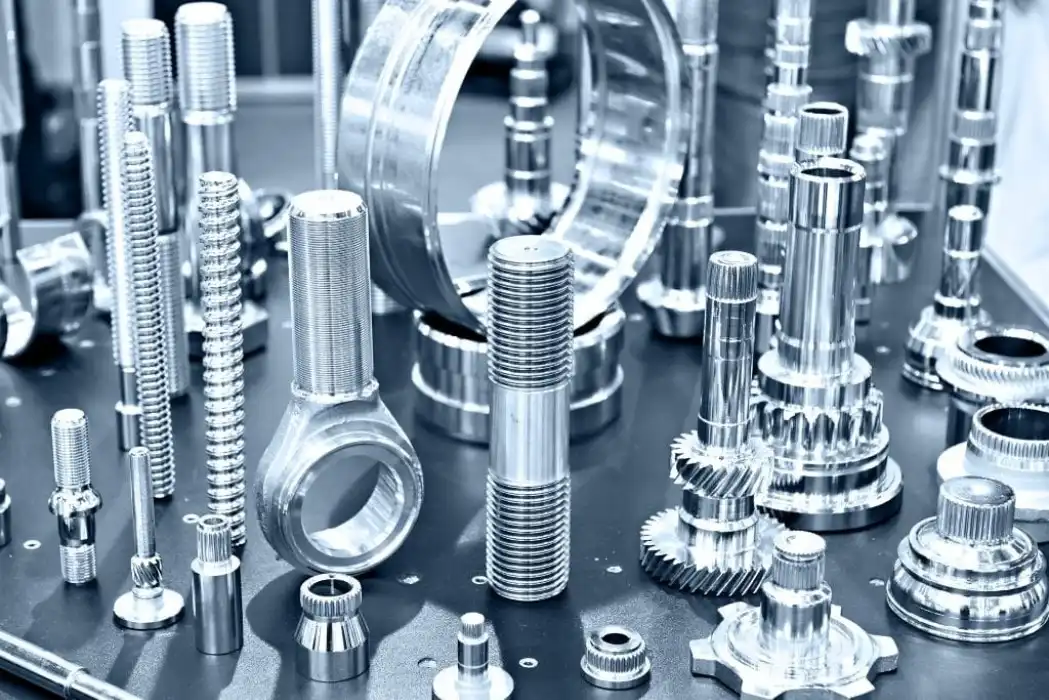
The choice of material directly affects how easy it is to machine, how smooth the surface can be, and how well the end part works. For rotating parts in hydraulic, pneumatic, and transmission systems, these are the materials that are most often asked for:
- Aluminum 6061-T6 / 7075-T6: These alloys are very easy to machine and have a great strength-to-weight ratio. Aluminum 6061 is good for structural housings and connecting bodies, while 7075 is better for harder, higher-stress actuator parts.
- Stainless Steel 303 / 304 / 316: These types don't rust and are commonly used for hydraulic fittings, pump shafts, and other parts that come into touch with fluids. 316 is better at resisting chlorides in harsh media conditions.
- Brass C360: This is a free-machining brass that works well for precision joints, valve seats, and threaded inserts that need to have low friction and good sealing properties.
- Titanium Grade 2 / 5: Biocompatible and rust-resistant, these grades are used for medical devices and aircraft fasteners that need to be light.
- Engineering Plastics (PEEK, Delrin, ABS): These are options for non-metallic bushings, spacers, and insulating parts that are light and do not react with chemicals.
When you match the right material to the job, you avoid problems like premature wear, corrosion failure, and dimensional drift during thermal cycles. These are problems that procurement managers in the hydraulic and transmission industries often face when they make material changes without first consulting engineers.
The CNC Turning Manufacturing Process
From Drawing to Finished Component
The first step is to look over the design files and do a DFM (Design for Manufacturability) analysis. Before any chips are cut, a skilled group of engineers checks the thread callouts, tolerance stack-ups, and surface finish requirements. Through this front-end investment, features that add no functional value and only add cost are found.
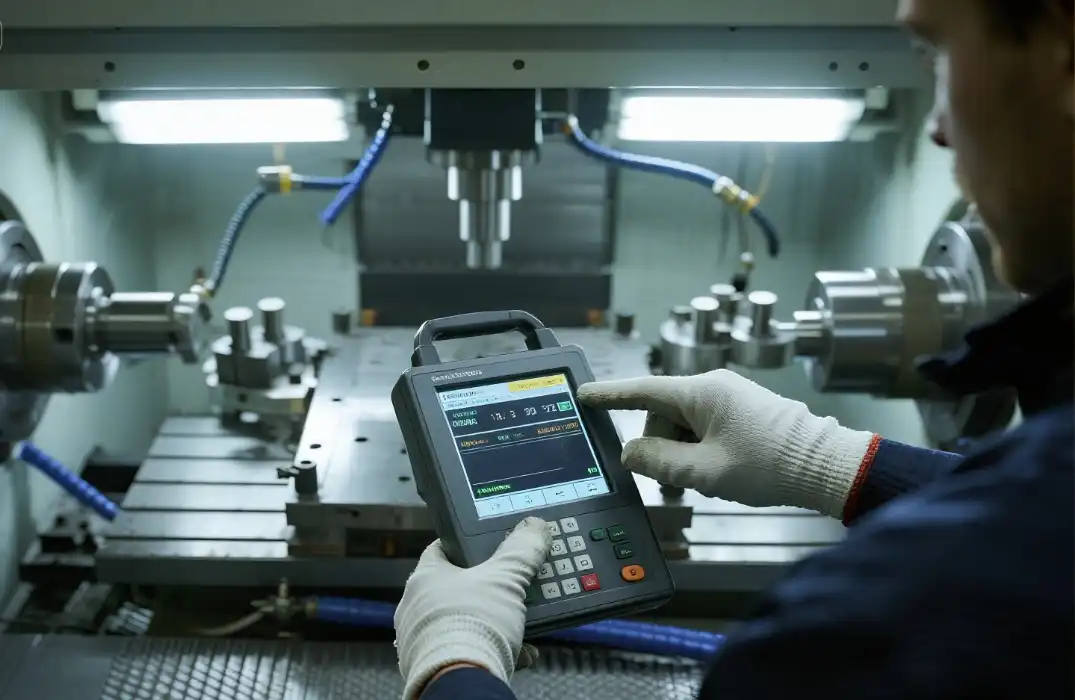
The next steps in setting up the machine are choosing the tools, setting up the chuck, and loading the program. During the first-article production phase, a Coordinate Measuring Machine (CMM) is used to compare the key measurements to the drawing. During the run, in-process monitoring keeps an eye on tool wear and thermal drift. A profilometer is used to measure the surface hardness, and standardized Go/No-Go gages are used to check the threads.
Tolerances and Common Defect Prevention
Most precision CNC turning parts can be turned with a standard deviation of ±0.02mm for cylinder features. For very precise jobs like making hydraulic valve spools or motor shaft journals, you need an accuracy of ±0.005mm, which can be reached by using temperature-controlled work areas and tight toolholding systems.
Chatter lines and other flaws on the surface are usually caused by worn tools, bad workholding, or the wrong mix of feed rate and speed. Competent suppliers deal with these issues by writing down process parameters and keeping an eye on operators in real time, instead of just inspecting after the fact to find problems.
Comparing CNC Turning With Alternative Machining Methods
Knowing when precision CNC turning parts manufacturing works well and when it doesn't helps you make better decisions about where to buy things. When it comes to accuracy, volume, and consistency across operators, CNC turning is better than traditional manual turning. When it comes to cost, turning is clearly better than CNC milling for cylinders and other rotational shapes. This is because the cutting tool engages the whole circumference at once, cutting faster and removing more material.
Grinding has better roundness tolerances and finer surface finishes (Ra 0.1μm and below) than turning, but it costs a lot more per part and takes a lot longer to cycle. The best cost-to-quality ratio is found with CNC turning for parts that need to be within 0.005mm of roundness and Ra 0.8μm to meet technical requirements. This includes most hydraulic and transmission parts. Only when bearing raceway ends or gauge-quality references are given does grinding become necessary.
How to Choose the Right CNC Turning Supplier?
Evaluation Criteria That Protect Your Supply Chain
Comparing unit prices is only one part of choosing a source for rotating component outsourcing. Before giving out contracts, procurement managers should look at these signs of capability and system:
- Certifications: ISO 9001 confirms quality management systems that have been written down. ISO 13485 adds standards for making medical devices to this. Both show that methods for process control, tracking, and corrective action work in a planned way instead of an unplanned way.
- Threading capability breadth: Suppliers that offer metric M2–M100, Unified UNC/UNF, and custom pitch threads get rid of the need for extra work or dealing with multiple vendors.
- Diameter range and tolerance capability: A real precision CNC turning parts provider can work with diameters from Ø3mm to Ø300mm and show that they can hold to ±0.005mm with inspection data, not just promises.
- Prototyping turnaround: A prototype cycle of 3–7 working days lets engineering teams test designs quickly and shorten development schedules.
- Drawing version management: Structured ECO (Engineering Change Order) methods stop the expensive situation where production runs on old drawings, which is a common problem when buying hydraulic parts.
In addition to skills, you should also look at how quick they are to contact, the quality of their DFM feedback, and their desire to provide material tracking documents. These operational behaviors are better at predicting the long-term dependability of a partnership than lists of equipment.
Design and Maintenance Tips for CNC Turning Parts
Design Practices That Reduce Cost and Improve Quality
Well-thought-out design of precision CNC turning parts makes cutting easier without losing function. When you specify a minimum internal radius that matches the available tooling, you don't have to worry about sharp internal corners that force tool radius compromises that affect the accuracy of the dimensions. For deep holes with tight tolerances, you need special boring bars and longer cycle times. It's much cheaper to increase the tolerance where the assembly allows it.
Surface finish and material play a big role in how well parts are maintained while they are in use. Parts that work in hydraulic circuits can be protected from corrosion and wear with passivation or hard anodizing. Checking the shaft bearings and threaded contacts on a regular basis can find fretting or galling early, before small damage to the surface turns into loss of function.
Part roundness and circle accuracy are directly affected by the state of the spindle bearings and how stable the machine is at high temperatures. When suppliers keep records of their equipment's calibration and do regular preventative maintenance, the output is more stable across production batches.
Conclusion
Precision CNC turning parts are what make hydraulic systems, power transfer units, and industrial automation tools work all over the world. Whether an outsourced part works reliably or needs to be fixed more than once depends on its dimensions, how well it can be threaded, how easily the process can be documented, and how well the material can be tracked. When OEM and custom production companies choose a supplier with certified quality systems, proven tolerance capability, and real engineering support, external machining goes from being a risk to being a competitive advantage.
FAQ
What tolerance levels can CNC turning achieve?
Most cylinder parts can be turned with a standard deviation of ±0.02mm. When the temperature is managed, ±0.005mm accuracy is reached for high-precision uses like hydraulic valve spools or shaft journals. The tolerance that can be used depends on the material, the shape of the part, the diameter, and the machine's capabilities. Instead of relying only on what the supplier says about tolerances, you should always ask for written first-article inspection reports.
How does material choice affect machining outcomes?
Cycle time, surface finish, and tool life are all directly affected by the material. Aluminum is easy to work with and can be finished very well on the outside. Stainless steel needs to be fed more slowly and makes more heat, so the right cooling tactics are needed. Titanium quickly becomes work-hardened, so it needs sharp tools and safe limits. If you choose the right alloy grade for the job, you can avoid early wear, corrosion failure, and changes in the shape of the metal after it has been machined.
What is the minimum order quantity for custom turned parts?
Reliable sources can handle prototype numbers as low as one piece and as high as 10,000 units or more in a single production run. Low-volume flexibility is especially useful when a product is still being developed and design changes are still being made. Make sure that your provider can go from making a prototype to mass production without having to re-quote or make changes to the process that could affect the accuracy of the dimensions.
How are thread quality and concentricity verified?
For each production run, standardized Go/No-Go gages are used to check the quality of the thread. A CMM or roundness tester can measure both concentricity and roundness. Shipments of important precision CNC turning parts should come with inspection records that list these measures.
Partner With BOEN Rapid for Certified CNC Turning Precision
BOEN Rapid delivers verified precision CNC turning parts manufacturer capabilities—tolerances to ±0.005mm, threading from M2 to M100 plus UNC/UNF, and diameters from Ø3mm to Ø300mm across aluminum, stainless steel, brass, titanium, and engineering plastics. ISO 9001 and ISO 13485 certified processes, 3–7 day prototype turnaround, and CMM-verified inspection reports back every order from prototype to 10,000-unit production runs. Contact our engineering team at contact@boenrapid.com or visit boenrapid.com to submit your drawing and receive a DFM-reviewed quote within 24 hours.
References
1. Machinery's Handbook, 31st Edition. Industrial Press, 2020. Material machinability and selection for precision turning applications.
2. Modern Machine Shop – "Achieving Tight Tolerances in CNC Turning," 2022.
3. Manufacturing Engineering (SME) – "Grinding vs. Turning: Selecting the Right Process for Cylindrical Components," 2021.
4. ISO 9001:2015 Quality Management Systems – Requirements. International Organization for Standardization, 2015.
5. Cutting Tool Engineering – "Preventive Maintenance and Its Effect on CNC Turning Accuracy," 2023.
6. Thomas Supplier Discovery Platform – "How to Evaluate CNC Turning Suppliers," 2022.