4-Axis CNC Machining: Process, Benefits, and Applications
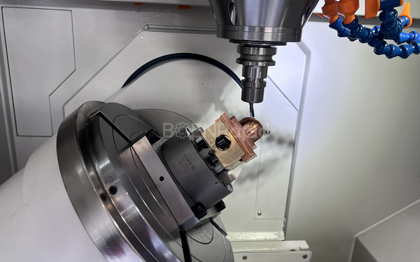
4-axis CNC machining adds a rotary axis (A or B) to the standard X, Y, and Z linear axes, letting the workpiece rotate continuously during cutting. This single change makes it possible to machine angled features, curved surfaces, and multi-face geometries in far fewer setups than traditional 3-axis methods. For OEMs, robotics integrators, and Tier 2 automotive suppliers sourcing precision 4-axis machining parts in medium volumes, this technology directly reduces per-unit cost, tightens dimensional consistency, and shortens lead times — three outcomes that matter most in competitive batch procurement.
Understanding 4-Axis CNC Machining
Before spending money on a new way of cutting, it's helpful to know what the fourth axis does and how it changes the cost of making parts.
What the Rotary Axis Actually Does
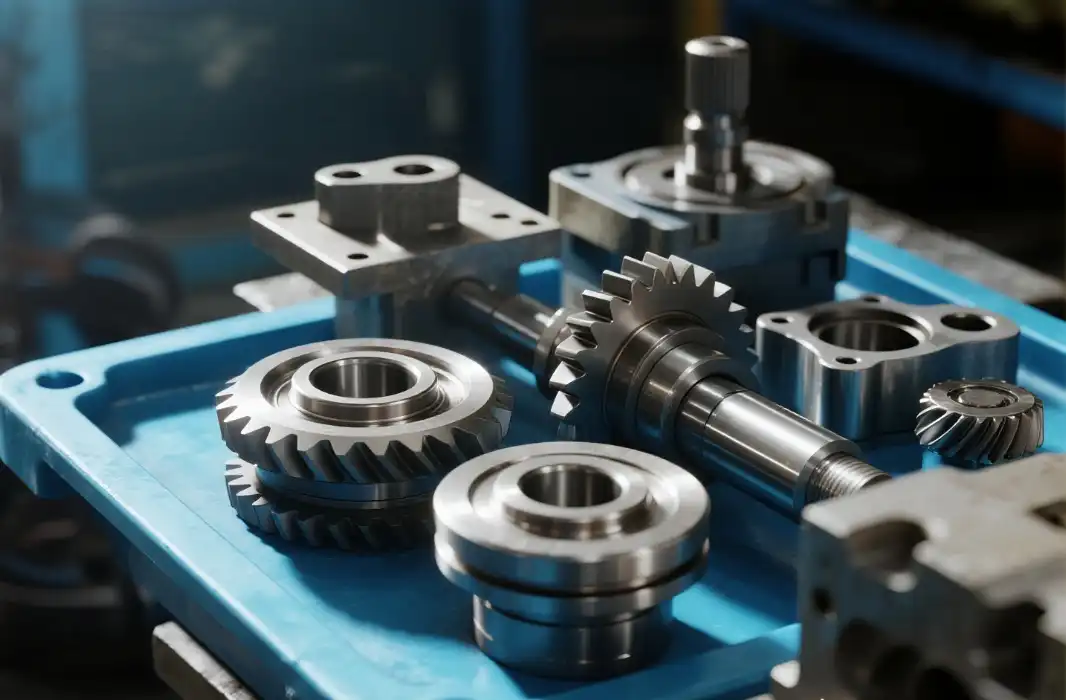
The wheel runs along X, Y, and Z in a normal 3-axis machine. When you add an A or B rotational axis, the workpiece can turn while the cutter is still in place. There is no change in the data reference between faces. Since the starting point for all measurements is the same, the geometric relationships between features stay the same across the whole part.
Materials Commonly Processed
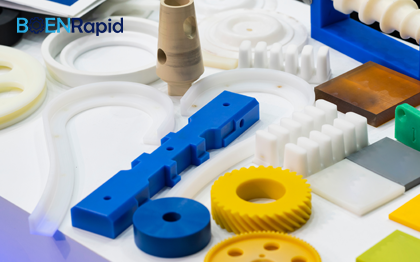
The BOEN Rapid machine can work with aluminum metals (6061 and 7075), stainless steel 303/316, titanium Ti-6Al-4V, and industrial plastics like PEEK, Nylon, and ABS. Different materials need different feeds, speeds, and cooling methods. Titanium, for example, doesn't let heat move easily, so the cutting edge gets very hot. To keep the tool from wearing out too quickly, you need a high-pressure coolant and variable-helix end mills.
Design Guidelines That Protect Tolerance
If a part keeps its tolerance through rotation, it depends on the wall thickness, how easy it is to reach features, and the shape of the clamping geometry. Within 24 hours, our engineering team looks over CAD files and marks any geometry that could lead to deflection or vibration. They then suggest changes that should be made before even a single chip is cut. This DFM step stops the most common reason why first-articles are rejected on their own.
The 4-Axis CNC Machining Process Explained
Procurement teams can ask the right questions of any CNC machining supplier if they know how the process works, from sending in the files to the final inspection.
CAD/CAM Programming and Toolpath Generation
Once DFM gives the go-ahead, coders use CAM tools to make optimized toolpaths. The rotary axis adds four-axis motion at the same time, so the software has to figure out how to connect the cutter across a moving surface. Well-written programs keep chip loads constant and cut down on the time needed for air cutting, which directly affects the quality of the finish and the life of the tool.
In-Process Quality Control
Depending on the shape and material, tolerances of ±0.005 mm to ±0.05 mm are possible. Using calibrated gauges, operators check important dimensions at set times. With real-time monitoring, tool wear is caught before it leads to parts that don't meet specifications, which lowers the amount of waste that happens in multi-setup 3-axis workflows.
CMM Inspection and Reporting
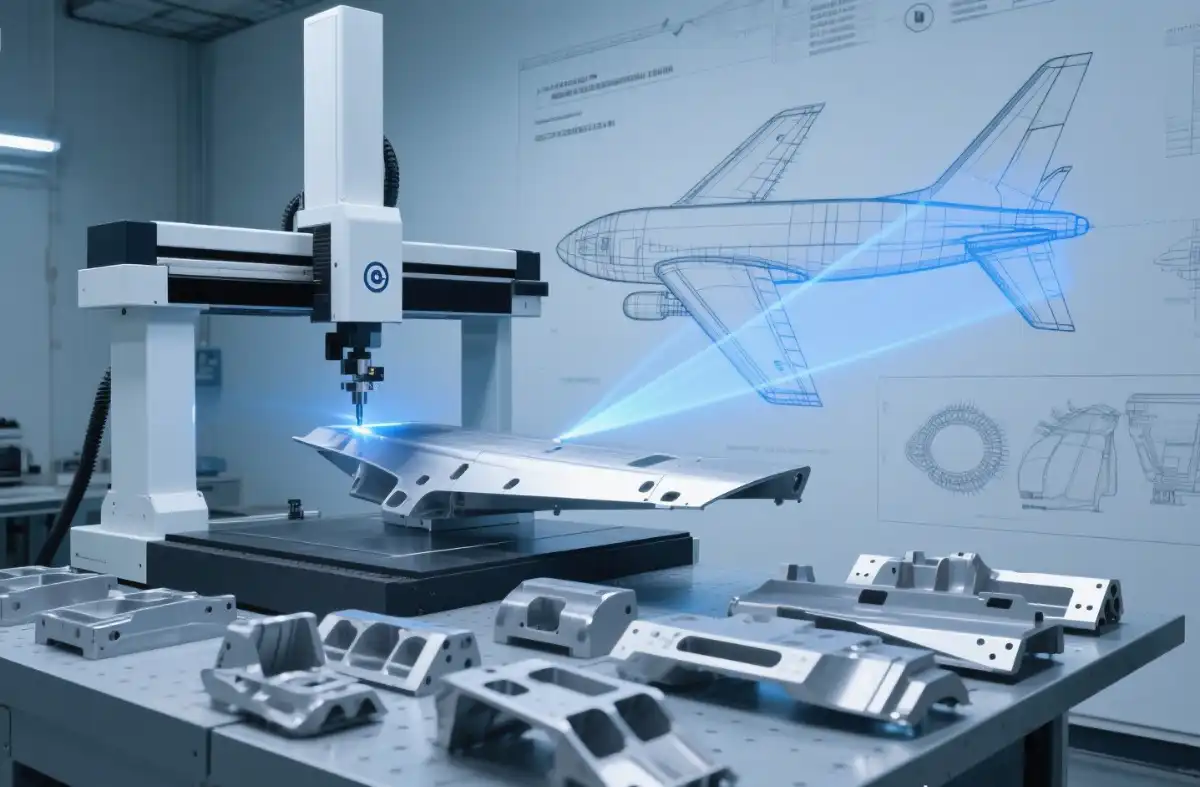
At BOEN Rapid, every production batch goes through CMM (Coordinate Measuring Machine) verification of dimensions. Ra values between 0.4 µm and 3.2 µm are used to measure surface roughness. Customers get full inspection reports and certificates for the materials they buy. This paperwork helps with PPAP applications and incoming quality checks.
Benefits of Using 4-Axis Machining Parts
When a part has curved holes, compound curves, or features on more than two faces, the difference in performance between 3-axis and 4-axis machining is most clear. Here are the main reasons why 4-Axis machining parts is the best choice for medium-volume batch production:
- Fewer setups, less accumulated error. What used to need four to six different events only needs one or two. Alignment errors add up every time a part is re-fixed. Cutting out the steps of repositioning directly improves the consistency of the geometry across a batch of 100 to 10,000 units.
- Cycle time reduction of 40–50%. Cutting with continuous movement cuts down on the time spent waiting between sets. This compression can be measured, and it directly leads to faster delivery for complicated parts with many curved parts.
- Cost reduction of 25–35% versus equivalent 3-axis workflows. Less work, fewer fixtures, and fewer machine hours used per part are all results of fewer operations. Because the savings grow with volume, 4-Axis machining parts is best for blanket orders that come in every three months.
- Consistent surface finish across all faces. The finish quality is the same on all surfaces because the cutter can get to them all without having to re-clamp. This is important for parts that fit perfectly with precise copies in robotic motors or valve bodies for cars.
They don't take away from your freedom in exchange for these benefits. On the same 4-axis machine, BOEN Rapid can make prototypes all the way up to production runs of more than 10,000 units. There is no minimum order number for first-article samples.
Compared to 5-axis cutting, 4-axis systems can handle most medium-complexity part shapes and cost less per hour. The cost-to-precision ratio is better for 4-axis motion in robotics and automation parts with a lot of features that don't need full simultaneous 5-axis motion.
Procuring 4-Axis Machining Parts: What B2B Buyers Should Know
There's more to finding precision 4-Axis machining parts for batch production than just comparing prices per unit. The supplier's process discipline, ability to record, and output capacity are just as important as the price they offer.
Evaluating Supplier Qualifications
If a supplier has both ISO 9001 and ISO 13485 certifications, it means that they have written process controls and management review rounds. These certifications aren't just for show; they require internal audits, calibration records, and systems for taking corrective action. BOEN Rapid has both and helps companies in medical, robotics, and automobile fields where legal traceability is needed.
Understanding Lead Times and Capacity
It takes 3–15 working days to deliver a prototype, depending on how complicated it is. Low-volume production usually ends in two to four weeks. BOEN Rapid offers flexible scheduling for quarterly framework orders that takes into account changes to drawings and changes in volume. This is something that many Tier 2 automotive and automation integrators need because their end-customers' schedules change.
The Ordering Process Step by Step
The procurement cycle for first orders generally follows: process evaluation → trial production → PPAP documentation → batch order. Our engineering team can make an exact price within 24 hours if you send them a 3D CAD file (STEP or IGES) and a 2D drawing with GD&T callouts. Before the full batch is released, sample parts can be used for receiving review.
Future Trends and Industry Insights in 4-Axis CNC Machining
The machining industry is moving toward making machine tools and data systems work together better. Modern 4-Axis machining parts platforms already come with adaptive feed control, real-time tracking of the spindle load, and automatic management of tool life. With these features, unexpected downtime is less likely to happen, and production managers can see how the process is doing across a shift for 4-Axis machining parts.
Industry 4.0 Integration
Connected tools to the Internet of Things (IoT) create data that goes straight to quality control systems. Statistical process control charts are always being updated, so they can show drift before parts get too far out of range. This infrastructure is what makes the difference between a reactive and a proactive supplier for people who need to buy important automation parts.
Demand for Lightweighting and Material Innovation
Robotics and electric vehicle powertrains are increasing the need for lightweight aluminum and titanium parts that are also strong. 4-axis machining works well with both types of materials, and as tools and cooling technology improve, cycle times keep going down even as the complexity of parts increases.
Sustainability in Precision Manufacturing
Cutting down on the number of setups not only saves time but also energy. Less machine hours per part means less carbon emissions per shipped unit. This is becoming a more important factor in choosing a supplier for OEMs that are under pressure to make their supply chains more sustainable.
Conclusion
4-Axis machining parts solves the real production issues that engineers and purchasing managers deal with every day, such as tool errors that build up over time, setup times that are too long, uneven batch quality, and a slow response time to changes to drawings. This process cuts down on the number of steps needed to make complex shapes by turning the piece along a continuous A or B axis. It can also achieve tolerances as tight as ±0.005 mm and lower costs for medium-volume runs. BOEN Rapid is a reliable source for precision rotary-axis parts used in robotics, automotive, aircraft, and medicine. Its buildings are ISO 9001 and ISO 13485 approved, and it has more than 15 years of experience with batch production.
FAQ
1. What part geometries benefit most from 4-axis machining?
The parts that benefit the most are those with angled holes, helical features, multi-face slot patterns, or compound radii. If a part needs more than two setups on a 3-axis machine, you might want to look into a 4-axis machine.
2. How does 4-axis machining affect batch consistency?
By keeping the datum the same during all cutting operations, the positioning change caused by re-fixturing is eliminated. This makes it much easier to keep the same dimensions across 100 to 10,000 units than with multi-setup 3-axis processes.
3. What documentation does BOEN Rapid provide with each order?
Material certificates and CMM inspection records are examples of standard paperwork. Customers in the automotive and regulated industries can get PPAP documentation packages. The inspection area can be changed to meet new quality standards.
4. What is the minimum order quantity?
There is no minimum size for prototypes or samples of the first item. Low-volume production starts with small batches and can go up to 10,000 or more units using the same process.
5. How quickly can BOEN Rapid respond to drawing revisions?
Within 24 hours of receiving changed CAD files, our engineering team checks them to see if they have any effect on toolpaths, fixturing, or standards. Only then do they allow production to resume. This response time works for customers who go through a lot of design iteration cycles.
Partner With BOEN Rapid for Precision 4-Axis Machining Parts
In as little as three business days, BOEN Rapid can deliver prototypes, ISO-certified 4-Axis machining parts with tolerances of ±0.005 mm, and inspection reports from a CMM. As an experienced 4-Axis machining parts manufacturer, we support OEM and ODM batch orders from trial production through quarterly supply agreements. Send your CAD files to contact@boenrapid.com to request a quote within 24 hours.
References
1. Kalpakjian, S., & Schmid, S. R. Manufacturing Engineering and Technology. Pearson, 2014.
2. Tlusty, J. Manufacturing Processes and Equipment. Prentice Hall, 2000.
3. Modern Machine Shop. "Multi-Axis Machining: Strategies for Complex Part Production." Modern Machine Shop, 2022.
4. Society of Manufacturing Engineers. Tool and Manufacturing Engineers Handbook: Machining. SME, 2021.
5. International Organization for Standardization. ISO 9001:2015 Quality Management Systems — Requirements. ISO, 2015.
6. Automotive Industry Action Group. PPAP: Production Part Approval Process, 4th Edition. AIAG, 2006.