CNC Turned Parts: Precision Manufacturing Explained
Precision CNC turning parts represent a critical manufacturing capability for companies demanding high-accuracy cylindrical and rotational components. Through computer-controlled lathe operations, these parts achieve dimensional tolerances as tight as ±0.005mm, enabling consistent production of shafts, pins, bushings, fittings, and complex threaded components across industries from aerospace to medical devices. This automated subtractive process transforms raw material blocks—including aluminum, stainless steel, brass, titanium, and engineering plastics—into finished parts through precisely programmed cutting operations that remove material to exact specifications.
Understanding Precision CNC Turned Parts
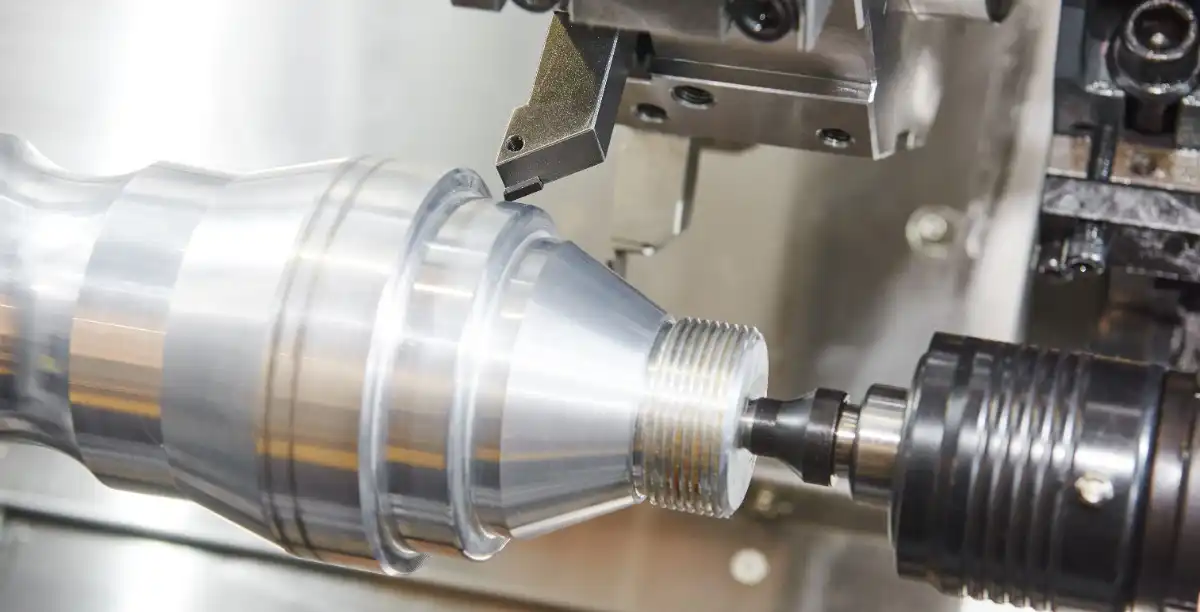
CNC turning is basically different from other types of machining, and it provides unmatched accuracy for cylinder shapes. The piece of work spins at set speeds while stationary cutting tools approach from multiple directions and remove material based on coordinates that are coded from CAD models.
What Distinguishes Precision CNC Turning
Precision turning focuses on controlling repeatability and tolerances in ways that are beyond what standard machining can do. In traditional turning, tolerances might be around ±0.1mm. With precision CNC turning, tolerances are always between ±0.005mm and ±0.02mm. This difference is important when making parts for medical implants, hydraulic fittings for spacecraft, or robotic joint assemblies where precise measurements are needed for proper function. The process is very good at making surfaces that are straight, concentricity, and perpendicularity that meet Ra 0.8μm or higher without any extra steps.
Materials Commonly Used in CNC Turning
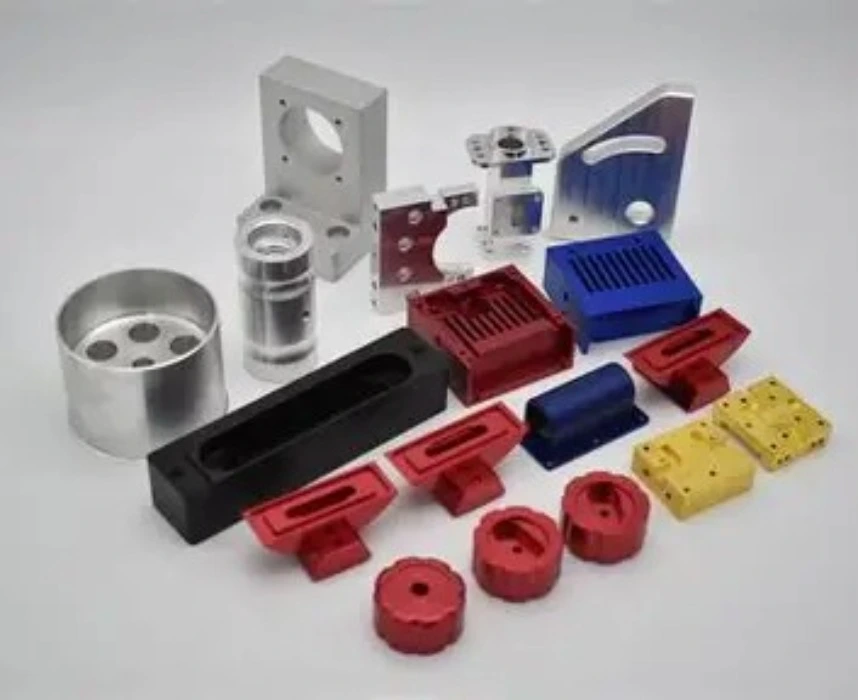
The choice of material has a direct effect on how well a part works under operational stress, environmental exposure, and temperature conditions. Aluminum alloys, especially 6061-T6 and 7075-T6, are used most often in situations where strength at a low weight is needed along with good machinability and heat resistance. Grades of stainless steel like 304 and 316 are very good at resisting rust, which is very important for medical and food processing equipment. When it comes to making a lot of fittings and connectors, brass is easier to work with than titanium Grade 5, which has better strength-to-weight ratios for aerospace uses but is harder to work with. Engineering plastics, like PEEK, Delrin, and nylon, are used in places where electrical protection, chemical resistance, or noise dampening are needed but metals can't provide those qualities.
Step-by-Step CNC Turning Process
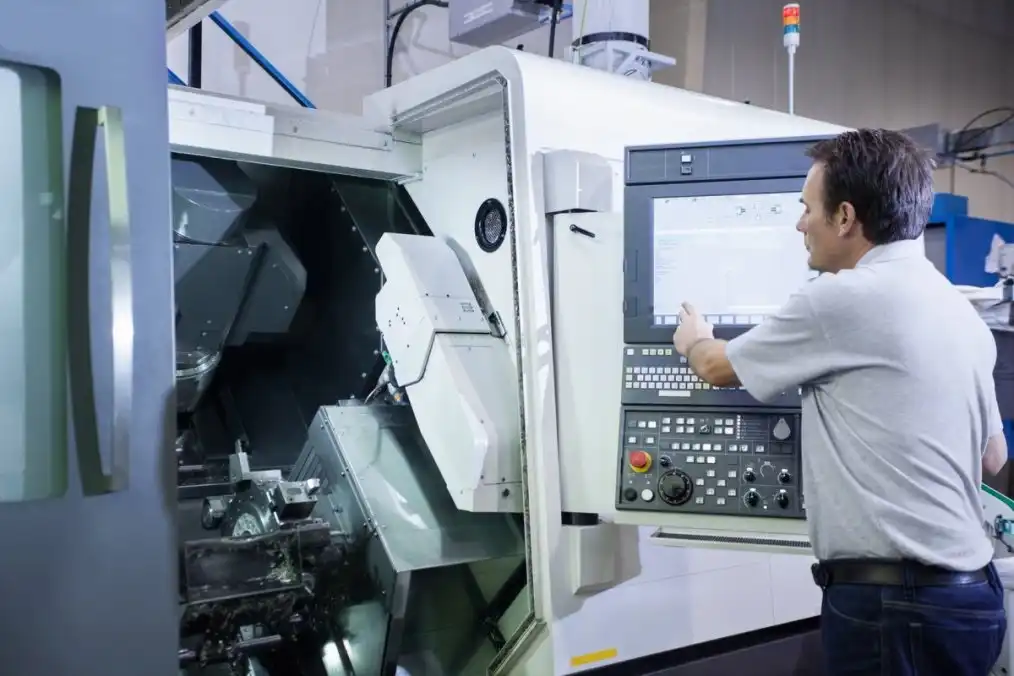
The first step in the production process of precision CNC turning parts is CAD/CAM programming, which turns engineering models into G-code that machines can read. This code specifies tool paths, spindle speeds, and feed rates. Before starting the automated cycle, operators make sure that the stock of raw materials is centered in the lathe's chuck or collet. Cutting tools move toward the spinning workpiece in predetermined steps. Roughing passes quickly remove large amounts of material, and finishing passes get the end size and quality of the surface. Live tools devices let you do secondary operations like knurling, cross-hole drilling, or milling flats without having to move the part. During the process, coolant systems control the flow of chips and the production of heat. This keeps the dimensions stable and the tool's life long.
Benefits and Key Advantages of Precision CNC Turning
More and more, manufacturers are asking for precision-turned parts because technology gives them stability that can't be achieved by hand. Each part that comes out is the same size as the last one, so there are no differences that could affect how well the system fits together or how well it works.
Superior Accuracy and Repeatability
Computer control takes away the inconsistent nature of people in the output process. After checking the setup and making sure the program works, the machine copies the dimensions of thousands of parts using statistical process control that shows capability indices (Cpk) higher than 1.67. This precision speeds up the assembly line because parts fit consistently without having to be chosen or adjusted by hand. Process stability makes sure that every part meets specifications, so inspection sampling frequencies can go down. This lowers the cost of quality control while still meeting certification requirements.
Automation Benefits Over Manual Turning
Skilled machinists are needed to physically control the movement of the tool when turning by hand. This can change depending on the operator's technique, fatigue, and how they understand the blueprint specifications. These factors are standardized by CNC automation, which uses preset processes that always work the same way, even if the shift changes or the amount of work being done. Cycle times go down because tool tracks make cutting more efficient by doing math that humans can't do. When digital models are used instead of real files, setup times go down and it's easy to switch between part numbers quickly. Labor costs go down because one worker can watch over several machines at once instead of assigning a separate operator to each lathe.
Comparison with Other Manufacturing Methods
Procurement teams can make the best use of their manufacturing strategies by knowing when to request CNC turning over other methods. CNC milling is great for making complicated prismatic shapes with pockets and contours, but turning is better for making cylinder shapes quickly. Casting makes near-net forms quickly and cheaply in large quantities, but it doesn't have the accuracy in dimensions and smoothness of surface finish that precise turning does, so it needs to be machined again. Grinding gets very smooth surfaces and accurate measurements, but it takes a long time and is only useful for finishing or solid materials. Additive manufacturing can make shapes that are too complicated to make with subtractive methods, but it has trouble meeting the surface finish, stability in dimensions, and material qualities of metals that are wrought and processed by precision turning.
Precision CNC Turning Parts Manufacturing Process
Design purpose and factory reality must be balanced for production to go smoothly. When engineering teams work with manufacturing partners during the planning phase for precision CNC turning parts instead of adding production as an addition, they get the best results.
Design and CAD/CAM Programming
Design for manufacturability analysis finds problems that might come up during production before the first prototype is cut. Features like undercuts, interrupted cuts, or measurement limits that are too tight for the process to handle add extra costs and wait times. CAM programming turns approved designs into toolpath strategies that find the best balance between speed, tool life, and surface finish needs. Simulation software checks programs for errors by finding collisions, making sure tools can reach, and guessing how long it will take for cycles to finish before using up all the machine's resources or materials.
Quality Control Protocols and Standards
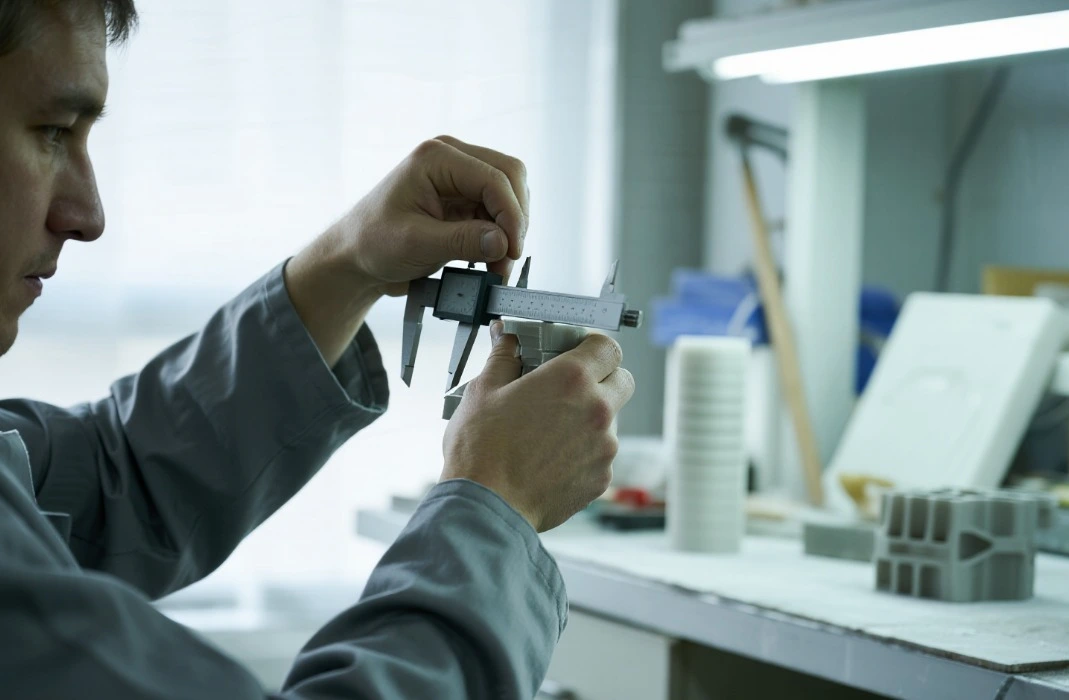
ISO 2768 sets general tolerance standards that are used a lot in foreign industry. These standards let people know what to expect when models don't have clear instructions. As a result of ASTM and ASME standards, the properties of materials and the way they are measured are always understood the same way across global supply chains. By using contact or optical tools to record three-dimensional coordinate data and comparing it to standard CAD models, coordinate measuring machines (CMM) make sure that important measurements are correct. Statistical process control charts keep an eye on changes in dimensions throughout production runs and take corrective actions before parts go beyond the limits of what was specified. Material certificates link the makeup of alloys and their mechanical traits to batch numbers. This helps meet the quality system standards of aerospace AS9100 and medical ISO 13485.
Design Guidelines for Optimal Manufacturability
Uniform wall thickness stops warping during heat treatment and cutting. Moving from one diameter change to another slowly lowers stress levels and makes machining easier. Custom specifications that need special taps or dies cost more and take longer to deliver than standard thread forms. Specificating business tolerance grades instead of measurements that are too small cuts down on the number of inspections needed and the amount of waste that is made without affecting the functionality. These ways to improve things can be found before the production plans are made public if design engineers and factory partners work together closely during the development stages.
How to Choose the Right Precision CNC Turning Supplier?
When buying something, you have to think about more than just the unit cost. You also have to think about quality consistency, delivery reliability, and technical support capabilities. The right production partner works with your engineering team as an extension, adding knowledge that helps you make better products.
Evaluation Criteria for Supplier Selection
Systematic quality management practices are shown by ISO 9001 certification. However, industry-specific standards like ISO 13485 for medical products or IATF 16949 for car parts show more in-depth knowledge of the subject. A manufacturing capacity assessment looks at the capabilities of the equipment, the amount of work that can be done, and the amount of space that is available to meet your needs without affecting lead times. Your sample and production volume needs should be in line with the minimum order amounts. Suppliers that are best at high-volume stamping may not be able to meet your low-volume precision needs. When going from rapid prototyping to large-scale production, total landing cost needs to be weighed against closeness for rapid prototyping.
Comparing Cost Versus Quality Trade-offs
The lowest price rarely gives you the best total cost of ownership. Actual costs go above and beyond the initial unit prices because of things like scrap rates, the need for rework, and delivery delays caused by inconsistent quality. Factory-direct makers don't add markups for distributors, and you can talk directly to production staff who understand your technical needs. When contract makers combine the needs of many customers, they may be able to get economies of scale that smaller experts in precision CNC turning parts can't. However, this can make it harder to respond quickly to your projects when they are competing for capacity during busy times.
Obtaining Quotes and Placing Orders
Detailed RFQ packages make it easier to get accurate quotes because they include full technical drawings, material specifications, quantity needs for both the prototype and production phases, and expected delivery dates. Prior to committing to large-scale production, sample orders are used to confirm the supplier's capabilities. They show how consistent the dimensions are, how good the surface finish is, and how well the packaging works. After-sales support sets professional sellers apart by being quick to respond to technical questions, keeping records like inspection reports and material certificates, and being willing to work together to solve problems instead of being defensive when they come up.
Common Applications and Industry Use Cases of Precision CNC Turning
Precision-turned parts allow new products to be made in many fields where performance, dependability, and safety can't stand material or size differences.
Industry-Specific Applications
In aerospace hydraulic systems, valve bodies and manifold ports must be exactly turned so that internal passages can seal consistently even when temperature and pressure are very high or very low. Transmission assemblies for cars have gears and shafts that need to be precisely machined to keep noise to a minimum and last a long time. Biocompatible materials must be machined to exact measurements so that medical surgical instruments are easy to handle and last a long time after being sterilized. For exact positioning, robotic motors need precise shafts and bushings that keep friction and slack to a minimum. For industrial automation pneumatic cylinders to keep their seals after millions of cycles of operation, they need piston rods that have been turned and have exact diameters and surface finishes. Electronics heat sinks have turned parts that increase the surface area for heat transfer while keeping the package size small.
Real-World Performance Examples
When a medical device company switched to a precision turning source that could keep catheter guide parts within ±0.01mm of being perfectly centered, their assembly rejection rates dropped by 73%. An car seller got rid of the need for grinding after machining, which cut production time by 40% by directly getting Ra 0.8μm surface finishes through precision turning. By working with a supplier that offers fast CNC turning services, a robots company cut the time it took to make a prototype from four weeks to seven days. This was done to help optimize the design through quick-turn sample production.
Conclusion
Precision CNC turning parts provides the exact measurements, wide range of materials, and consistent production that industries need where part performance directly affects product success. Procurement teams can make smart decisions about where to buy materials that meet quality, cost, and shipping needs when they know how the products are made, what materials can be used, and how suppliers are judged. Working with skilled precision turning experts shortens the time it takes to develop new products while keeping the high quality standards needed to stand out in global markets. This is true whether they are making samples or mass production runs.
FAQ
What tolerance levels are achievable through precision CNC turning?
Tolerances for standard precision turning are about ±0.02mm for most features. For critical dimensions, specialized equipment can reach ±0.005mm when process controls and material stability allow it. Possible tolerances rely on the shape of the part, the qualities of the material, and how easy it is for cutting tools to reach certain features.
How does CNC turning differ from CNC milling?
While stationary tools remove material, turning rotates the workpiece, making the most of both cylindrical and rotational geometries. Milling is best for making prismatic shapes with lots of pockets and complex contours because the cutting tools spin while the workpiece stays still. The best method choice is based on the shape of the part.
What are typical lead times for precision turned parts?
It usually takes 3–15 working days to deliver prototype quantities, but this depends on how complicated the order is and how much material is available. Most production runs are finished in two to four weeks, but exact times rely on the size of the order, the current production plan, and any extra steps that need to be taken, like heat treating or applying special coatings.
Partner with BOEN Rapid for Your Precision CNC Turning Parts Requirements
BOEN Rapid has been making precision CNC turning parts for customers around the world in the medical devices, automobile, robotics, aircraft, and industrial automation industries for more than 15 years. Our processes are approved by ISO 9001 and ISO 13485, which means that quality control is maintained throughout production. Our experienced engineering team also helps you with DFM analysis and material selection to make sure that your plans are the best they can be for production. We offer fast development with turn-around times of 3–15 days and flexible, low-volume production that can be scaled to fit your needs. As a direct precision CNC turning parts manufacturer, we don't have to pay markups to middlemen. We also offer quick contact and full documentation, such as inspection reports and material certificates. Get in touch with our team at contact@boenrapid.com to discuss your project specifications and receive detailed quotations tailored to your technical and volume needs.
References
1. Stephenson, D.A. & Agapiou, J.S. (2016). Metal Cutting Theory and Practice. CRC Press.
2. Society of Manufacturing Engineers. (2018). Fundamentals of Tool Design. SME Media.
3. Kalpakjian, S. & Schmid, S.R. (2020). Manufacturing Engineering and Technology. Pearson Education.
4. American Society of Mechanical Engineers. (2019). ASME Y14.5-2018: Dimensioning and Tolerancing Standard.
5. International Organization for Standardization. (2017). ISO 2768-1:1989 General Tolerances for Linear and Angular Dimensions.
6. Boothroyd, G., Dewhurst, P. & Knight, W.A. (2011). Product Design for Manufacture and Assembly. CRC Press.