Learn About the Steps Involved in CNC Rapid Prototyping
CNC rapid prototyping makes your CAD files into precision-machined real products quicker than most conventional production processes can. Manufacturing is the process of taking metal or plastic stock and removing material from it using computer-controlled cutting tools to produce functioning components that meet your design purpose. If you’re a hardware startup or R&D team rushing toward a product launch, knowing what happens at each phase can help you manage deadlines, limit costs, and prevent common design errors. BOEN Rapid is a competent provider of rapid CNC prototyping parts within 3 working days, with tolerances controlled to ±0.01mm.
Understanding Rapid CNC Prototyping: Definition and Core Concepts
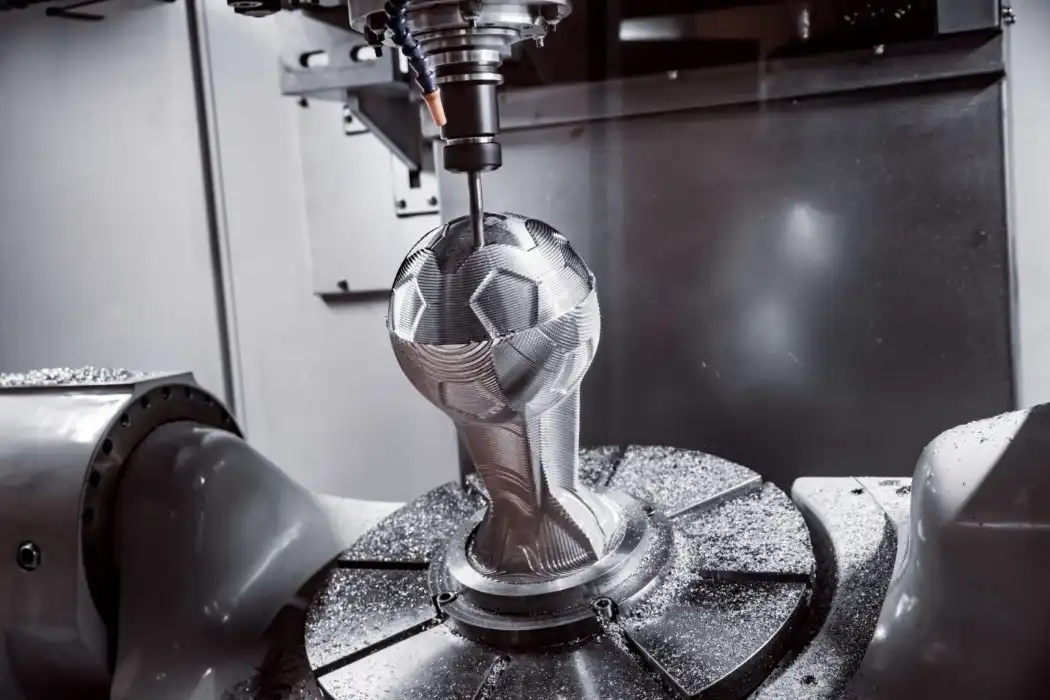
CNC quick prototyping is a sort of subtractive manufacturing. It is computer-controlled using pre-established software. It doesn't build up layers like 3D printing; it cuts, drills, and grinds away a solid block. This is crucial because the parts that are created have the same mechanical qualities as the parts that are utilized in manufacturing.
What Makes It "Rapid"
There are two things that speed things up. CAM software that automatically generates toolpaths and multi-axis machining centers that can handle difficult forms in one setup. It's a part that takes weeks to manufacture by hand is done in a few days.
Material Authenticity
One of the main reasons to utilize CNC prototyping is material fidelity. You may mill PEEK, polycarbonate, titanium Grade 5, aluminum 6061, or stainless steel 316. It is the same material you want to use in the final project. So your functional tests should prove how things really operate in the real world, not simply wild assumptions.
CAD/CAM Software Integration
Modern CNC processes rely on CAM software to convert CAD models into toolpaths. The quality of this alteration directly determines the quality of machining. It takes less time to program, and there is less possibility of having to repeat work when the 3D model is carefully prepared with defined limitations and surface finish callouts.
Step-by-Step Guide to the Rapid CNC Prototyping Process
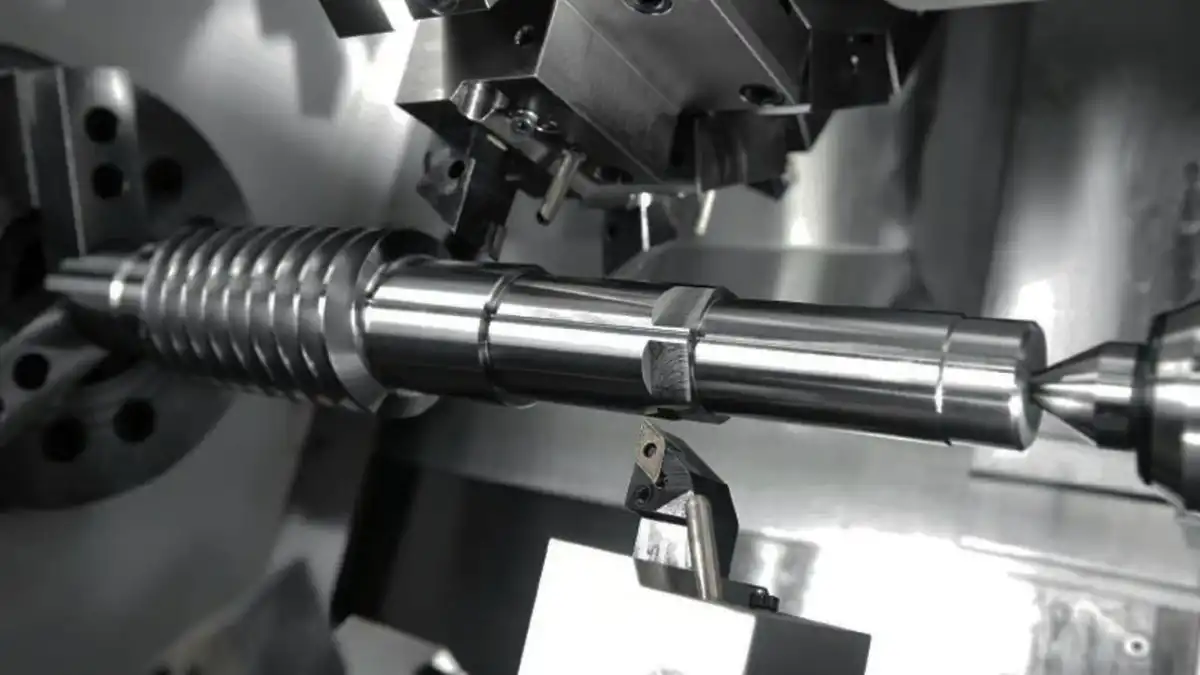
There’s an established sequence to converting a CAD file into a final sample. If you miss or speed through any phase, you typically wind up with rapid CNC prototyping parts that need costly repairs. BOEN Rapid is a well-structured CNC prototype process that goes like this:
Step 1 – CAD Submission and DFM Review
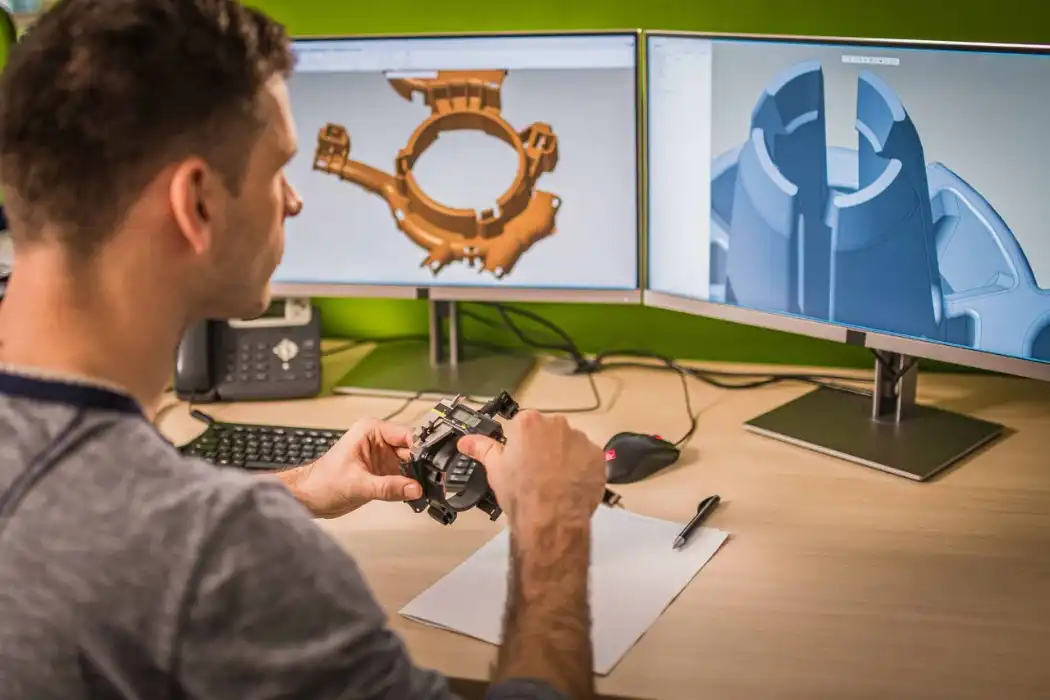
You provide us your CAD files, and our engineers will do a preliminary inspection within 24 hours to determine whether they can be built. This Design for Manufacturability evaluation identifies issues with wall thickness, tight radius features that are too large for the tool, and tolerance conflicts before any material is touched. Catching these issues early may save you time and money on materials and machining.
Step 2 – Material Selection and Programming
Once the design is approved, we choose the appropriate material depending on your functional requirements, such as resistance to heat, tensile strength, weight objectives, or regulatory compliance. Next, CNC programmers program toolpaths by picking the optimal cutting tools, feeds, speeds, and machining stages for the selected material.
Step 3 – Precision Machining, Inspection, and Surface Finishing
Components are machined on multi-axis CNC centers to an accuracy of ±0.01mm to ±0.1mm. In-process measurements verify that critical attributes are accurate before the part leaves the machine. After machining, you may choose from many post-processing options like anodizing, bead blasting, powder coating, and polishing. When a prototype is ready, it is accompanied by quality papers and certifications for materials utilized.
Comparing Rapid CNC Prototyping with Alternative Solutions
Hardware teams often argue about which of CNC machining, 3D printing, and injection molding is best for making prototypes. Each method can be used for validating something, but the best one for you will rely on your specific needs.
CNC Machining vs. 3D Printing
FDM and SLA 3D printing are cheaper per part for visual models, but layer-based building makes the mechanical properties less uniform. Because CNC-machined parts are isotropic, which means they have the same strength in all directions, they can be used for load-bearing function tests. When teams test structural frames, gear housings, or connection bodies, CNC machining gives more accurate results.
CNC Machining vs. Injection Molding
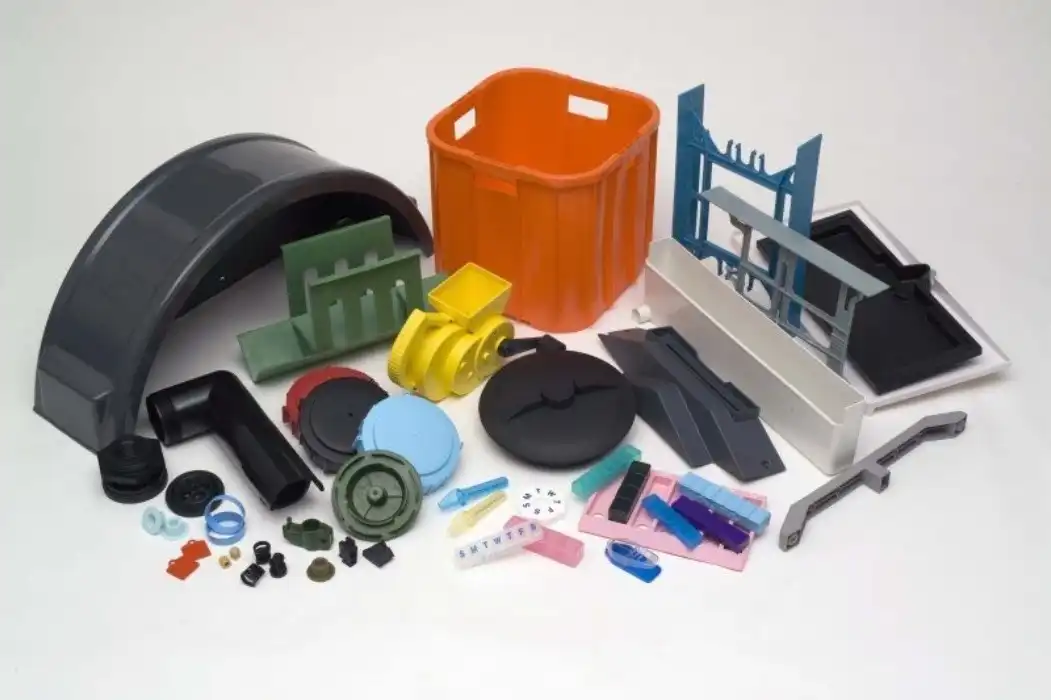
Before the first part is made, injection casting needs tools that can cost tens of thousands of dollars. When making fewer than a few hundred pieces, CNC cutting is a much better deal. It also lets you change the design between versions without having to retool, which is very important early in the development process when design specs are still changing.
When CNC Is the Right Answer
CNC prototyping is best when you need materials with properties that are the same in production, tight tolerances on dimensions, and the freedom to change designs between versions without having to buy expensive tools. For hardware startups getting ready for a trade show, a crowdfunding campaign, or an investor demo, CNC machined prototypes give them a level of finish and credibility that is hard to get with other methods that work at the same speed.
How to Choose the Right Rapid CNC Prototyping Supplier
Some CNC shops don't have the speed, openness, or technical help that is needed for prototype development. Here are some things that set a skilled partner apart from a regular job shop.
Quality Certifications and Process Controls
An ISO 9001 certification shows that a supplier follows documented processes to make sure that output is consistent. Medical device rapid CNC prototyping parts must have ISO 13485 certification, which means a higher level of quality management and traceability. Certifications from DIN, ANSI, ASME, and JIS are held by BOEN Rapid, and the company does business in line with these standards.
Turnaround Time and Order Flexibility
If a source says it will take four to six weeks to make a single sample, they are not a good partner for iterative development. Look for suppliers who can respond to your RFQ within 24 hours and offer delivery times between 3 and 15 business days, with no minimum order quantity. You can test a plan before committing to a lot when you start with a single part.
Engineering Support and Supply Chain Continuity
The best providers do more than just run the file you send them. They offer DFM analysis, material advice, and tolerance evaluation. It's also important to know if the same source can handle small-scale production after your idea has been approved. When you work with a partner like BOEN Rapid, who can do both prototyping and OEM/ODM production, you don't have to worry about switching suppliers in the middle of development.
Common Challenges and Best Practices in Rapid CNC Prototyping
Even with the correct equipment, there are still issues with CNC prototyping. With preparation and communication, these issues may be corrected before they are too costly.
Dimensional Inaccuracies from Poor File Preparation
Dimensional variations are mostly due to imprecise tolerances, missing surface finish callouts, and geometry that doesn’t line up in the CAD files. A completely marked up pictures to your 3D model removes any guesswork and ensures the machinist’s purpose is the designer’s goal.
Surface Finish Defects
Incorrect feed rates or bad post-processing instructions might result in tool lines, burrs, and uneven surface roughness. If you are ordering, specify in your brief what sort of Ra surface finish you want and how you want it handled subsequently so that the provider may choose the appropriate finishing method from the start.
Avoiding Supplier Gaps Between Prototype and Production
Hardware teams frequently run into trouble when they prototype with one supplier, only to have the production supplier be unable to produce the design at scale. By working with an integrated maker from the outset—one that conducts both prototype machining and mass production—you can be confident that the materials, tolerances, and process settings will be consistent throughout the whole development cycle.
Conclusion
The phases of CNC quick prototyping are logically arranged, which include CAD preparation, DFM evaluation, material selection, precision machining, inspection, surface finishing, and delivery. If none of these measures are taken, the probability of rapid CNC prototyping parts failing or needing costly reworking after testing is higher. A sensible choice for hardware startups and engineering teams working under pressure of time is a supplier that has defined quality procedures, actual engineering assistance, and the capacity to go into mass production. This option will pay itself back for the whole term of the product. For over 15 years, BOEN Rapid has guided firms in the aerospace, medical devices, consumer electronics, and robotics sectors through this process.
FAQ
1. How long does CNC rapid prototyping typically take?
At BOEN Rapid, standard prototype delivery runs 3–15 working days depending on part complexity, material availability, and required post-processing. Simple aluminum parts can often be completed at the shorter end of that range. Submitting fully annotated CAD files and responding promptly to DFM questions shortens the timeline further.
2. Can CNC machining handle complex geometries?
Yes. Multi-axis CNC centers machine undercuts, compound curves, internal pockets, and fine threaded features that simpler setups cannot reach. The geometry complexity that can be achieved depends on part size, material, and tooling access. Our engineers flag any features that require design adjustment during the initial DFM review.
3. What materials are available for CNC prototyping?
BOEN Rapid machines aluminum, steel, stainless steel, titanium, brass, copper, ABS, POM, PEEK, nylon, and polycarbonate, among others. Material selection should match your production intent so that prototype test results transfer directly to your volume manufacturing decision.
4. Is there a minimum order quantity?
No. BOEN Rapid accepts orders starting from a single piece, which suits iterative development where each design revision may only require one or two parts for validation.
5. How is quality verified before delivery?
Every part undergoes dimensional inspection and surface finish analysis. Quality documentation, inspection reports, and material certificates ship with each order.
Start Your Next Prototype with BOEN Rapid
Your plan should have a factory partner who gets back to you in 24 hours, not 24 days. BOEN Rapid focuses on making rapid CNC prototypes for hardware companies and engineering teams that need high-precision rapid CNC prototyping parts quickly and don't want to commit to large orders. Our team offers DFM analysis, approved quality methods, and reliable global shipping through DHL, UPS, and FedEx. We can do everything from single-part validation to low-volume OEM production. To get a price and start working on your project right away, send your CAD files to contact@boenrapid.com.
References
1. Todd, R. H., Allen, D. K., & Alting, L. — Manufacturing Processes Reference Guide, Industrial Press, 1994.
2. Kalpakjian, S., & Schmid, S. R. — Manufacturing Engineering and Technology, Pearson Education, 2014.
3. Gibson, I., Rosen, D., & Stucker, B. — Additive Manufacturing Technologies: 3D Printing, Rapid Prototyping, and Direct Digital Manufacturing, Springer, 2015.
4. International Organization for Standardization — ISO 9001:2015 Quality Management Systems — Requirements, ISO, 2015.
5. Boothroyd, G., Dewhurst, P., & Knight, W. — Product Design for Manufacture and Assembly, CRC Press, 2010.
6. Bralla, J. G. — Design for Manufacturability Handbook, McGraw-Hill, 1999.