How are stainless steel CNC milled parts made?
Stainless steel CNC milled parts are precise components created by removing material from a stainless steel workpiece using computer-controlled rotating cutting tools. Multi-axis machining centers perform operations such as face milling, pocketing, drilling, and contouring, starting with a digital design file. Grades such as SS304, SS316 and SS316L are chosen according to mechanical and chemical demand. The end result is a dimensionally precise item with tolerances as close as ± 0.01 mm and surface finishes of Ra 0.8 to 1.6 μm – perfect for demanding applications in medical devices, robotics and industrial equipment.
Understanding Stainless Steel CNC Milling: The Basics
Before looking at the production process itself, it's helpful to know what makes this method of production unique and why engineers in so many fields specify it.
What Makes Stainless Steel a Preferred Material
Stainless steel has a chromium-rich passive oxide film that protects it from corrosion far better than carbon steel. Austenitic grades like as SS304 and SS316 are easily welded and formed. However, SS316L is usually utilized for medical device housings and food contact parts exposed to chloride conditions since it contains less carbon and more molybdenum.
Commonly Used Grades and Their Properties
The grade you choose influences all of the decisions you make following cutting. SS303 has sulfur added to it to make it simple to cut. This is an inexpensive alternative for parts that are n't extremely critical. SS304 is easily machined and does not corrode, which makes it excellent for general industrial applications. Molybdenum addition to SS316L enhances its resistance against acidic media and makes it biocompatible in accordance with ISO 10993 standards, which is required for surgical instruments and IVD equipment.
Why Engineers Choose CNC Milling Over Casting or Stamping
Holes are cast, and three-dimensional form is difficult with pressing. Using CNC milling to remove material from solid bar stock or billets produces a result that is completely dense and has predictable mechanical properties. This approach is useful for small to medium-sized orders when the cost of the tools required for injection molding or die casting would be too costly, and if the dimensions must be maintained perfectly throughout the full manufacturing process.
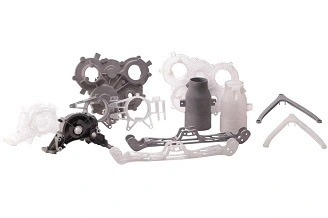
Step-by-Step Process: How Stainless Steel CNC Milled Parts Are Made
The steps in the production process are organized. To protect tolerances and surface quality all the way through to final delivery, each stage builds on the one before it.
Stage 1 — Material Selection and CAD/CAM Programming
The engineer selects a grade of Stainless steel CNC milled parts and a raw material form (bar, plate, or billet) based on the size and specifications of the design. Then a CAD model is used to generate CAM toolpath software. The program decides the cutting strategies. Aggressive roughing passes remove plenty of material rapidly. Semi-finishing passes smooth out the contour. Finishing passes accomplish the ultimate size and finish objectives. For a material such as stainless steel, which work-hardens fast when cut, the correct sequence of toolpaths is highly critical.
Stage 2 — Multi-Axis Machining
CNC machining center has 3-axis, 4-axis, or 5-axis capabilities to keep the workpiece in position. Five-axis tools can cut in multiple directions at once, dealing with undercuts, compound angles, and curved surfaces all together. This helps to reduce movement errors and preserve geometry consistency, which is especially critical for characteristics such as real position and concentricity that are verified against GD&T callouts on the design. Strong pressure cooling systems manage the heat to prevent thin-walled items from warping. The strong shear strength of stainless steel extends the life of tools used on stainless steel.
Stage 3 — Post-Processing and Quality Verification
The components need to be machined to eliminate the edge burrs. This is termed deburring. Passivation per ASTM A967 removes the free iron that was taken out and restores the passive oxide layer. Electropolishing may achieve Ra values below 0.4 μm, useful for semiconductors and pharmaceuticals. You may bead blast or mechanically clean anything to enhance the appearance or function. A CMM is used for the final review to check GD&T characteristics, micrometers are used to check sizes, and profilometers are used to verify surface roughness. We provide a Material Test Report (MTR) with each shipment, and a full-dimensional inspection report for traceability.
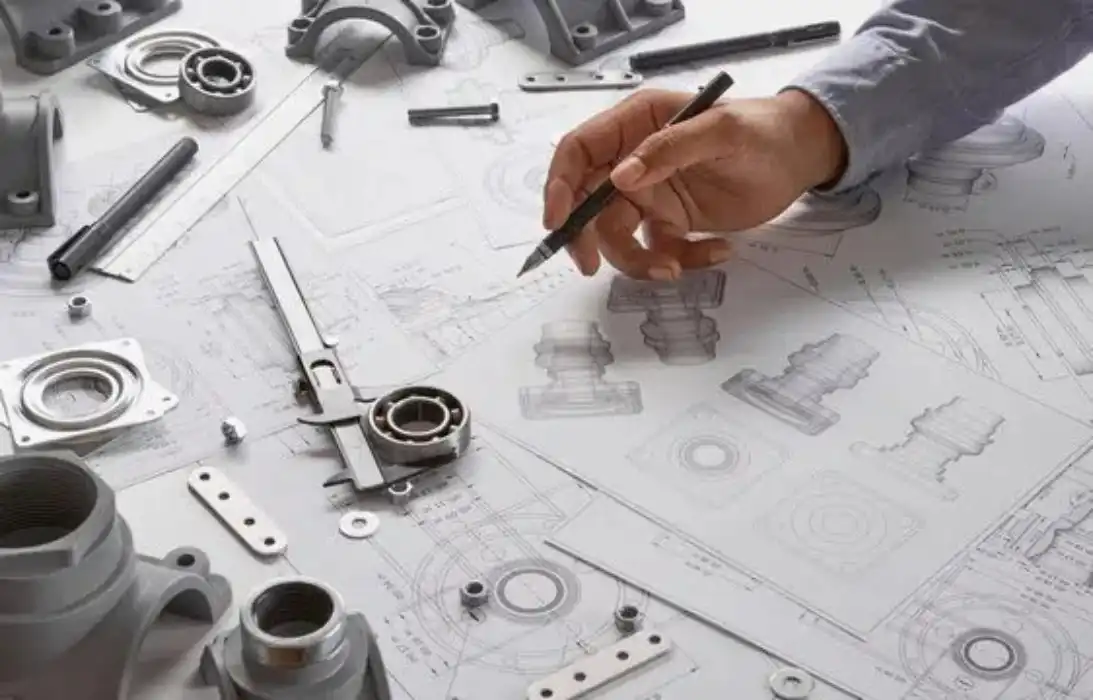
Comparison and Decision-Making: Why Choose CNC Milled Stainless Steel Parts?
Purchasing teams often compare CNC milling to other methods. Better sourcing decisions are made when you know where each method works best.
CNC Milling vs. Turning, Laser Cutting, and 3D Printing
CNC turning is good at making cylindrical shapes, but it can't handle prismatic shapes without extra steps. Laser cutting is great for flat profiles, but it can't handle the depth and three-dimensional shapes needed for pump housings or valve bodies. Metal 3D printing lets you use any shape, but for medium-volume production runs, it's still hard to beat polished stainless steel in terms of surface finish, density, and cost-effectiveness. CNC cutting is still the most flexible way to make complicated parts with tight tolerances.
Stainless Steel vs. Aluminum: Making the Right Material Call
Aluminum is cheaper per kilogram and can be machined faster, which makes it a good choice for experiments and uses that need to be light. Stainless steel, on the other hand, has tensile strengths higher than 515 MPa for mild SS304 and up to 1,100 MPa for precipitation-hardened types. Aluminum can't even come close to these strengths. Even though it takes longer to machine, Stainless steel CNC milled parts are the better choice when it comes to long-term structural stability, resistance to rust, and clean surfaces.
Balancing Cost, Lead Time, and Quality Requirements
The real factors that affect the cost of making stainless steel are strict machine needs, specialized carbide tools, slower cutting speeds, and post-processing. If buyers know this, they won't accept dishonestly low quotes that skimp on inspections or the ability to track materials. At BOEN Rapid, the first evaluation of a project is finished in 24 hours, prototypes are sent out in 3–15 business days, and low-volume production usually ends in 2–4 weeks. This gives procurement teams accurate project planning deadlines.
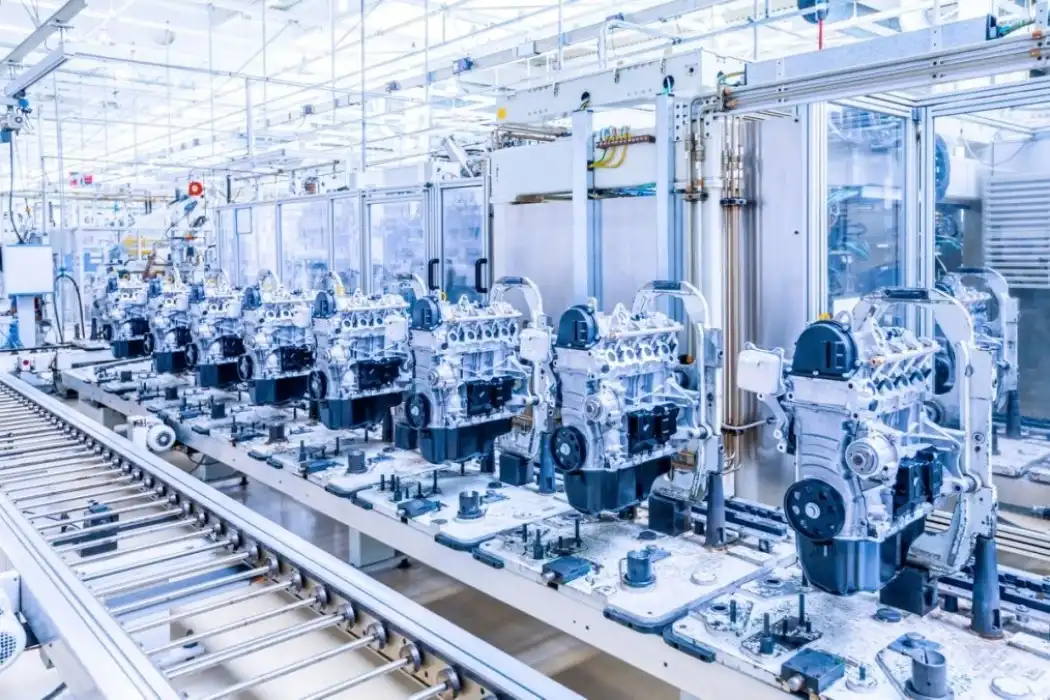
Selecting the Right Supplier for Stainless Steel CNC Milled Parts
The process of evaluating suppliers should be treated with the same care as designing parts. A qualified company that makes CNC milled parts out of stainless steel must show more than just the ability to machine.
Evaluating Quality Certifications and Documentation
Getting ISO 9001 certification means that you have a written quality control system. ISO 13485 goes even further and covers standards particular to medical devices, such as change control (ECN), nonconformance handling (NCR/CAPA), and batch traceability. Ask each possible supplier to show you their quality manual, records of their calibration, and an example of an inspection report. If a provider can't give you these papers within a day, it's likely that their system doesn't have enough depth for regulated industry uses.
Before moving on to samples, buying managers should make sure that the following suppliers meet the main requirements:
- ISO 13485 certification covering CNC machining and surface treatment operations, not just assembly.
- Material traceability: MTRs tied to specific production batches, with XRF verification capability to confirm alloy chemistry (Ni and Mo content in SS316L).
- Passivation testing per ASTM A967 using copper sulfate or ferrozyl methods to verify free-iron removal.
- CMM inspection capability with documented GD&T reporting, not just basic dimensional checks.
- NDA execution and drawing confidentiality protocols before any technical file transfer.
These requirements are not just nice-to-haves; they are the bare minimum that a supplier must meet in order to pass an internal quality audit from an OEM of a medical device or food equipment.

Prototyping Capability and Minimum Order Flexibility
A lot of big companies turn down orders that are less than a few hundred pieces. This is a big problem for engineering teams that are in the design verification or verification and validation phases. A good partner for precision machining will take prototype quantities without a minimum order quantity (MOQ) and give accurate quotes from PDF, DWG, STEP, or IGS files. Early testing with the provider that will be used for production also finds DFM problems before they become expensive change orders.
Long-Term Partnership vs. Transactional Sourcing
Companies that make medical devices and food equipment rarely get better results by switching suppliers after validation. The process of re-qualification takes months and costs money. By making a long-term supply deal with a verified maker that includes agreed lead times, ECN notice windows, and pricing review schedules, you can protect your production and keep your regulatory status.
Common Applications and Industry Use Cases
Precision-machined stainless steel parts are used in applications where product success depends on accurate measurements and the purity of the material.
Medical Devices and Surgical Instruments
Because it is biocompatible, SS316L is the usual grade for handles on surgical instruments, housings for IVD equipment, and cases for monitoring devices. Parts must be able to withstand multiple autoclave cleaning processes without losing their shape or surface. Electropolished surfaces make it harder for bacteria to stick to them, which is what is needed in sterile manufacturing environments.
Robotics, Automotive, and Industrial Equipment
For reliable mechanical assembly, robotic end-effectors and structural brackets need accurate true positions that stay the same. Sensor housings and pump parts for cars need to be resistant to rust when the temperature changes. For chemical processing settings, industrial valves and flanges need to be able to keep their sealing performance across production runs that are the same size.
Food Processing and Coffee Machine Components
FDA rules say that parts made from SS304 or SS316 that come into contact with food must be cut to have smooth surfaces and be finished to Ra ≤ 0.8 μm. Clean-in-place (CIP) methods only work well when the inside surfaces don't have any tool marks or holes that catch residue. This is where the specification of the surface finish has a direct effect on food safety.

Conclusion
Making precision Stainless steel CNC milled parts from stainless steel is a disciplined process of decision-making at each stage – from grade selection to machining strategy to post-processing to quality verification. Knowing this sequence allows procurement experts to ask better questions, assess vendors more accurately, and establish more realistic project timelines. Whether it's a housing for a surgical instrument, a structural bracket for a robot, or the body of a valve for food processing, the best way to create them is using a process that relies on established quality processes, traceable materials, and validated inspection data, not simply inexpensive pricing.
FAQ
1. What stainless steel grade should I specify for medical device components?
Most people choose SS316L. Because it doesn't have much carbon in it, it doesn't become sensitive when welding, and the molybdenum in it stops chloride pitting in sterilization environments. It also meets the biocompatibility standards of ISO 10993, which means it can be used in medical instruments and devices that are implanted.
2. What tolerances are achievable in stainless steel CNC milling?
Standard cutting gives general features an accuracy of ±0.02 mm. Important measurements like hole sizes, mating surfaces, and true-position callouts can be kept to within ±0.01 mm with the right tools and checking procedures during the process.
3. How long does prototype delivery typically take?
At BOEN Rapid, prototype parts are shipped within 3–15 business days, based on how complicated the part is, how it needs to be treated on the outside, and how much inspection paperwork is needed. Batches of low-volume production usually finish in two to four weeks.
4. Is passivation always required after machining stainless steel?
For the most part, yes. During machining, tiny bits of free iron from the cutting tools are pressed into the surface. If these particles are not passivated according to ASTM A967, they cause localized corrosion that lowers the grade's corrosion resistance. This is especially true in chemical, medical, and food environments.
5. Can you accept orders without a minimum quantity requirement?
BOEN Rapid doesn't have a minimum order quantity (MOQ), so they can make anything from single samples to large production runs. Because of this, we are a good partner for engineering teams during the verification stages of designs and for project-based buying where order numbers can change.
Get Precision Stainless Steel CNC Milled Parts from BOEN Rapid
BOEN Rapid offers precision manufacturing that is approved by ISO 9001 and ISO 13485 to engineers and buying teams that can't afford to use cheaper materials or cut corners on inspections. We machine SS303, SS304, SS316, and SS316L to ±0.01 mm critical tolerances as a reliable Stainless steel CNC milled parts provider. Our work is backed by full MTRs, CMM inspection reports, and passivation proof. Today is the last day to send your drawings and get an RFQ response. Get in touch with our engineers at contact@boenrapid.com to begin your job.
References
1. ASTM International. ASTM A967: Standard Specification for Chemical Passivation Treatments for Stainless Steel Parts. ASTM International, 2017.
2. Davis, J.R. Stainless Steels. ASM International, 1994.
3. ISO 13485: Medical Devices — Quality Management Systems — Requirements for Regulatory Purposes. International Organization for Standardization, 2016.
4. Kalpakjian, S., & Schmid, S.R. Manufacturing Engineering and Technology. Pearson Education, 2014.
5. Modern Machine Shop. "Five-Axis Machining: Strategies and Best Practices." Gardner Business Media, 2020.
6. Tlusty, J. Manufacturing Processes and Equipment. Prentice Hall, 2000.