Top 10 4 Axis CNC Parts You Need to Know About?
When it comes to multi-sided components with angled features and tight tolerances, 4-axis machining parts are the go-to solution for procurement engineers and OEM buyers who can't afford batch scrap from repeated repositioning. By adding a rotational A- or B-axis to the standard X, Y, and Z linear axes, 4-axis CNC systems machine complex geometries in a single setup — cutting cycle times by 40–50% and reducing per-part cost by 25–35% compared to conventional 3-axis workflows. This guide breaks down the ten most procurement-critical components produced this way, so you can source smarter. (General machining capabilities referenced from SME, 2022)
What Are 4-Axis CNC Machined Parts? An Essential Overview
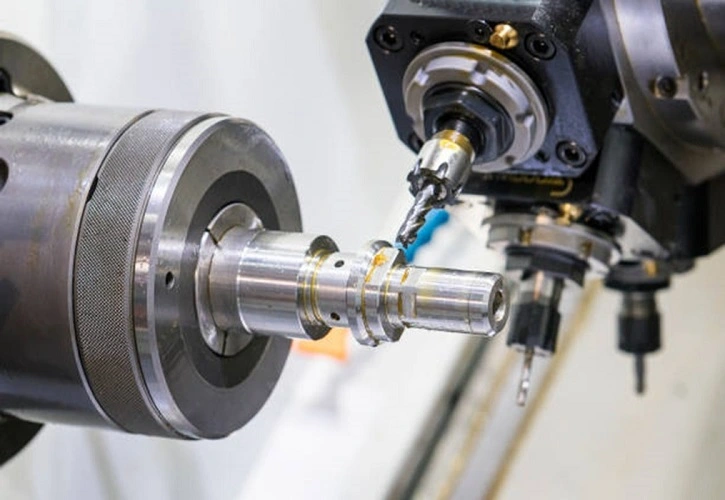
A 4-Axis machining parts is any part that is made by adding continuous rotation to the three linear cutting axes and cutting the workpiece. That fourth axis makes sure that the datum references are the same on every machined face. This gets rid of the problem of cumulative alignment error that happens in 3-axis workflows with more than one setup.
Some of the materials used are aluminum 6061/7075, stainless steel 303/316, titanium Ti-6Al-4V, PEEK, and Nylon. These materials cover all the weight and corrosion classes that robotics companies, automotive Tier 2 suppliers, and automation integrators need. The range of tolerances is ±0.005 mm, and the surface finishes range from Ra 3.2 µm for structural brackets to Ra 0.4 µm for precision bearing seats.
The practical benefit is clear: what used to take four to six separate setups, each of which introduced fixture error, only takes one or two operations to finish. The Modern Machine Shop 2023 Machining Technology Report says that shops that used 4-axis rotary integration cut the amount of fixture-related scrap by up to 30% on prismatic multi-face parts. (Modern Machine Shop, 2023)
Top 10 4-Axis CNC Parts You Need to Know About
Choosing the right type of component helps procurement teams figure out how good a provider is and make sure that their experience with rotary axes meets the level of complexity shown on your picture. Here are the ten 4-Axis machining parts that are most common in supply lines for robots, cars, and automation:
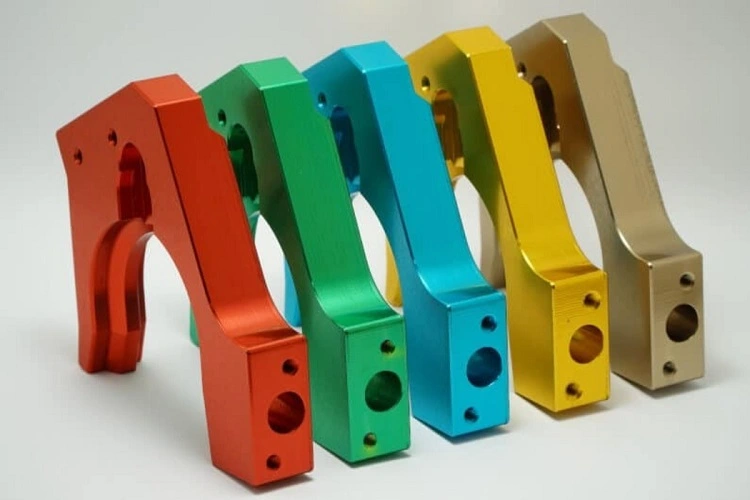
1. Robot Joint Housings — These are the best 4-axis workpieces because they have angled bore designs on multiple sides. Inter-face rotational error can't happen with single-setup processing, which is important for joint reliability.
2. Actuator End Caps — Circular flanges with ports spread out in a circle need to be continuously indexed. With four-axis milling, the angle difference between ports is always within ±0.01° for the whole batch.
3. Camshafts and Eccentric Shafts — Helicoidal lobe shapes need rotating and linear interpolation to happen at the same time. Four-axis turning milling centers can cut the whole profile without having to re-chuck.
4. Gearbox Housings — Multiple bearing bores on sides that are not perpendicular must share the same baseline. With rotary-axis fixturing, the parallelism of the bores stays within ±0.005 mm, even when making 1,000 pieces at a time.
5. Sensor Mounting Brackets — Every collaborative robot sensor cluster has attachment surfaces with a compound angle. Four-axis milling cuts these angles in one step, so you don't have to file and shimmy by hand.
6. Hydraulic Manifold Blocks — Internal galleries that are cross-drilled need exact entry points at right angles. All angle drill tracks can be set up in a single 4-axis setup, and the part doesn't have to be moved.
7. Turbine and Impeller Components — Continuous A-axis spinning during milling makes smooth aerodynamic surfaces with little hand finishing necessary for blisk-style impellers with compound-curved vanes.
8. Medical Device Housings — Enclosures for diagnostic and surgical tools have offset port patterns and deep seal gaps that need continuous datum control, which is exactly what a rotary axis gives you.
9. Automotive Steering Knuckles — Steering knuckles have complicated three-dimensional bore arrangements that need accurate multi-face processing. With four-axis fixturing, geometric tolerances are kept even during large production runs.
10. Custom Fixture Plates and Tombstones — These allow clamping multiple parts at the same time on rotating pallets, which increases the output per spindle hour and lowers the cost of making each unit by a large amount.
These parts show the wide range of fields (including robotics, automotive, aerospace, and medical) where rotary-axis machining is now required. (Referenced from Kalpakjian & Schmid, Manufacturing Engineering and Technology, 7th ed., 2014)
Comparing 4-Axis Machining Parts with Alternatives: What B2B Buyers Should Know
4-Axis vs. 3-Axis: The Setup Cost Argument
Three-axis cutting works well for flat and simple polygonal parts, but you have to re-clamp each new face by hand. Every time you re-clamp, the fastener moves by about 0.01 to 0.05 mm, and it takes 15 to 30 minutes of extra time to set up. When there are more than 100 pieces in a batch, these mistakes add up to measured scrap. Most of those re-clamps are unnecessary with 4-Axis machining parts rotating indexing, which also keeps the cost of tools well below that of five-axis systems.
4-Axis vs. 5-Axis: Balancing Complexity and Cost
Five-axis machining gives you the most control over sculpted surfaces and undercuts, but it's too expensive for mid-volume runs of 100 to 10,000 pieces because it's hard to program and set up the fixtures, and the machine wears out over time. Four-axis works best for parts that need to be geometrically precise but also structurally symmetrical around one rotation axis. These are parts like robot joints, gearbox housings, and manifold blocks that make up most OEM automation bill of materials.
The same is true for quality control. An ISO 9001-compliant CMM inspection of a 4-Axis machining parts checks all of its finished faces against a single set of datums. This creates a single inspection report instead of records for each face individually. That makes PPAP paperwork easier and speeds up acceptance of the first piece. (Groover, Fundamentals of Modern Manufacturing, 2020)
Procurement Guidelines: How to Source the Best 4-Axis CNC Machined Parts?
Finding 4-Axis machining parts takes more than just comparing prices. Before sending out a purchase order, a process engineer must make sure of the following things:
- Certified quality system — The minimum requirement for a quality system is ISO 9001, and for medical or life-safety uses, you need ISO 13485. Not just badges, but also area certificates.
- CMM inspection reporting — Dimensional reports linked to particular lot numbers make it possible to find the source of a quality problem further down the line.
- DFM feedback within 24 hours — A good supplier finds interference zones, undercut risks, and material substitution opportunities before cutting starts, not after the first item fails.
- Demonstrated batch consistency — Ask for Cpk data or first-pass yield records on similar shapes across runs of 500 pieces or more to show that the batch is consistent.
- Transparent lead-time commitments — With dedicated rotary-axis capacity, prototype delivery in 3–15 working days and volume production in 2–4 weeks are both reasonable goals.
With these criteria, a supplier search changes from a price negotiation to a technical qualification process. This is the exact change that lowers the risk of rejecting a batch over the course of a supply agreement. (Monczka et al., Purchasing and Supply Chain Management, 6th ed., 2015)
Design Considerations and Optimization Tips for 4-Axis CNC Parts
Orient Features Around the Rotation Axis
Cross-holes, port groups, and lobe patterns are all radially symmetrical features that work best when they are centered on the A-axis. When features aren't lined up correctly, they cause more linear errors, which increases the tool's reach and displacement risk. These direction problems are found early in the DFM review process, before they reach the CAM coder.
Control Tolerance Stack-Up Across Faces
The zero-point is shared by all faces that use the rotating coordinate. This consistency should be used by designers by putting the primary datum on the rotation axis, the secondary datum on a machined flat, and the tertiary datum on a first-cut bore. It is possible for this hierarchy to keep the tolerance stack-up below ±0.01 mm on four or more faces, which is hard for regular sequential setups to do.
Material Selection Impacts Cycle Time
The surface speed of aluminum 6061 is about three times that of 316 stainless steel. Aluminum is usually used for robotics parts that need to be light. 303/316 stainless steel or titanium Grade 5 should be used in places that are corrosive or hot, like automotive exhaust brackets and hydraulic bodies. To avoid expensive changes in the middle of a program, it is best to match the material to the environment during the design stage. (Todd, Allen & Alting, Fundamental Principles of Manufacturing Processes, 1994)
Conclusion
4-Axis machining parts cutting is an important part of today's supply lines for OEMs and automation. The rotational axis gets rid of the fixture mistakes, scrap events, and cycle-time fines that slow down multi-setup 3-axis processes. It does this without the extra programming work and high cost of buying a 5-axis system. The ten types of parts we'll talk about here, which include robot joint housings and hydraulic manifold blocks, make the strongest business case for investing in rotary-axis in a purchase program. ISO-certified quality systems, CMM traceability, and DFM responsiveness are some of the things that qualified providers use to make sure that parts are always the same, from the first piece to mass production.
FAQ
What materials work best for 4-axis CNC machined parts?
Most people choose aluminum alloys (6061 and 7075) because they are easy to work with and have a good strength-to-weight ratio. Stainless steel 303/316 works well in places that are corrosive or clean. Titanium Ti-6Al-4V is designed for medical and aerospace applications that require a lot of stress. Engineering plastics like PEEK and Nylon are used in robotics to meet needs for low friction or electrical separation.
When should I choose 4-axis over 5-axis machining?
If your part has multiple faces spread out around a main spinning axis, like gearbox housings, actuator caps, or manifold blocks, choose 4-Axis machining parts. Five-axis is needed when there are sculpted undercuts or compound compound-curved surfaces that the cutter can't see with a rotational index.
What lead times should I expect for custom rotary-axis components?
Depending on how complicated the shape is, a good precise manufacturer can make first-article samples in 3–15 working days. Low-volume production runs of 100 to 1,000 pieces usually take two to four weeks to finish. For ongoing mid-volume projects, quarterly blanket orders with planned drops are the most cost-effective way to set things up.
How does a 4-axis setup reduce per-part cost?
Combining four to six setups into one or two cuts down on fixture time that isn't being used, operator attendance, and WIP inventory between operations all at the same time. Benchmarks in the industry consistently show that parts with three or more machined faces can be made for 25–35% less than with equivalent 3-axis multi-setup workflows.
Partner with BOEN Rapid for Precision 4-Axis Machining Parts
In just 24 hours, BOEN Rapid sends ISO 9001 and ISO 13485-certified 4-Axis machining parts with tolerances of ±0.005 mm, along with CMM inspection records and DFM comments. We support prototype-to-production volumes from 1 to 10,000+ pieces and are a trusted manufacturer that works with robotics, automotive, and automation OEMs around the world. To get a detailed review and quote right away, email our engineering team at contact@boenrapid.com or go to boenrapid.com.
References
1. Modern Machine Shop (2023). 2023 Machining Technology Report: Rotary Axis Integration and Scrap Reduction. Gardner Business Media.
2. SME – Society of Manufacturing Engineers (2022). CNC Machining Fundamentals: Multi-Axis Systems and Industrial Applications. SME Publications.
3. Kalpakjian, S. & Schmid, S. (2014). Manufacturing Engineering and Technology (7th ed.). Pearson Education.
4. Groover, M.P. (2020). Fundamentals of Modern Manufacturing: Materials, Processes, and Systems (6th ed.). Wiley.
5. Monczka, R., Handfield, R., Giunipero, L. & Patterson, J. (2015). Purchasing and Supply Chain Management (6th ed.). Cengage Learning.
6. Todd, R., Allen, D. & Alting, L. (1994). Fundamental Principles of Manufacturing Processes. Industrial Press.