What are Aluminum CNC Milled Parts?
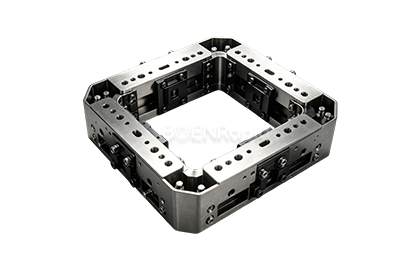
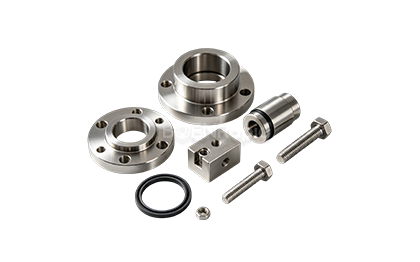
If you’ve ever touched a precision-machined aluminum bracket, heat sink, or robotic arm housing, you’ve already touched what the industry refers to as aluminum CNC milled parts. Precision parts are machined from solid aluminum billets using computer-controlled cutting tools to remove material and create complicated geometries, pockets, slots, and curved surfaces, with repeatable accuracy. In the middle of current product development lie these elements, from hardware startups rushing to construct a demo prototype before their next funding round, to established robotics companies managing multi-year supply chains.
This tutorial will explain what these components are, why they are important, how they compare to alternatives, and how to obtain them reliably.
Understanding Aluminum CNC Milled Parts
What the Process Actually Involves
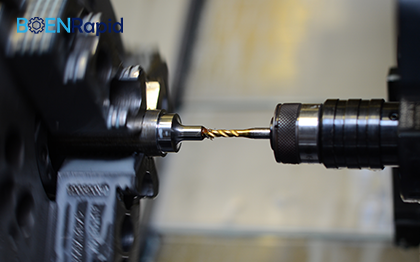
CNC milling is the process of employing computer programming to control spinning cutting tools that form aluminum material into final products. It doesn't involve casting or stamping — it eliminates material instead of adding or shaping it. The extruded item is quite similar to the original CAD file, and no molds were necessary.
Alloys That Matter Most
Not all grades of aluminum behave the same in a spindle. Alloy 6061-T6 is the industrial workhorse. It can be welded, it does not rust, and weighs around 2.70 g/cm3, roughly 1/3 that of steel. The yield strength of the alloy is close to that of certain steels. In combination with its strength-to-weight ratio, it makes it the best option for bracing in airplanes and structural sections that are under a lot of stress. Grade 5052 is ideal for outdoor or maritime environments because of its superior resistance to salt and moisture.
Precision and Surface Finish Capabilities
Tolerances are normally ±0.02 mm, with important portions being kept to ±0.01 mm. Roughness of polished surfaces is often between 0.8 and 1.6 μm. A smoother finish may be achieved by polishing or unique toolpath procedures. These statistics translate directly into parts that fit right the first time, reducing the amount of rework and test failures later in the process.
Benefits and Applications of Aluminum CNC Milled Parts
Why Engineers Choose Aluminum for CNC Work
Aluminum CNC milled parts have a thermal conductivity of 120-180 W/m.K, which is better than cast aluminum or most polymers. It also has one of the greatest machinability indices among the structural metals. This implies it can be worked faster and cheaper per unit than titanium or stainless steel. There are no hard tools, so design modifications are only a matter of reprogramming, a great advantage when you are changing a prototype every week.
Key Industrial Applications
Aluminum CNC machined parts are used in a wide variety of industrial environments. Here are the places that are always in great demand:
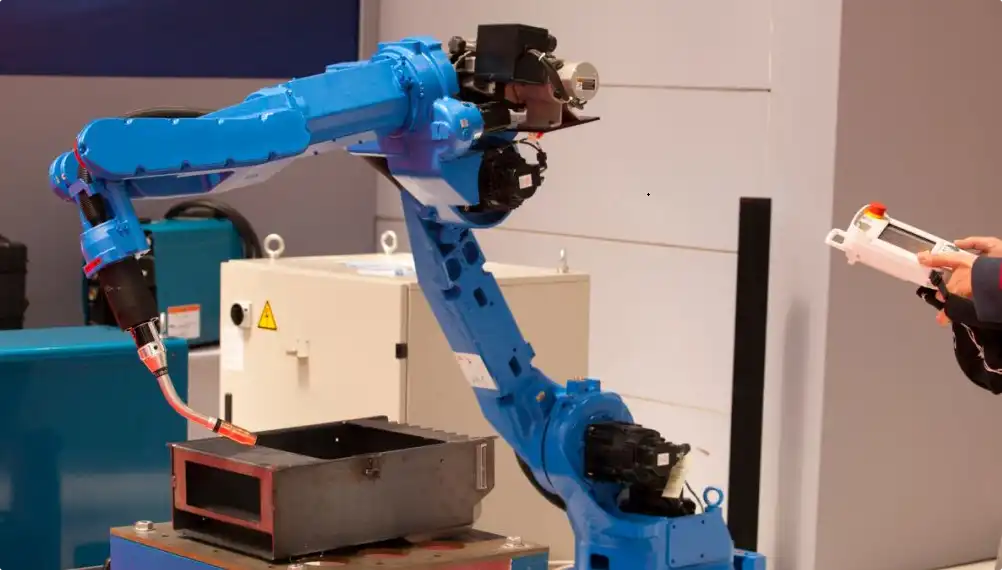
- Robotics and automation: Low mass and high rigidity are needed for structural arm segments, joint housings, and end-of-arm tooling – aluminum provides both.
- Medical devices: Aluminum is non-magnetic, perfect for MRI housings and surgical equipment. Hard anodizing gives sterilization resistance.
- Electronics and Semiconductors: Custom heat sinks with strict tolerances and thermal performance, LiDAR enclosures, and semiconductor process chambers need precise fin geometry.
- Electric Vehicles and Aerospace: Weight reduction here is not optional. Machined aluminum structural elements replace heavier steel sections, with no sacrifice in load-bearing ability.
One thing they all have in common is that they all need accurate measurements, a flat surface, and materials that won’t shatter. Having a source that can perform all three for a single prototype and for a huge production run is incredibly good.
Design Tips to Avoid Costly Errors
Before sending a file to a supplier, make sure the wall thickness is at least 0.8 mm, that small-diameter tools don't make holes that are too deep, and that you include the thickness of the anodizing layer in your drawings. Type II hardcoat adds about 5–10 μm per surface, and Type III hardcoat can add 30–50 μm, which directly affects the final fit dimensions.
Comparing Aluminum CNC Milled Parts with Other Materials and Processes
Aluminum vs. Plastic and Stainless Steel
Plastics for engineering use weigh less and can be machined quickly, but they are not as strong or thermally efficient as metal. Even though stainless steel doesn't rust, it's almost three times as heavy as aluminum, which makes it take a lot longer to machine and wear out tools faster. Aluminum is in the middle when it comes to most structural and thermal uses.
CNC Milling vs. Turning
Cylindrical parts like shafts, bushings, and threaded connectors are great for turning. Milling can work with complicated curves, pockets, slots, and prismatic shapes. A supplier with live tooling or combined mill-turn centers can combine those steps into a single setup, which cuts down on lead time and positional error for many real-world parts.
CNC Milling vs. Casting and 3D Printing
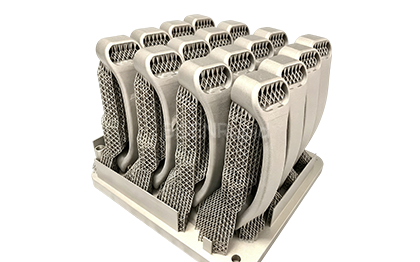
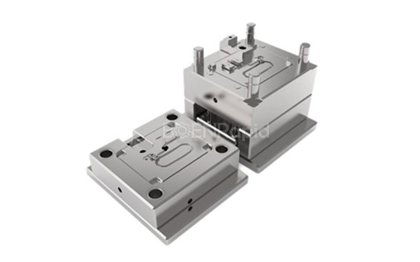
Die casting is only cost-effective when more than a few hundred to a few thousand units are made. This is because hard tooling costs usually range from tens of thousands to over one hundred thousand dollars. Aluminum CNC milled parts cutting is faster to start up and easy to change below that point. 3D printing metal can make parts with complicated internal shapes that milling can't, but the parts' surface finish and density aren't always as good as cut parts without further processing. CNC milling is still the most useful and reliable choice for making working prototypes and small to medium-sized batches.
Choosing the Right Aluminum CNC Milling Supplier for Your Business
Certifications and Quality Systems to Look For
ISO 9001 certification is the benchmark for the consistency of process execution. Suppliers making parts for medical devices must be ISO 13485 certified. If you are working with aerospace businesses, you should look at the AS9100 standards. Ask about in-process inspection, how it is done, e.g., do they utilize CMM systems, video measurement, profilometers, etc. The kind of inspection determines what faults are detected prior to shipment of products.
Geographic Considerations
China has a lot of well-established precision CNC machine businesses that have equipment that can operate on numerous axes and treat the full surface. European stores often offer lower delivery periods for customers in the EU and may have certifications particular to the area. North American suppliers reduce the risk of wait time for US-based teams but have higher per-unit costs. It is contingent upon how much you need, how much time you have, and how much you want to spend overall.
Evaluating Supplier Responsiveness
If you’re waiting four days for a quotation from a provider, your product cycle is already slowing down. Send a STEP or IGES file to a competing B2B supplier, and you should obtain a DFM evaluation and first pricing in 24 hours. The speed with which they respond while they are quoting you is a good predictor of how they will be when they are making your transaction.

Best Practices for a Successful Procurement of Aluminum CNC Milled Parts
Preparing a Complete RFQ
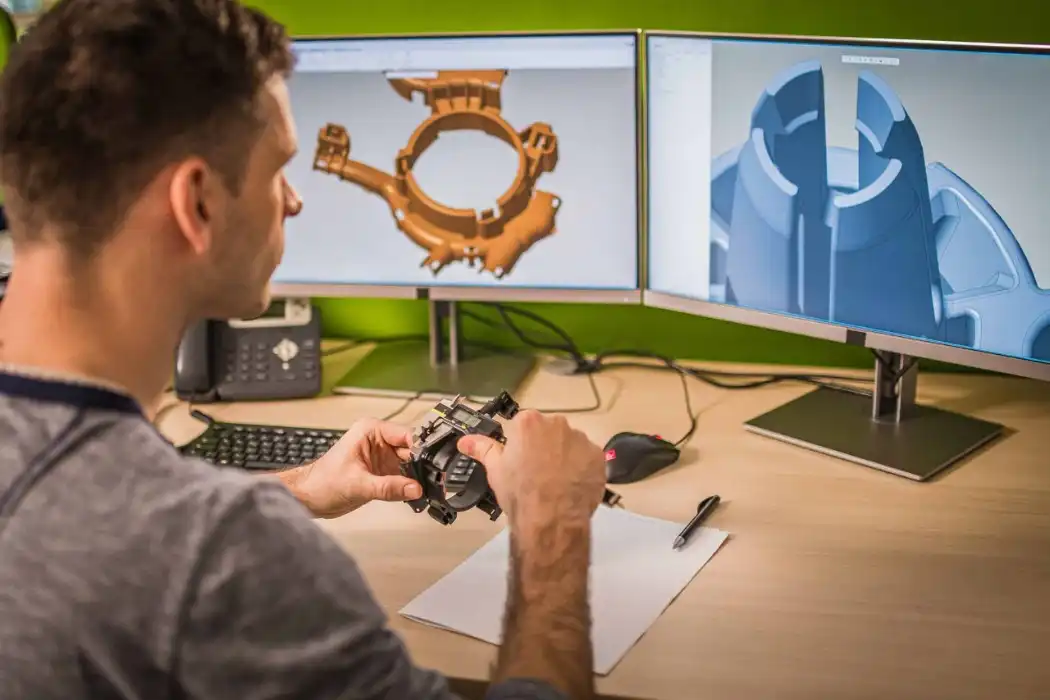
A good Request for Quotation comprises your 3D CAD file (STEP format is preferable), a 2D design with GD&T callouts, the metal grade, the surface finish and treatment you require, the number of parts you need, and when you need them by. The better your RFQ, the less back and forth until you can start manufacturing.
Quality Assurance Measures
Request a First Article Inspection (FAI) report when new part numbers are introduced. Whether you purchase more than once, agree in advance whether you require a 100% inspection or a statistical sample. Orders for regulated enterprises should be supported by material certifications that can be traced to a heat number. The dimensional reports from CMM measurements provide you with information you may utilize in the event there is an issue when the part is examined when it comes in.
Leveraging Prototyping for Faster Product Development
Going into a limited production run before ordering one to five prototypes is not a delay. That’s just smart engineering practice. With a prototype run, you may find fit difficulties, irregular finishes, and problems with tolerance stack-up before they develop in a complete batch. If your supplier can provide a prototype in less than two weeks, then your development team has actual schedule flexibility.

Conclusion
Aluminum CNC milled parts are highly lightweight, dimensionally exact, and may be finished with several surface finishes. That’s something few other low- to mid-volume processes in manufacturing can match. Whether you’re developing a hardware prototype for a fundraising pitch or ensuring an automated assembly line runs at maximum capacity, having the proper machined metal item and source may make a major difference in your timeline and the quality of your work. Select vendors who have proven certifications, transparent quality documents, and sufficient engineers to review your designs before they reach the factory floor and create difficulties.
FAQ
1. Which aluminum alloy is best for CNC milling?
Alloy 6061-T6 suits most general applications — structural brackets, enclosures, and heat sinks — because it machines cleanly and accepts anodizing well. For high-stress applications like aerospace mounts or high-load robotic joints, 7075-T651 is the stronger choice, though it costs more per kilogram and increases tool wear.
2. What tolerance levels are realistically achievable?
Standard CNC milling holds ±0.02 mm on general features. Critical dimensions — bores, datum surfaces, and mating interfaces — can be held to ±0.01 mm with proper fixturing and toolpath control. Always specify your critical features explicitly in the drawing rather than applying a blanket tolerance.
3. How long does a custom aluminum part order take?
Prototype quantities (1–10 pieces) typically ship within 3–15 working days depending on geometry complexity. Low-volume production runs of 50–300 pieces generally complete within 2–4 weeks. Suppliers with flexible scheduling can accommodate urgent requests on a case-by-case basis.
4. Does anodizing change the final dimensions?
Yes. Type II anodizing adds approximately 5–10 μm per surface. Type III hardcoat adds 30–50 μm. Parts destined for anodizing must be machined slightly undersized to keep final dimensions within print tolerance.
5. What file formats should I submit?
STEP (.stp) is the preferred format for 3D geometry. Include a PDF or DWG drawing with tolerances, GD&T callouts, and surface finish specifications. IGES files are also accepted by most suppliers.
Get a Quote for Precision Aluminum CNC Parts — BOEN Rapid
Teams in robotics, medical devices, electronics, and aircraft have been getting quality aluminum CNC milled parts from BOEN Rapid for more than 15 years. We are a reliable company that makes CNC-milled aluminum parts. We offer free prototypes, DFM review 24 hours a day, and delivery in 3–15 working days. We are ISO 9001- and ISO 13485-approved, and we can help with any private projects that need it. To get a price right away, send your STEP file to contact@boenrapid.com.
References
1. ASM International. ASM Handbook, Volume 16: Machining. ASM International, 2009.
2. Kalpakjian, S., & Schmid, S. R. Manufacturing Engineering and Technology. Pearson Education, 2014.
3. Aluminum Association. Aluminum Standards and Data. The Aluminum Association, 2020.
4. ASTM International. ASTM B209: Standard Specification for Aluminum and Aluminum-Alloy Sheet and Plate. ASTM International, 2021.
5. International Organization for Standardization. ISO 2768-1: General Tolerances for Linear and Angular Dimensions. ISO, 1989.
6. Society of Manufacturing Engineers. Tool and Manufacturing Engineers Handbook, Volume 1: Machining. SME, 2018.