CNC Toolpath Explained: How Toolpath Strategies Improve Machining Efficiency
What Is a CNC Toolpath and Why Does It Matter?
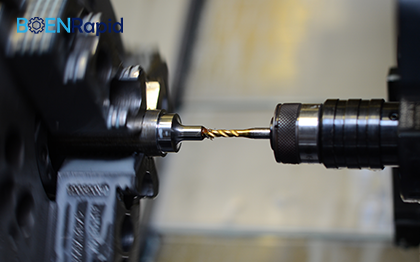
A CNC toolpath is the programmed route that a cutting tool follows during machining. While it may appear to be a simple movement path, it is actually a comprehensive machining strategy that controls cutting forces, tool movement, machining efficiency, and final surface quality.
The toolpath created in CAM software directly affects how the machine moves and performs. A well-designed toolpath can reduce machining time, improve tool life, achieve better surface finishes, and ensure higher part accuracy.
Core Considerations When Selecting CNC Toolpaths
Roughing vs. Finishing: Different Operations, Different Goals
Roughing and finishing are two essential stages in CNC machining, but they focus on different objectives.
Roughing prioritizes the Material Removal Rate (MRR) by removing large amounts of material quickly and bringing the workpiece close to its final shape. The main goal is maximizing productivity while maintaining stable cutting conditions.
Finishing focuses on achieving the required surface finish (Ra) and dimensional accuracy. It removes a small amount of remaining material with smaller stepovers to achieve precise final dimensions and improved appearance.
Climb Milling vs. Conventional Milling: A Key Machining Decision
The choice between climb milling and conventional milling has a significant impact on machining performance.
In climb milling, the cutting tool rotates in the same direction as the feed movement. The chip thickness decreases as the cutter exits the material, helping transfer heat away from the cutting edge and improving tool performance.
In conventional milling, cutting starts with zero chip thickness, which creates more friction, heat, and potential tool wear. For most modern CNC operations, climb milling is the preferred method due to its advantages in efficiency and surface quality.
| Feature | Climb Milling (Recommended) | Conventional Milling |
|---|---|---|
| Tool Life | Longer tool life due to better heat removal | Faster wear caused by increased friction |
| Surface Finish | Better finish with reduced chip re-cutting | Lower finish quality due to possible chip re-cutting |
Common CNC Toolpath Strategies Explained
Improving 2D Roughing Efficiency with Adaptive Clearing
Traditional pocketing methods can create uneven tool loads, especially when machining corners. This can increase cutting stress and reduce tool performance.
Adaptive Clearing (Dynamic Milling) maintains consistent radial engagement between the tool and material. This allows deeper axial cuts, higher feed rates, and more efficient material removal compared with conventional pocketing methods.
Advanced 3D Roughing for Complex Surfaces
For complex 3D components, advanced roughing strategies help optimize material removal.
3D Adaptive Clearing analyzes the entire model and removes material layer by layer while maintaining stable cutting conditions.
Rest Machining focuses on removing only the remaining stock left by larger tools. This approach improves efficiency by using smaller tools only where necessary, reducing unnecessary machining time.
Finishing Toolpaths for High-Quality Surface Results
Different finishing strategies are selected based on part geometry and surface requirements:
Contour (Waterline): Best suited for steep walls and vertical surfaces.
Parallel (Raster): Effective for shallow and open surface areas.
Scallop (Constant Stepover): Provides consistent and uniform finishes on complex free-form 3D contours.
How to Optimize CNC Toolpaths for Better Performance
Proper optimization of feeds and speeds is essential for achieving efficient machining. Experienced machinists adjust cutting parameters based on material characteristics, tooling conditions, and chip thickness variations.
Optimizing tool entry and exit movements, such as using helical ramps and arc-in approaches, helps reduce cutting impact, prevent tool shock, and extend tool life.
Advanced CNC Efficiency: High-Speed Machining (HSM)
High-Speed Machining (HSM) improves production efficiency by replacing traditional heavy cutting methods with faster and lighter cutting strategies.
By using advanced CAM software features such as toolpath simulation, collision detection, and physics-based optimization, machinists can identify potential issues before production begins. This helps prevent excessive cutting loads, reduce machining risks, and improve overall manufacturing efficiency.
Practical CNC Toolpath Selection Guide
| Machining Feature | Main Goal | Recommended Strategy |
| 2D Pocket | Maximum material removal | Adaptive Clearing |
| Vertical Walls | Improved surface precision | Contour / Waterline |
| Complex Organic Surfaces | Uniform surface finish | Scallop |
Conclusion: Continuous Improvement Through Better Toolpaths
Mastering CNC toolpath strategies is an ongoing process that requires technical knowledge, experience, and continuous optimization. By selecting the right machining strategy and carefully adjusting every parameter, manufacturers can improve efficiency, extend tool life, and achieve higher-quality finished parts.
An optimized CNC toolpath transforms machining from basic machine operation into a precise, efficient, and reliable manufacturing process.