Unlocking Efficiency: Key Factors Affecting Prototype Lead Times and Quotes
Understanding What Determines Prototype Costs and Delivery Time
When you submit a CAD file for a prototype quote, manufacturers evaluate multiple factors, including machining time, labor requirements, material costs, finishing processes, and logistics.
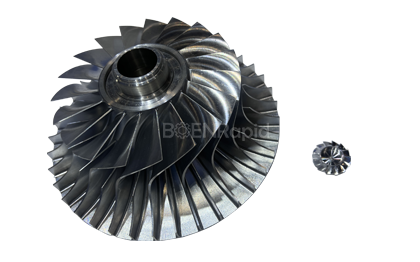
A higher price or longer lead time is usually the result of increased manufacturing requirements rather than arbitrary pricing. For example, complex geometries may require advanced equipment such as 5-axis CNC machines, while specialized materials like PEEK may increase both material costs and processing difficulty.
Understanding these factors allows you to optimize your design, control costs, and achieve your target delivery schedule.
Design Factors That Influence Prototype Quotes
The design stage provides the greatest opportunity to control manufacturing costs. The decisions made in CAD directly affect production difficulty, processing time, and overall project efficiency.
Part Complexity and Geometry
Simple designs are generally faster and more affordable to manufacture. However, parts with deep pockets, thin walls, complex curves, or multiple machining surfaces require additional setups, specialized tooling, or advanced equipment.
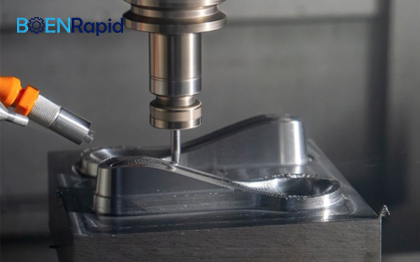
For CNC machining, complex features may require multiple fixture changes or 5-axis machining operations, increasing labor time and production costs.
For 3D printing, complex geometries may require additional support structures, which increase printing time and post-processing work.
In general, simpler designs lead to faster production and lower costs.
Tolerances and Precision Requirements
Tolerances define how much variation is acceptable in part dimensions.
While tight tolerances are necessary for functional assemblies and precision components, applying them unnecessarily can significantly increase manufacturing costs. High-precision parts often require slower machining speeds, specialized tools, advanced inspection equipment, and additional quality control procedures.
Applying tolerances only where functionally required helps maintain performance while reducing production expenses.
Part Size and Overall Volume
Part size directly affects material usage, machine requirements, and production time.
Larger components require more raw materials and longer processing times. In additive manufacturing, increased part volume can significantly extend printing time.
Oversized parts may also exceed standard machine capabilities, requiring specialized equipment and increasing manufacturing costs.
Material and Manufacturing Process Selection
Material choice and manufacturing method are closely connected. Selecting the right combination is essential for achieving the required performance while controlling cost and lead time.
How Material Selection Affects Cost
Materials influence both raw material expenses and manufacturing difficulty.
For example:
- Aluminum 6061 is affordable, lightweight, and easy to machine.
- Titanium offers excellent strength but requires slower machining speeds and specialized tooling.
- PEEK provides high-performance properties but involves higher material costs and more challenging processing requirements.
Choosing the right material based on actual requirements can prevent unnecessary expenses.
How Manufacturing Processes Impact Results
Different manufacturing methods have different advantages in speed, cost, and precision.
| Manufacturing Process | Typical Lead Time | Relative Cost | Best For |
|---|---|---|---|
| CNC Machining | 5–15 business days | High | Functional parts requiring high precision |
| SLA/DLP 3D Printing | 2–7 business days | Medium | Detailed prototypes and form-fit testing |
| FDM 3D Printing | 1–5 business days | Low | Early concepts and basic validation |
| Urethane Casting | 15–25 business days | Medium | Low-volume production (10–100 units) |
Selecting the correct process ensures prototypes are produced efficiently without unnecessary costs.
The Impact of Post-Processing and Surface Finishes
Prototype parts often require additional finishing after manufacturing.
Common secondary processes include:
- Support removal
- Deburring
- Sanding
- Anodizing
- Painting
- Plating
Advanced surface treatments can add extra setup costs and extend lead times. If an as-machined or standard finish meets your requirements, avoiding unnecessary finishing steps can save time and budget.
Supplier and Logistics Factors
Beyond design and manufacturing choices, supplier-related factors also affect project timelines and pricing.
Order Quantity and Production Efficiency
Manufacturing costs are influenced by production volume.
For processes such as CNC machining, initial setup costs—including programming and fixturing—are distributed across the production quantity. As a result, ordering multiple units often reduces the average cost per part compared with producing only one prototype.
Supplier Experience and Production Capacity
A supplier’s technical expertise, available equipment, and production capacity can affect delivery schedules.
A reliable manufacturing partner with strong communication and engineering support can help prevent delays, reduce design issues, and improve overall project efficiency.
Documentation and Communication Quality
Clear technical information is essential for accurate quoting and smooth production.
Providing:
- A clean 3D CAD file (such as STEP format)
- Detailed 2D drawings
- Critical tolerance requirements
- Material and finishing specifications
helps manufacturers understand project requirements and avoid delays caused by missing information.
Prototype Optimization Checklist
Before submitting a design for quotation, review the following:
- Design: Have unnecessary complex features been removed?
- Tolerances: Are tight tolerances only applied where needed?
- Material: Is the selected material necessary for this development stage?
- Manufacturing Process: Is the chosen process suitable for the project goal?
- Finish: Is an advanced surface finish truly required?
- Documentation: Are drawings and technical requirements clearly provided?
Conclusion: Working Smarter for Prototype Success
Successful prototyping requires a balance between design, materials, manufacturing processes, and supplier collaboration.
By understanding the factors that influence lead times and quotes, engineers can make smarter design decisions, reduce unnecessary costs, and accelerate product development.
A well-optimized prototype project not only delivers high-quality parts faster but also creates a smoother path toward final production.