Aluminium CNC Milled Parts: A Comprehensive Guide
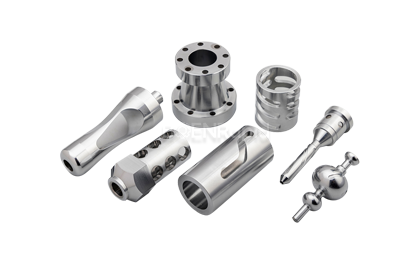
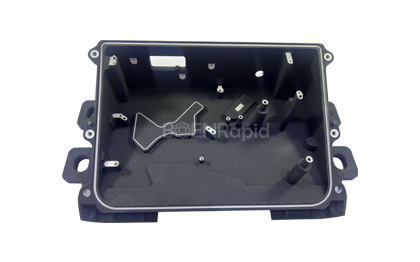
Aluminum CNC milled parts are precision components produced by computer-controlled rotating cutting tools that remove material from solid aluminum billets. This subtractive process creates complex geometries, tight tolerances, and refined surface finishes that casting simply cannot match. At BOEN Rapid, we machine aluminum alloys including 6061, 6063, 7075, and 5052 across 3-axis, 4-axis, and 5-axis centers, achieving tolerances to ±0.02 mm and surface roughness of Ra 0.8–1.6 μm. Whether you need a single prototype or a low-volume production run, understanding this process helps you make smarter engineering and sourcing decisions.
Understanding Aluminium CNC Milled Parts
What the Process Actually Involves
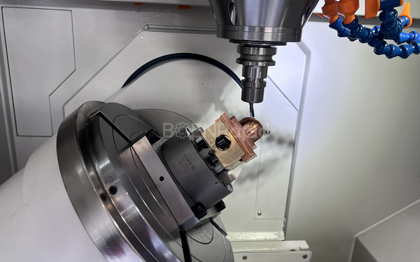
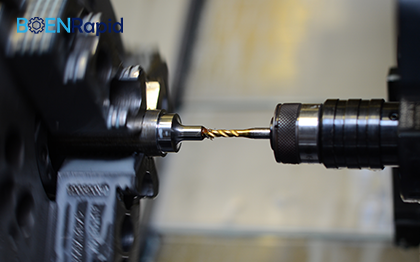
Computer-controlled rotating cutters are used in CNC milling to remove material from a solid billet of aluminum. Modern multi-axis centers let you do a lot of different tasks at once, like face milling, pocket milling, outline cutting, and drilling. This method of using a single clamp cuts down on moving mistakes and makes sure that the accuracy of the dimensions is the same for all parts in a batch.
Aluminum Grades and Their Properties
All of engineering's needs are met by the four grades we work with the most. The density of 6061-T6 is about 2.70 g/cm³; it is easy to weld and doesn't rust, and it can be used for most construction purposes. 7075-T651 has the same yield strength as mild steel but only about a third of the weight. This makes it the best material for UAV frames and aerospace brackets. 5052 is better at resisting rust in naval and outdoor settings, while 6063 is chosen for thin-walled shapes that need a clean anodized finish.

CNC Milling vs. Casting: A Practical Comparison
Die casting needs hard tools that can cost between $10,000 and $80,000, and it takes a few weeks of lead time before even one part is made. With CNC cutting, you don't have to make that initial purchase at all. If you give us a STEP or IGES file, we can make samples for you in 3–15 business days. This makes it easier for engineering teams to make multiple versions of a design before committing to making the tools for production. This lowers the risk of development and speeds up time to market.
Tolerance Capabilities You Can Rely On
Machined features that aren't very important can hold ±0.02 mm, and vital measurements like bearing bores or mating interfaces can hold ±0.01 mm. Surface sharpness is set to Ra 1.6 μm by default, but it can be Ra 0.8 μm for optical housings or closing surfaces. All of the parts meet the general tolerances set by ISO 2768 and the material specs of ASTM B209/B211. This gives procurement teams a strong paper trail for qualifying suppliers.

Benefits and Applications of Aluminium CNC Milled Parts
Why Aluminum Outperforms Other Materials in Many Scenarios
Depending on the alloy, aluminum's thermal conductivity ranges from 120 to 180 W/m·K. This makes it a much better choice for heat-sensitive electronics than cast alternatives. Its strength-to-weight ratio makes every gram matter in robots and electric vehicle platforms, where mass directly affects payload and productivity. Natural oxide formation provides basic resistance to corrosion, and treatments applied after machining increase service life even more in harsh environments.
Here are the main performance benefits of aluminum CNC milled parts that make it the standard choice for many demanding industries:
- Lightweight structural integrity: Aluminum is about one-third as dense as steel, so it reduces system weight without lowering load-bearing capacity. This is a clear benefit in electric car suspensions and drone frames.
- Thermal management precision: Machined fin shapes and hole features create surface areas that can't be made by extrusion alone. This makes custom heatsinks measurably better than off-the-shelf options.
- Design freedom without tooling cost: Complex pockets, undercuts, and contoured surfaces are made directly from CAD data. This means that changes made by engineers can be made right away, instead of having to wait weeks for new tools to be made.
These traits really cut down on costs during the whole process of making a product, and they also lower the total amount of money that needs to be spent on engineering before a design is approved for production.

Real-World Industry Applications
Medical device makers use metal that isn't magnetic for the housings of MRI scanners and surgical robotic arms. Hard anodizing makes the metal resistant to sterilization while keeping the measurements accurate, which is important for biomedical assemblies. Aluminum cavities and process chambers in semiconductor equipment need to be clean and have exact shapes, which can only be done by precision machining. Robotics OEMs depend on machined arm segments, joint housings, and end-effector brackets that can handle being loaded and unloaded many times while still having a low moment of inertia.
Surface Finishing Options That Add Function and Appearance
Type II anodizing adds an oxide layer of 5–10 μm to protect the finish. Type III hard anodizing adds 30–50 μm for electrical protection and resistance to wear. To account for this growth and keep the final print dimensions, we make the raw parts a little smaller than they need to be. Bead blasting gives things a uniform matte look and gets rid of machining lines. Powder coating adds color and chemical protection to parts that people will see.

Comparing Aluminium CNC Milled Parts with Alternatives
Aluminum vs. Steel and Plastic
Steel is stronger in every way, but it adds a lot of weight. When machined, 7075 aluminum is used instead of steel for structural parts in robotic arms, link friction is reduced. This directly leads to faster cycles and bigger motors. Engineering plastics weigh less per kilogram, but they change shape when heated and can't keep their shape or thermal conductivity over time like metal can. Aluminum CNC milled parts are still the best material for most uses that need accuracy, light weight, and a lot of different post-processing options.
CNC Milling vs. Laser Cutting
Laser cutting quickly makes flat profiles, but it can't make undercuts, threaded holes, or three-dimensional shapes without extra steps. CNC milling can make parts in all three dimensions, with controlled depth pockets, chamfers, and complicated bores all in one setting. When your plan needs more than a flat shape, milling is the best way to go because it gives you more accuracy and detail than laser cutting.
Cost Factors and Bulk Ordering Logic
As the number of parts goes up, the cost per part goes down significantly because the time it takes to set up the machine is spread out over more parts. When you go from 5 to 50 parts of the same design, the unit cost usually drops by 40 to 60%, but this depends on the shape. Buyers who want to bridge the gap between getting approval for a pilot and mass production can save money by locking in a price for stable quality before going big.
Procuring Aluminium CNC Milled Parts: What B2B Buyers Need to Know
How to Get an Accurate Quote Quickly
Please upload a STEP or IGES file along with a 2D drawing that shows the alloy grade, critical tolerances, and the surface finish that must be met. The Design for Manufacturability (DFM) assessment will give you more accurate comments and prices if you give us more information up front. When you send us your files, BOEN Rapid will give you an initial project review and DFM assessment within 24 hours. There is no minimum order quantity needed.
Understanding Lead Times and Order Flexibility
Depending on how complicated the features are, prototypes are sent out in 3–15 business days. Low-volume production runs usually end in two to four weeks. When engineering changes happen after an order has been placed, our scheduling allows for changes to the design in the middle of production without starting over with the queue. This adaptability helps the iterative development pace that tech companies and R&D teams use.
Evaluating Supplier Certifications and Risk
An ISO 9001 certification means that there is a written quality management system with inspection records that can be found. ISO 13485 adds a layer that is specific to medical devices. This layer covers sterile processing requirements and risk-based design controls. Suppliers with both certifications have shown independent auditors how their quality systems work. This makes it easier for you to qualify suppliers and gives your customers faith in the supply chain.

Choosing the Right Aluminium CNC Milling Supplier: A Decision Guide
Technical Capabilities That Separate Suppliers
With a 5-axis machine, you can cut complicated surfaces with just one setup, while a 3-axis machine would need three separate sets of fixtures. Less setup time means fewer mistakes in data sharing and faster delivery. If you are looking for a supplier, find out if they have their own 5-axis equipment or if they hire someone else to do the work. If they hire someone else, the schedule can change without your control.
Certifications, Standards, and Documentation
Ask for material papers that show the hardness test results and prove the alloy's composition by XRF spectrometry for each batch. Request sample CMM inspection reports to make sure the provider checks GD&T callouts like position, flatness, and concentricity and doesn't just rely on operator opinion.
OEM/ODM Partnership and Confidentiality
Suppliers who sign NDAs before looking at design files are good for both engineering startups and well-known OEM brands. BOEN Rapid supports private manufacturing, custom packaging, and long-term framework agreements that include yearly volume commitments, delivery windows, and cost-reduction goals from one year to the next. Using this plan, you only have to manage one accountable partner instead of many, which cuts down on the work that comes with handling many suppliers.
Conclusion
Aluminum CNC milled parts are the only process at this price that can combine material efficiency, physical freedom, and a wide range of post-processing options in this way. If you know about alloy choice, tolerance capabilities, surface treatments, and source standards, you can make choices that will stand up to engineering and business review. This is true whether you are testing a first prototype or putting a design that has already been proven into mass production. BOEN Rapid has been machining for 15 years, has two ISO certifications, and promises a 24-hour DFM turnaround time for all projects, whether it's a single part or a regular production schedule.
FAQ
1. How long does anodizing add to lead time?
Type II anodizing usually takes two to three extra working days. Adding 3–5 days for Type III hard anodizing may depend on the thickness of the finish and the size of the batch. To cut down on total turnaround time, we coordinate the finishing schedule with the machining schedule.
2. Can you machine a single prototype with no minimum order?
Yes. BOEN Rapid does not have a minimum order size. We can take orders as little as one piece, which makes us a good partner for early-stage hardware creation where changes to the design happen a lot.
3. How do you prevent anodizing from affecting final dimensions?
We make the raw parts smaller than the expected coating thickness (5–10 μm for Type II and 30–50 μm for Type III), so that the final sizes after anodizing match what you need from the drawing.
4. What file formats do you accept?
We accept PDF, STEP, IGES, and DWG files. We can get back to you with a full DFM report and quote within 24 hours if you send us STEP files along with a 2D PDF that lists tolerances and surface finish requirements.
5. Do you provide material and inspection documentation?
We give you certificates for materials, XRF spectrometry results, data from hardness tests, and CMM inspection records. For medical and aircraft parts, full traceability paperwork is the norm.
Start Your Next Project with BOEN Rapid
Send your STEP file to contact@boenrapid.com and receive a full DFM report and quote within 24 hours — no minimum order required. As a trusted aluminum CNC milled parts manufacturer, BOEN Rapid pairs ISO 9001 and ISO 13485 certified quality systems with 3-axis, 4-axis, and 5-axis machining to deliver prototypes in 3–15 working days and low-volume runs in 2–4 weeks.
References
1. ASM International. ASM Handbook, Volume 2: Properties and Selection — Nonferrous Alloys and Special-Purpose Materials. ASM International, 1990.
2. Boothroyd, G., Dewhurst, P., & Knight, W. A. Product Design for Manufacture and Assembly. CRC Press, 2010.
3. Kalpakjian, S., & Schmid, S. R. Manufacturing Engineering and Technology. Pearson, 2014.
4. International Organization for Standardization. ISO 2768-1: General Tolerances — Part 1: Tolerances for Linear and Angular Dimensions Without Individual Tolerance Indications. ISO, 1989.
5. ASTM International. ASTM B209: Standard Specification for Aluminum and Aluminum-Alloy Sheet and Plate. ASTM International, 2021.
6. Todd, R. H., Allen, D. K., & Alting, L. Manufacturing Processes Reference Guide. Industrial Press, 1994.