The journey from a digital design to a physical, market-ready component involves a multi-stage process where precision, material science, and manufacturing strategy converge. This transformation is best managed through an end-to-end solution that starts with rapid prototyping to validate a concept, moves through design optimization, and scales up to full production using advanced CNC milling and turning. This integrated approach ensures consistency, efficiency, and quality from the very first part to the ten-thousandth.
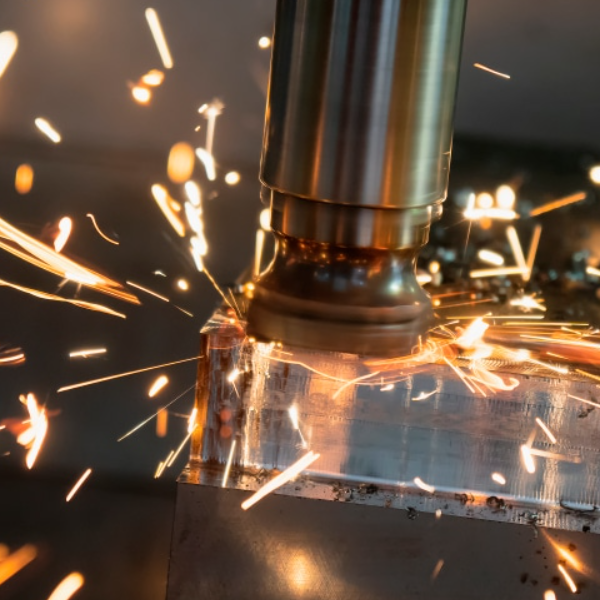
Table of Contents
• The Journey of a Custom Part: From Concept to Reality
• Stage 1: The Prototyping Phase – Validating Your Vision
• Bridging the Gap: The Critical Role of Design for Manufacturability (DFM)
• Stage 2: The Production Phase – Scaling with Confidence
• The Material Universe: Selecting the Right Substance for Your Part
• Beyond Machining: Essential Finishing and Quality Assurance
• Why Partner with an End-to-End Solutions Provider?
The Journey of a Custom Part: From Concept to Reality
Creating a custom part is not a single action but a carefully orchestrated sequence of events. It begins with an idea, represented by a 3D CAD (Computer-Aided Design) model. This digital blueprint must be transformed into a tangible object that can be tested, refined, and ultimately manufactured at scale. The path from prototype to production is fraught with potential challenges, from design flaws and material incompatibilities to manufacturing inefficiencies that can inflate costs and delay timelines. Navigating this path successfully requires a holistic strategy that considers the entire lifecycle of the part from the very beginning.
An effective workflow integrates prototyping, design feedback, and production under one cohesive manufacturing plan. This ensures that the initial prototypes are not just conceptual models but are made with the final production process in mind. By using the same manufacturing technologies, like end-to-end custom parts solutions , for both early-stage and full-scale runs, you eliminate variables and ensure that the functional part you approve is the same part you receive in your final shipment. This seamless integration is the hallmark of modern, efficient product development.
Stage 1: The Prototyping Phase – Validating Your Vision
The prototyping stage is the first reality check for any design. It's where theoretical models are subjected to real-world stresses and functional tests. The goal is to identify and rectify design flaws, test form, fit, and function, and confirm material choices before committing to expensive production tooling or large material orders. A successful prototype answers critical questions and provides the confidence needed to move forward.
What is Rapid Prototyping with CNC?
Rapid prototyping refers to the fast fabrication of a physical part, model, or assembly using 3D CAD data. While 3D printing is often associated with this term, CNC (Computer Numerical Control) machining is a superior method for creating high-fidelity functional prototypes. CNC prototyping is a subtractive process where a block of production-grade material is shaped by cutting, drilling, and grinding tools controlled by a computer. The process directly translates a digital design into a physical part with exceptional precision and material accuracy.
Why is CNC Ideal for Prototypes?
CNC machining offers distinct advantages for prototyping. First and foremost is material fidelity. Unlike some additive methods that use proxy materials, CNC machining allows prototypes to be made from the exact metal or plastic intended for the final product. This is crucial for authentic mechanical, thermal, and chemical resistance testing. Second, CNC delivers unparalleled precision and tight tolerances. This ensures that the prototype accurately represents the final part's fit and function, which is essential for components in complex assemblies. Finally, the speed of modern CNC services means you can receive a high-quality, functional prototype in a matter of days, accelerating the entire development cycle.
Bridging the Gap: The Critical Role of Design for Manufacturability (DFM)
A design that looks perfect on screen may be difficult, expensive, or even impossible to manufacture. Design for Manufacturability (DFM) is a proactive engineering practice focused on optimizing a design for its manufacturing process. It serves as the crucial bridge between the prototyping and production phases. By applying DFM principles early, you can significantly reduce production costs, improve part quality, and shorten lead times.
What is DFM and Why Does it Matter?
DFM is the process of reviewing a part's design to identify and eliminate potential manufacturing challenges. It involves analyzing factors like feature geometry, material selection, tolerances, and surface finish requirements. Why does it matter? Because a small design tweak—such as increasing an internal corner radius or standardizing a hole size—can be the difference between a 30-second machining operation and a 10-minute one. When multiplied across thousands of units, these small efficiencies translate into massive cost and time savings. DFM ensures that your part is not only functional but also economical to produce.
Key DFM Considerations for CNC Milling & Turning
When preparing a design for CNC machining, several key factors should be considered. These optimizations streamline the cutting process, reduce tool wear, and minimize machine time.
| DFM Consideration | Impact on CNC Milling | Impact on CNC Turning |
Internal Radii | Avoid sharp internal corners. All cutting tools have a diameter, so corners must have a radius at least 1/3 the tool's diameter. Larger radii allow for faster machining. | Not as critical, but fillets at diameter changes reduce stress concentration and are easier to machine. |
|
Wall Thickness | Very thin walls can vibrate or warp during machining, compromising accuracy. Aim for a minimum wall thickness of 0.8mm for metals and 1.5mm for plastics. | Thin walls on long, slender parts can be challenging to support and may lead to chatter. Maintain a good length-to-diameter ratio. |
|
Hole Depth & Diameter | Deep, narrow holes are difficult and time-consuming to drill. A standard rule is to keep hole depth to less than 10 times the diameter. | Similar to milling, deep holes require specialized tooling (peck drilling). Standard drill sizes are more cost-effective. |
|
Tolerances | Tighter tolerances require more machine time, specialized tooling, and more frequent inspections, all of which increase cost. Only specify tight tolerances where functionally necessary. | Turning can naturally hold very tight diametrical tolerances. However, overly tight tolerances still increase cost and cycle time. |
|
Stage 2: The Production Phase – Scaling with Confidence
Once the design is validated and optimized through prototyping and DFM, the project moves into the production phase. This is where the focus shifts from creating a few parts to manufacturing hundreds or thousands with perfect consistency. CNC milling and CNC turning are the workhorses of this stage, each offering unique strengths for producing high-quality custom components at scale.
How CNC Milling Delivers Precision for Complex Geometries
CNC milling uses rotating multi-point cutting tools to remove material from a stationary workpiece. It excels at creating parts with flat surfaces, pockets, channels, and complex 3D contours. Modern 3-axis and 5-axis milling machines can approach the part from multiple angles in a single setup, enabling the fabrication of highly intricate geometries without the need for manual repositioning. This capability is ideal for manufacturing components like enclosures, manifolds, brackets, and medical device housings. The precision of CNC milling ensures that every feature, from a simple hole to a complex curved surface, is machined to exact specifications every time.
When is CNC Turning the Most Efficient Choice?
CNC turning, performed on a lathe, involves rotating a workpiece while a single-point cutting tool moves along its surface. This method is exceptionally efficient for creating parts with cylindrical or conical features, such as shafts, pins, fasteners, and nozzles. Because the cutting action is continuous, turning can produce parts with excellent surface finishes at very high speeds. For any component with a rotational axis of symmetry, turning is almost always the most cost-effective and fastest production method. Advanced turning centers can also incorporate live tooling to perform secondary milling or drilling operations, creating complex parts in one single cycle.
How Do You Transition from Low-Volume to High-Volume Production?
The transition from low-volume (often used for initial market entry or specialized equipment) to high-volume production requires careful planning. A key benefit of using a CNC-based approach is its scalability. The same CNC program used to make 10 parts can be used to make 10,000. For scaling up, a manufacturing partner may implement optimizations such as custom work-holding fixtures to reduce setup times, or program refinements to shave seconds off each cycle. For extremely high volumes, certain operations might be moved to more specialized machines (like a Swiss-style lathe for small, complex parts) to maximize throughput and drive down the per-unit cost.
The Material Universe: Selecting the Right Substance for Your Part
The performance of a custom part is defined as much by its material as by its geometry. CNC machining is compatible with an enormous range of materials, from common metals to advanced engineering plastics. Selecting the right material involves balancing mechanical properties, weight, thermal resistance, cost, and cosmetic appearance.
Which Metals are Common for CNC Machining?
Metals are chosen for their strength, durability, and conductivity. Some of the most frequently machined metals include:
• Aluminum (e.g., 6061, 7075): Offers an excellent strength-to-weight ratio, good thermal conductivity, and natural corrosion resistance. It is lightweight and easy to machine, making it a cost-effective choice for many applications, from consumer electronics to automotive brackets.
• Stainless Steel (e.g., 304, 316L): Known for high strength, hardness, and exceptional corrosion resistance. It is ideal for medical instruments, food processing equipment, and marine hardware.
• Carbon Steel (e.g., 1018, 1045): A versatile and affordable option that provides good strength and wear resistance. It can be heat-treated to achieve various levels of hardness.
• Titanium (e.g., Grade 2, Grade 5): Features a remarkable strength-to-weight ratio, biocompatibility, and extreme temperature and corrosion resistance. It is a premium material used in aerospace, high-performance racing, and medical implants.
What are the Benefits of High-Performance Plastics?
Engineering plastics provide a lightweight, corrosion-proof, and often more affordable alternative to metals. They are chosen for their unique properties:
• ABS: A tough, impact-resistant thermoplastic that is easy to machine and has a good surface finish. It is commonly used for enclosures and functional prototypes.
• Delrin (POM): Features high stiffness, low friction, and excellent dimensional stability. It is perfect for gears, bearings, and other high-wear mechanical components.
• PEEK: A high-performance polymer with outstanding mechanical strength, chemical resistance, and the ability to operate at very high temperatures. It is often used as a metal replacement in demanding aerospace, medical, and industrial applications.
Beyond Machining: Essential Finishing and Quality Assurance
The manufacturing process does not end when the part comes off the machine. Post-processing steps are often required to meet functional and cosmetic requirements. Equally important is a robust quality assurance system to verify that every part conforms to the specified design.
What is the Role of Surface Finishes?
Surface finishes are applied to a machined part to enhance its properties or appearance. An "as-machined" finish has visible tool marks and is suitable for many functional parts. However, other finishes may be required:
• Bead Blasting: Creates a uniform matte or satin texture, removing tool marks and small burrs.
• Anodizing (for Aluminum): An electrochemical process that creates a hard, durable, and corrosion-resistant ceramic layer on the surface. It can be dyed in various colors for cosmetic purposes.
• Plating (e.g., Nickel, Chrome): Adds a metallic coating to improve wear resistance, conductivity, or corrosion protection.
• Polishing: Creates a smooth, reflective surface for aesthetic or optical applications.
How is Quality Guaranteed Throughout the Process?
Quality assurance is a continuous process, not a final step. It begins with DFM and continues through every stage of production. Reputable manufacturing partners, such as Boen Rapid, implement a rigorous quality management system. This includes in-process inspections where operators check critical dimensions during manufacturing. Upon completion, parts undergo a final inspection using precision tools like calipers, micrometers, and advanced Coordinate Measuring Machines (CMM). A CMM can automatically verify dozens of dimensions against the original CAD model with micron-level accuracy. Adherence to internationally recognized standards like ISO 9001 ensures that the processes are repeatable, traceable, and focused on delivering consistent, defect-free parts.
Why Partner with an End-to-End Solutions Provider?
Managing the journey from prototype to production can be complex, involving multiple vendors and handoffs. Partnering with a single, vertically integrated company that offers end-to-end solutions provides significant advantages in efficiency, consistency, and overall project success.
How Does a Single Partner Streamline Communication?
When you work with one partner, you have a single point of contact for the entire project. There is no need to coordinate between a prototyping house, a machine shop, and a finishing company. All DFM feedback, design revisions, and production scheduling are handled by a dedicated project manager who understands your project from start to finish. This streamlined communication eliminates misunderstandings, reduces administrative overhead, and ensures that everyone is working from the same set of plans.
What Ensures Consistency from Prototype to Final Product?
Consistency is perhaps the greatest benefit. An end-to-end provider uses the same quality standards, machinery, and inspection processes for both your prototype and your production run. The DFM feedback you receive is from the same engineers who will oversee the final production, guaranteeing that the approved design is perfectly optimized for their systems. This eliminates the risk of a part that worked in the prototype phase failing during mass production because a different vendor used a slightly different process or interpretation of the design.
How Does this Approach Improve Cost and Time Efficiency?
An integrated approach is inherently more efficient. Setup costs can be amortized over the entire project, from prototyping to production. The DFM process catches costly errors before they are magnified at scale. There are no delays caused by shipping parts between different vendors for different operations. By leveraging a comprehensive service like the one offered by Boen Rapid, you can get your product to market faster and more cost-effectively, with the confidence that every part, from the first to the last, meets your exact specifications.